

Choosing the Best Portable Exhibition Stands: A Guide to Transport & Protection
What if the most significant threat to your event ROI isn't a lack of foot traffic, but the hidden "weight tax" and transit damage that erodes your budget? Investing in portable exhibition stands should simplify your marketing, yet many managers find themselves battling damaged graphic panels and high shipping fees for heavy, oversized crates. It's a common struggle to fit supposedly mobile equipment into a standard estate car without risking wear and tear before the show even begins.
We understand that your stand is the physical infrastructure of your brand's success, and it needs to arrive in pristine condition every time. This guide explores how to protect your investment and ensure seamless logistics with the right transport solutions for your portable displays. You'll learn how to select professional-grade cases that facilitate easy one-person transport and fast setup times. We also examine the 2-in-1 functionality of transit cases that convert into branded counters, allowing you to maximize your floor space while keeping your hardware secure for years of repeated use.
Key Takeaways
- Understand why true portability for portable exhibition stands is defined by the efficiency of the transport system rather than just the total weight of the hardware.
- Identify the critical differences between lightweight transit bags and heavy-duty flight cases to ensure your specific kit receives the necessary level of protection during transit.
- Learn how to utilize 2-in-1 transit cases that convert into professional exhibition counters, reducing shipping volume while improving booth functionality.
- Discover logistical solutions like Turbo wheeled cases that enable a single person to transport large kits without the need for expensive freight services or heavy machinery.
- Master the best practices for packing and maintaining fabric graphics to prevent permanent kinks and extend the lifecycle of your event infrastructure.
The Reality of Portable Exhibition Stands in 2026
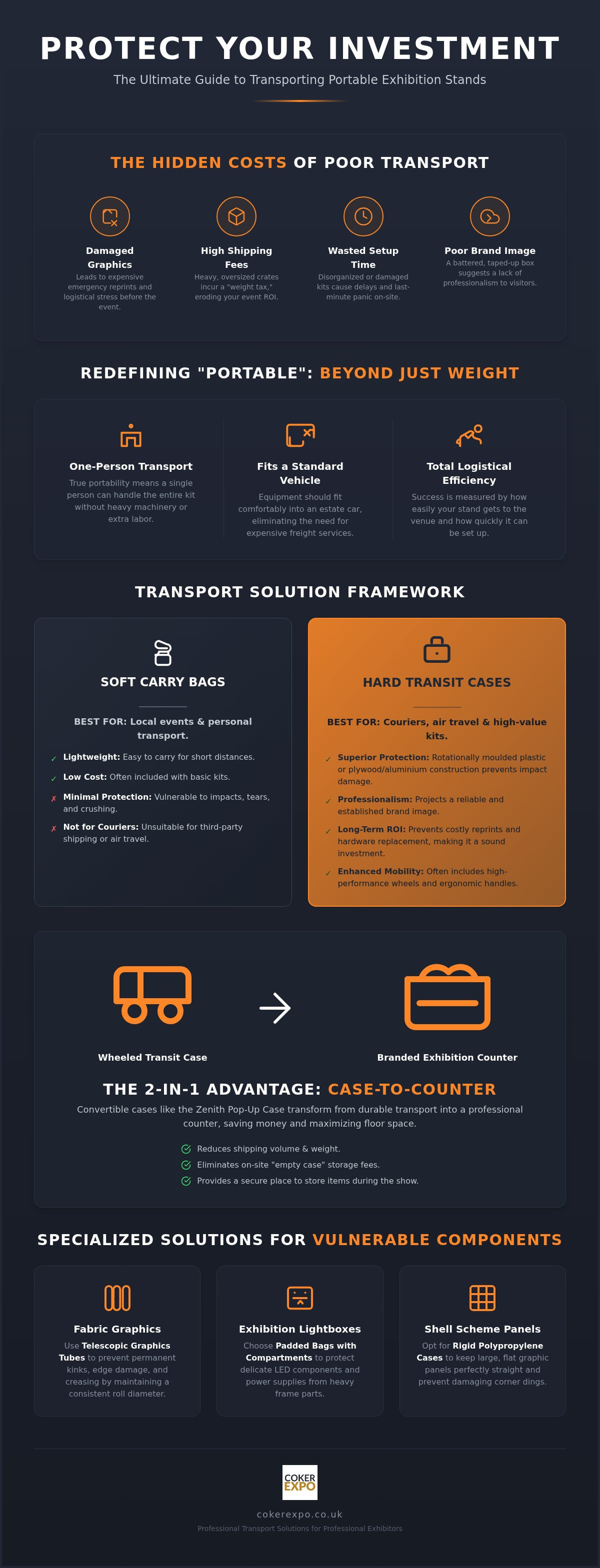
In 2026, the definition of portable exhibition stands has shifted from mere weight to total logistical efficiency. True portability means your equipment can be moved by one person and fits comfortably into a standard estate car without specialized freight services. While a display stand is fundamentally designed to hold graphics, its real-world utility depends on how it survives the journey to the venue. Relying on the "cardboard box" approach often leads to expensive graphic replacements before the show even starts. Quality transport solutions are the essential infrastructure for maintaining a professional exhibition stand design that projects reliability.
Soft Bags vs. Hard Cases: The Durability Spectrum
Choosing between a soft carry bag and a hard transit case depends on your travel frequency and method. Lightweight canvas bags are sufficient for local events where you handle the kit personally in a private vehicle. However, if you rely on third-party couriers or national shipping, a hard case is mandatory. These robust containers are critical for protecting high-value exhibition lightboxes, where internal LED components and delicate tension fabrics are vulnerable to impact. Investing in the right protection ensures your hardware remains a sound business investment rather than a recurring expense.
The "Hidden" Costs of Poor Protection
The ROI of a high-quality case becomes clear when you calculate the cost of a single emergency reprint. Damaged panels don't just cost money; they create logistical stress and damage your brand's perception during setup. A battered, taped-up box suggests a lack of professionalism to neighboring exhibitors and early-arriving visitors. 2026 trends prioritize speed and reduced on-site labour, and a well-organized case facilitates a setup time of under 30 minutes. By preventing kinks in graphics and protecting structural frames, you avoid the panic of last-minute repairs at the trade show venue. Professional-looking transit gear reinforces your authority before the first visitor even walks through the door.
Selecting Your Transport Solution: A Comparison Framework
Selecting the right housing for your portable exhibition stands requires a clear understanding of your travel frequency and handling methods. Transit cases, typically made from rotationally moulded plastic, offer a superb balance of weight and impact resistance for those using their own vehicles or local couriers. Flight cases use plywood and aluminium extrusions for maximum durability, which is essential for air travel or frequent international freight. High-performance castors and ergonomic handles are non-negotiable features; they prevent operator fatigue during long walks through exhibition terminals. Following established trade show logistics tips will help you coordinate your freight and avoid the common pitfalls of onsite handling delays.
Moulded Plastic Cases for Pop-Up Displays
The Zenith Pop-Up Case with Wheels is an industry standard for a reason. It provides a secure, rigid environment for both the aluminium frame and the magnetic graphic panels. Its primary advantage is the 2-in-1 functionality; the case converts into a professional counter with the addition of a tabletop and a graphic wrap. This eliminates the need to pay for empty crate storage at the venue, which significantly reduces your overall event budget. Internal foam padding and secure locking latches ensure that the hardware remains stationary during transit, preventing internal scuffing.
Specialized Protection for Graphics and Lightboxes
Graphics are the most vulnerable component of any display system. Telescopic graphics tubes, such as the UNO case, are designed to prevent edge damage and permanent creasing by maintaining a consistent roll diameter. For those using illuminated displays, the Halo Lightbox Carry Bag with Wheels provides dedicated compartments for LED frames and power supplies. This prevents heavy aluminium extrusions from crushing delicate lighting components. If you are transporting shell scheme graphic panels, rigid polypropylene cases are the best choice to keep panels flat and prevent corner dings. You can explore a wide variety of these specialized solutions in our professional bags and cases collection to ensure your specific kit is fully protected.
Top Logistics Solutions for Professional Exhibitors
Managing high-impact portable exhibition stands requires more than just a basic carrier; it demands a logistics strategy that scales with your equipment. For exhibitors using structural elements like lighting truss or expansive booth kits, the Turbo wheeled transit cases are the industry workhorses. These cases provide the structural rigidity needed for heavy hardware while maintaining the mobility required for a single operator to navigate a venue. By centralising your kit into a single, high-capacity wheeled unit, you reduce the risk of losing smaller components and streamline your load-in process.
The CAB series (Carry Bags for Exhibition Equipment) offers a versatile alternative for smaller, modular displays. These bags are crafted from high-durability fabrics with reinforced stitching to handle the repetitive stress of event cycles. For managers who prioritise maximum organisation, the Pegasus Exhibition Kit Transport Case represents a premium choice. It features superior internal architecture designed to keep bespoke components stationary, preventing the internal friction that often leads to surface scratches on high-grade aluminium frames.
Heavy-Duty Solutions: Flight Cases and Road Trunks
When your schedule involves frequent national travel or third-party freight handling, wheeled exhibition flight cases are the only logical investment. These trunks are built using robust plywood panels, aluminium extrusions, and high-density foam linings that absorb the kinetic shocks of transit. They're designed for "on the road" durability where standard plastic cases might fail under the pressure of stacked cargo. We also offer custom sizing for non-standard equipment, ensuring that sensitive items like display turntables or branded plinths have a snug, vibration-resistant environment during every journey.
Budget-Friendly Portability
Not every marketing calendar requires a heavy-duty road trunk. The Budget wheel exhibition case provides a semi-rigid, cost-effective solution for small pop-ups and lightweight kits. It offers a significant upgrade over standard cardboard packaging without the weight of a full flight case. For ultra-portable setups, lightweight canvas bags are the ideal choice for protecting folding display boards. These bags prevent surface scuffing and keep panels clean during car-based transport. Balancing your choice between price and protection ensures you don't overspend on infrastructure for low-frequency events. To find the right fit for your specific kit, you can browse our full range of exhibition transport cases and secure your equipment for the next season.
Maximising Longevity: Care and Maintenance of Your Kit
Securing high-quality portable exhibition stands is only the first step in ensuring a high ROI. The longevity of your equipment depends heavily on post-show discipline and routine maintenance. After a high-pressure event, it's tempting to pack away hardware hastily, but this is when most damage occurs. Establishing a standardised packing protocol prevents mechanical failure and keeps your display looking pristine for years. A well-maintained kit doesn't just save money on replacements; it ensures you can deploy your marketing assets at a moment's notice with total confidence.
Maintenance extends to the transport hardware itself. Grit and debris from loading docks can quickly seize wheel bearings, making transport difficult and increasing the risk of handle breakage. Periodically wipe down the exterior of your cases and ensure that castor wheels are free from carpet fibres or dirt. A quick inspection of latches and hinges before storage prevents the frustration of discovering a broken case on the morning of your next event. Verifying that all components are in their designated bags using a pre-show checklist is the hallmark of a professional exhibitor.
Graphic Protection Strategies
Graphics are often the most expensive component to replace. For PVC panels, rolling is the only viable method to avoid permanent creasing; always roll with the print side facing outwards to prevent the graphic from "tunnelling" or delaminating. Fabric graphics are more resilient but remain susceptible to dye-sublimation transfer if packed while damp or stored in humid conditions. We recommend using foam-lined polypropylene cases to provide a cushioned environment that protects panel edges from impact. Between event seasons, store your graphics in a climate-controlled office rather than a damp warehouse or garage to prevent material degradation.
Final Checklist Before You Buy
Before finalising your logistics strategy, perform a final audit of your requirements. Measure your hardware twice; internal case dimensions are often smaller than the exterior footprint due to padding and wheel housings. Check the load-bearing capacity of your chosen wheeled case to ensure it can handle the weight of heavy aluminium frames or trussing. If you're ready to upgrade your event infrastructure, you can browse our full range of Bags and Cases to secure your equipment. Proper organisation transforms your portable exhibition stands from a logistical burden into a streamlined, professional asset that delivers results at every show.
Securing Your Event Infrastructure for Long-Term Success
The success of your next exhibition depends on more than just the visual appeal of your display. It relies on the reliability of your transport system and the condition of your hardware upon arrival. We've seen how true portability for portable exhibition stands is achieved through a combination of ergonomic design and robust protection. By matching your hardware to the correct transit solution, whether it's a 2-in-1 counter case or a specialized graphics tube, you eliminate the stress of transit damage and the hidden costs of inefficient logistics.
Investing in professional-grade infrastructure is a sound business decision that pays dividends across every event cycle. You can protect your equipment with our professional Bags and Cases collection, which includes durable carry bags starting from £32.00 and heavy-duty flight cases for professional road use. Our ergonomic designs facilitate easy national transport, ensuring your team can focus on lead generation rather than logistical troubleshooting. Secure your kit today and ensure your brand arrives in pristine condition at every venue, ready to make a significant impact.
Frequently Asked Questions
Can I use a standard suitcase for my portable exhibition stand?
No, standard suitcases aren't engineered to handle the weight or specific dimensions of professional portable exhibition stands. They lack the internal padding and rigid structure required to protect aluminium frames or delicate LED components. Using non-specialised luggage often results in transit damage and can void your equipment warranties. Professional transit cases use high-impact polyethylene to withstand the rigours of loading docks and courier handling.
What is the difference between a transit case and a flight case?
The primary difference lies in material construction and durability. Transit cases are lightweight, rotationally moulded plastic units best suited for personal vehicle transport or local couriers. Flight cases use heavy-duty plywood with aluminium edges and steel corners. These are essential for international freight or air travel where equipment is subjected to heavy stacking and kinetic impact. Selecting the right case depends on your specific logistics cycle.
Do pop-up cases really work as counters at the show?
Yes, many pop-up cases are designed specifically to act as the internal structure for a branded counter. By adding a folding tabletop and a custom graphic wrap, you transform your transport case into a functional point of contact. This 2-in-1 functionality eliminates the need for empty case storage at the venue. It is a highly efficient way to maximise booth utility while reducing overall event costs.
How do I prevent my fabric graphics from wrinkling in a carry bag?
You can prevent wrinkles by rolling fabric graphics around a core instead of folding them. Always pack graphics with the printed side facing outwards to maintain the integrity of the dye-sublimation. Ensure the fabric is entirely dry before packing to avoid moisture-related damage. For best results, use a dedicated graphics tube or a padded bag with internal dividers to keep the materials stationary during transit.
Are wheeled cases necessary for small exhibition stands?
Wheeled cases are highly beneficial for any exhibitor navigating large venues or transport terminals. Even for smaller portable exhibition stands, the cumulative weight of frames and graphics can lead to operator fatigue and physical strain. High-quality castors and ergonomic handles allow for smooth one-person transport. This ensures your team arrives at the booth ready to engage with visitors rather than exhausted from the load-in process.
Can I get custom-sized cases for non-standard exhibition equipment?
Yes, custom-sized flight cases are available for non-standard items like display turntables or bespoke lighting truss. These cases are manufactured to your specific dimensions with custom foam inserts to prevent internal movement. This level of tailored protection is vital for high-value infrastructure that doesn't fit into standard off-the-shelf bags. It ensures total reliability during both national and international transit cycles.
Einen Kommentar hinterlassen