

Durable Stainless Steel Notice Boards & Menu Cases
A display case that succumbs to corrosion or condensation isn't just a maintenance headache; it's a silent drain on your brand's perceived value. You likely understand that first impressions are formed long before a customer ever walks through your door. If your notices are obscured by moisture or your frames are marred by rust, you're signaling a lack of attention to detail that can drive footfall away. Investing in high-quality stainless steel notice boards and menu cases solves these issues by providing a resilient, professional interface for your public communications.
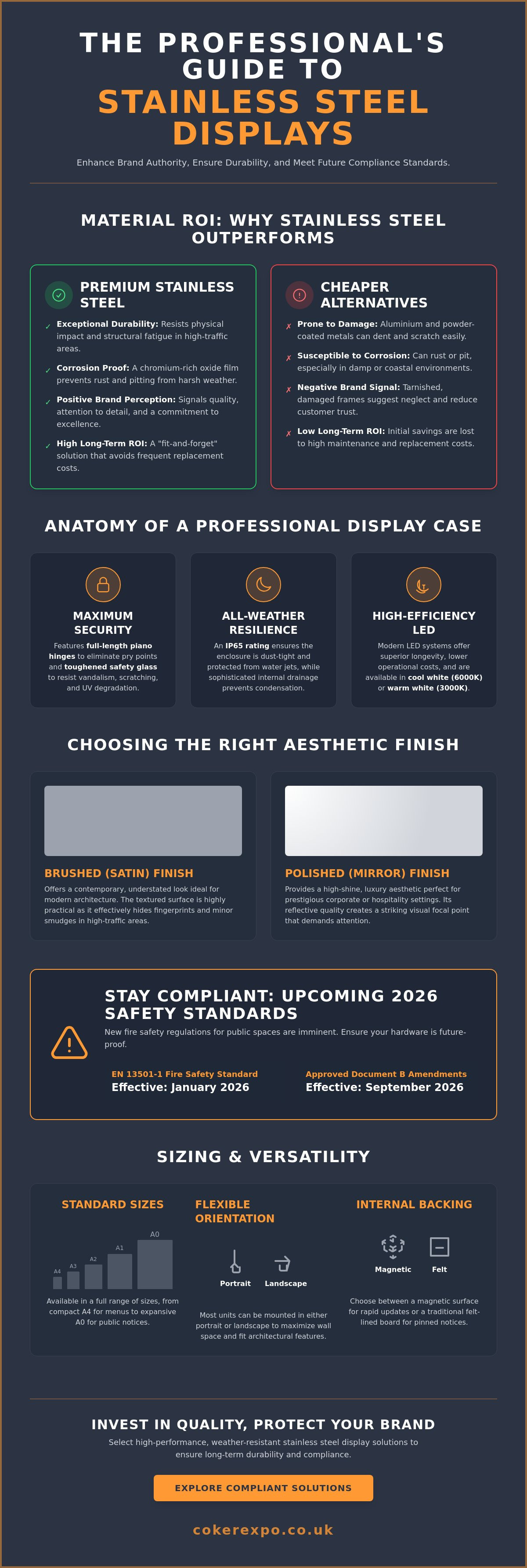
Selecting the right hardware requires more than just picking a size. With the EN 13501-1 fire safety standard update taking effect in January 2026 and amendments to Approved Document B arriving in September 2026, compliance is now a critical factor for any facility manager or business owner. This article will help you select high-performance, weather-resistant stainless steel display solutions that enhance your brand authority and ensure long-term durability. We'll break down the technical differences between steel grades and explain how to achieve a secure, "fit-and-forget" installation that maintains its kerb appeal for years.
Key Takeaways
- Contrast the long-term resilience of stainless steel against cheaper alternatives to ensure your information points remain functional and professional.
- Understand the technical shift to high-efficiency LED illumination and why features like piano hinges and safety glass are non-negotiable for security.
- Use our site assessment framework to choose the right stainless steel notice boards and menu cases based on mounting requirements and environmental exposure.
- Learn how to navigate upcoming 2026 fire safety regulations to ensure your display hardware meets the latest compliance standards for public spaces.
- Establish a practical maintenance routine that preserves your hardware's aesthetic and maximises the ROI of your brand infrastructure.
Why Stainless Steel Notice Boards and Menu Cases are the Professional Standard
Stainless steel notice boards and menu cases represent the highest tier of information display for public and commercial spaces. These units aren't just frames; they're high-durability, secure enclosures designed to protect critical information from both environmental damage and unauthorised tampering. While cheaper aluminium or powder-coated alternatives might look acceptable on day one, they often fail under the pressure of high-traffic environments or harsh weather. Stainless steel's inherent resistance to rust and physical impact makes it the essential infrastructure for businesses that value longevity.
The decision to invest in stainless steel is often driven by "material ROI." Choosing a premium alloy means you're investing in a solution that won't require replacement every few years due to structural fatigue or surface pitting. This durability is rooted in specific stainless steel properties, such as the chromium-rich oxide film that protects the metal from atmospheric corrosion. For sectors like healthcare, education, and hospitality, this reliability is non-negotiable. A tarnished menu case outside a restaurant or a rusted notice board at a corporate headquarters sends a subconscious message of neglect. High-quality hardware reinforces brand authority and builds customer trust by demonstrating a commitment to excellence in every physical touchpoint.
The Aesthetic Advantage: Brushed vs Polished Finishes
Visual impact depends heavily on your choice of finish. Brushed (satin) stainless steel offers a contemporary, understated look that fits seamlessly with modern architecture. It's also highly practical for high-traffic areas because the textured surface effectively hides fingerprints and minor smudges. In contrast, polished (mirror) finishes provide a high-shine, luxury aesthetic often found in traditional hospitality settings or prestigious corporate lobbies. While mirror finishes require more frequent cleaning to maintain their brilliance, their reflective quality creates a striking visual focal point that demands attention.
Weatherproofing and the IP Rating System
True weatherproofing goes beyond a simple door seal. Professional-grade cases feature sophisticated internal drainage systems and heavy-duty seals that prevent water ingress even during heavy rain. The industry standard for outdoor electrical components is an IP65 rating. This rating ensures the unit is dust-tight and protected against water jets from any direction. Choosing toughened safety glass instead of acrylic is another critical distinction. Glass is naturally resistant to the scratching and UV-induced yellowing that plagues plastic alternatives. It also significantly reduces condensation build-up, ensuring your notices remain legible regardless of humidity or temperature fluctuations.
Key Features: Illumination, Security, and Size Specifications
Selecting the right hardware requires a clear understanding of sizing standards and mounting versatility. Sizing for stainless steel notice boards and menu cases typically ranges from compact A4 units, ideal for restaurant entryways, to expansive A0 formats suited for community centres or educational campuses. Most professional units support both portrait and landscape orientation. This flexibility allows managers to maximise wall space or align the display with specific architectural features. Content management is further simplified through the choice of internal backings; magnetic surfaces allow for rapid updates, while felt-lined boards provide a traditional aesthetic for pinned notices.
LED Illumination: Visibility After Dark
The industry has fully transitioned to high-efficiency LED illumination as of 2026. These systems offer superior longevity compared to legacy fluorescent tubes and significantly lower operational costs. You can choose between cool white (6000K) LEDs for a modern, high-contrast look or warm white (3000K) for a softer, more inviting hospitality atmosphere. These systems typically use external low-voltage drivers to keep high-voltage components away from the public-facing enclosure. If your site requires permanent brand visibility, backlit headers provide a dedicated space for business names or logos that remain legible throughout the night.
Security and Anti-Vandalism Measures
Security is a fundamental requirement for any information point in a public space. Professional-grade units use full-length piano hinges rather than standard butt hinges. This design eliminates gaps and leverage points, making it nearly impossible for unauthorised individuals to pry the door open. Toughened safety glass is essential for high-footfall areas; it resists scratching and, in the event of a high-velocity impact, shatters into small granules instead of dangerous shards. For access control, you should specify twin barrel locks for maximum security, though coin-operated locks remain an option for sites where multiple staff members need frequent access without carrying keys.
When planning your site layout, reviewing a range of professional external notice boards can help you identify the specific security and illumination configuration required for your environment. Choosing the correct combination of features ensures your display remains a reliable asset rather than a maintenance liability.
Choosing the Right External Notice Board for Your Environment
Selecting the correct hardware requires a systematic assessment of your site's specific environmental stressors. High winds, intense sunlight, and airborne pollutants all dictate the necessary configuration of your stainless steel notice boards and menu cases. A board positioned in a narrow urban corridor faces different challenges than one installed in an open coastal park. You'll need to balance visibility with the physical constraints of the building's facade or the surrounding landscape to ensure the unit performs as intended for the long term.
Content volume and viewing distance are the primary variables for sizing. A single A4 menu case is sufficient for close-range reading at a restaurant entrance, but a community information point requires an A1 or A0 format to remain legible from several metres away. Matching the board's profile to your existing architecture ensures the hardware looks like a permanent, integrated component of the building design rather than an afterthought. This cohesion reinforces the professional image of your venue or public space.
Material Grades: 304 vs 316 Stainless Steel
The distinction between material grades is the most critical factor for longevity in the UK. 304 grade is the industry standard for inland locations where atmospheric salt levels are low and pollution is moderate. However, for coastal sites or high-pollution urban areas, 316 grade is essential to prevent "tea staining" or surface pitting. 316 stainless steel contains molybdenum for superior chloride resistance. This chemical addition ensures the metal remains pristine even when exposed to salt spray or heavy de-icing salts. Investing in 316 grade is a pragmatic decision for any facility within five miles of the coast, as it prevents the premature structural failure common in lower-grade metals.
Mounting Options and Accessibility
Wall-mounted units are the primary choice for urban environments where pavement space is restricted. They integrate directly into the building's envelope, providing a streamlined and secure display. Post-mounted structures are better suited for parklands or entrances set back from the main thoroughfare. These freestanding units can be positioned to intercept foot traffic more effectively than wall-mounted alternatives. Regardless of the mounting style, you must adhere to accessibility standards. Information should be positioned so the centre of the display is at eye level, typically between 1200mm and 1600mm from the ground, ensuring readability for all users.
Explore our full range of external notice boards to find the specific mounting configuration and material grade that fits your project requirements.
Maximising ROI: Maintenance and Brand Consistency
Achieving a significant impact in a professional environment requires more than just high-quality hardware; it demands a commitment to content quality and physical upkeep. Your stainless steel notice boards and menu cases serve as the initial touchpoint in a customer’s journey. If the internal graphics are faded or the metal surface is neglected, the premium feel of the hardware is undermined. We recommend pairing your display cases with professional large format printing to ensure your notices match the structural quality of the frame. This holistic approach transforms a simple information point into a powerful branding tool that justifies the initial investment through years of reliable service.
CokerExpo provides the essential infrastructure for these environments, acting as a knowledgeable partner for managers who need reliable, long-term solutions. By integrating your external displays with other high-performance hardware, such as external lightboxes, you create a consistent visual language that guides visitors from the street to the interior. This strategy should extend to your indoor presence, where a well-executed exhibition stand design continues the narrative established at the entrance. Consistency across these touchpoints builds brand authority and reassures clients of your professional standards.
Cleaning and Care for Stainless Steel
A simple maintenance schedule preserves the aesthetic value of your investment. Use warm water with a mild detergent and a soft cloth for routine cleaning. You must avoid bleach, chlorides, or abrasive scouring pads, as these can permanently damage the protective chromium oxide layer. If you notice tea-staining, which is often just surface contamination rather than actual rust, use a specialised stainless steel cleaner to restore the finish. Additionally, apply a silicone-based lubricant to lock mechanisms and inspect door seals every six months to ensure the unit remains fully weatherproof and easy to operate for staff.
Integrating Your Display Strategy
Your external display is the first chapter of your brand story. In temporary event settings or during facility refurbishments, folding display boards can effectively supplement your permanent notice boards by providing directional information or temporary schedules. This integrated approach ensures that your messaging is never interrupted by logistical changes. For those looking to upgrade their entire communication infrastructure, you can explore CokerExpo’s full range of professional display solutions to find hardware that balances technical expertise with practical durability.
Securing Your Professional Presence for the Long Term
Investing in high-performance infrastructure is a strategic decision that pays dividends through reduced maintenance and enhanced brand authority. You've seen how the correct material grade and security features, like piano hinges and toughened glass, protect your investment from both the elements and vandalism. As fire safety regulations like EN 13501-1 tighten in 2026, choosing compliant, durable hardware is no longer optional; it's a necessity for operational safety.
High-quality stainless steel notice boards and menu cases provide the "fit-and-forget" reliability that managers in high-pressure sectors demand. By integrating these units with professional lighting and consistent branding, you ensure your venue remains visible and inviting long after dark. CokerExpo has been a specialist in durable B2B display infrastructure since 1999. We provide high-performance LED technology as standard and offer expert UK-based technical support to help you navigate bespoke requirements.
View our range of professional notice boards and display cases to find a solution that matches your architectural standards and performance needs. Your brand deserves hardware that works as hard as you do.
Frequently Asked Questions
Is stainless steel better than aluminium for outdoor notice boards?
Stainless steel offers superior structural integrity and impact resistance compared to aluminium, making it the better choice for permanent outdoor installations. While aluminium is a cost-effective alternative, it's more susceptible to denting and surface oxidation in harsh environments. Stainless steel notice boards and menu cases provide a higher material return on investment because they maintain their professional finish and structural alignment for decades without the risk of warping or corrosion.
Can I get a custom-sized stainless steel menu case?
Bespoke manufacturing is available for clients who require specific dimensions to fit unique architectural spaces or non-standard content. While we stock a wide range of standard A-series sizes, we can produce custom units tailored to your exact specifications. This flexibility allows you to maintain brand consistency across your premises, ensuring that every display point integrates seamlessly with your building’s facade while retaining all standard weatherproofing and security features.
What is the difference between 304 and 316 stainless steel for signage?
The main technical difference is that 316 grade contains molybdenum, which provides significantly higher resistance to salt spray and industrial pollutants. You should specify 304 grade for standard inland applications where environmental conditions are relatively mild. However, for any site within five miles of the coast or in high-pollution urban centres, 316 grade is essential to prevent surface pitting and ensure the long-term aesthetic value of your hardware.
Do I need an electrician to install an illuminated menu case?
A qualified electrician must perform the final connection to the mains power supply to ensure your installation complies with UK safety regulations. Although our cases use high-efficiency, low-voltage LED systems with external drivers, the primary electrical feed requires professional certification. Using a specialist ensures that the unit is correctly earthed and that the IP65 weatherproofing seals around the cable entry points are properly maintained during the installation process.
How do I prevent condensation inside my outdoor notice board?
Effective condensation control relies on choosing a unit with integrated ventilation and high-performance seals that allow for natural air circulation. Toughened safety glass is also superior to acrylic in this regard, as it's less prone to the thermal expansion that can trap moisture. You should also regularly inspect the drainage holes at the base of the frame to ensure they aren't blocked by dirt, as clear drainage is critical for moisture management.
Are the locks on these cases pick-resistant for high-security areas?
Our cases are fitted with high-security barrel locks specifically designed to withstand tampering and unauthorised access in high-footfall public areas. These locks are integrated into a reinforced frame that features full-length piano hinges, which removes the leverage points often targeted by vandals. This combination of secure locking mechanisms and robust hinge design ensures that your information remains protected while still allowing your staff to perform rapid content updates using authorised keys.
Einen Kommentar hinterlassen