

How to Choose a Trade Show Lightbox: The Professional’s 2026 Buyer’s Guide
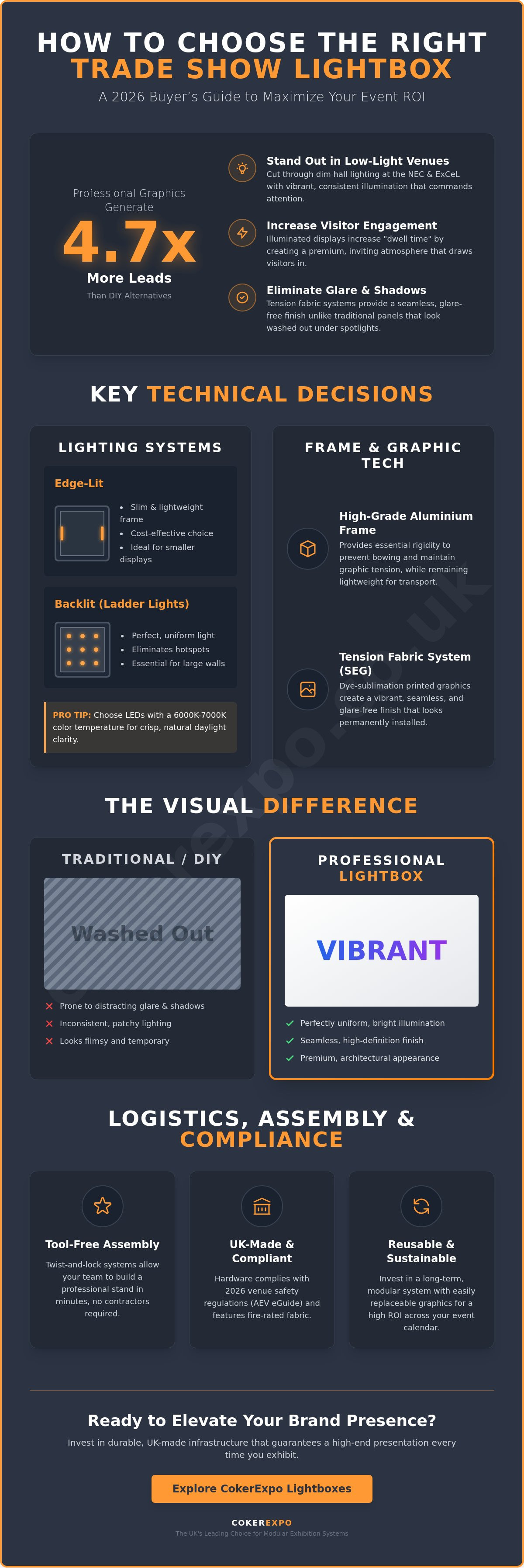
Professional trade show graphics generate 4.7 times more leads than DIY alternatives, yet many exhibitors still settle for "washed out" visuals and inconsistent lighting. You've likely felt the pressure of a high-stress setup where heavy equipment and complex tools become a liability. Understanding how to choose a trade show lightbox is about more than aesthetics; it's about investing in a modular, UK-made infrastructure that guarantees a high-end brand presentation every time you hit the floor.
This 2026 buyer’s guide will provide you with the technical and practical criteria needed to maximize your event ROI. We'll show you how to select high-impact lighting that simplifies your logistics while staying fully compliant with the latest AEV eGuide safety standards at venues like the NEC and ExCeL London. From tool-free assembly to fire-rated tension fabric systems, you'll learn how to build a durable, reusable stand that makes an impact without the headache.
Key Takeaways
- Understand why high-impact illumination is essential for standing out in low-light venues like the NEC and how it directly influences visitor engagement.
- Master the technical criteria for how to choose a trade show lightbox by comparing the performance of edge-lit versus backlit LED systems and high-grade aluminium frames.
- Discover how to integrate freestanding and modular lightboxes into your specific stand layout, including seamless integration with existing shell scheme graphic panels.
- Prioritize logistics with tool-free, twist-and-lock assembly systems that allow your team to build a professional-grade display in minutes without external contractors.
- Ensure long-term ROI by selecting durable, UK-made hardware that complies with 2026 venue safety regulations and features easily replaceable tension fabric graphics.
Understanding the Impact of Illuminated Trade Show Displays
A modern trade show lightbox consists of a robust aluminium frame, high-output integrated LEDs, and vibrant tension fabric graphics. It isn't just a sign; it's a structural component of your brand's physical presence. In cavernous, often dimly lit venues like the NEC in Birmingham or ExCeL London, ambient hall lighting is rarely sufficient to make your message stand out. This is why internal illumination has become a non-negotiable standard for professional exhibitors in 2026. Lighting ensures your brand remains the focal point, regardless of the venue's overhead conditions.
When you're deciding how to choose a trade show lightbox, you're essentially choosing between a temporary "booth" look and a premium, retail-grade environment. Traditional pop-up banners often look flimsy and can cast distracting shadows. Lightboxes provide a clean, architectural finish that commands attention. They also align with the 2026 industry shift toward sustainability. Instead of single-use panels, you're investing in reusable LED technology and frames that serve as long-term infrastructure for your marketing calendar.
The ROI of Illumination
Illuminated displays significantly increase "dwell time" by making your graphics legible from a distance. This isn't just about brightness; it's about clarity. By applying established visual merchandising principles, you create a "halo effect" around your products. This subtle psychological cue suggests higher quality and reliability to potential leads. Whether you're working within a restricted shell scheme or a sprawling space-only stand, lightboxes provide the versatility to adapt your branding to any footprint without losing impact.
Tension Fabric Systems (TFS) vs. Traditional Graphics
The secret to the seamless look of modern lightboxes is Silicone Edge Graphics (SEG). These are part of advanced tension fabric systems that allow the graphic to be stretched perfectly flat across the frame. Unlike PVC or laminated panels, fabric graphics eliminate distracting glare from harsh exhibition spotlights. The result is a borderless, high-definition finish that looks like a permanent part of the venue. Learning how to choose a trade show lightbox involves understanding these material differences to ensure your brand graphics don't look "washed out" or cheap under intense hall lights. Fabric is also lighter to transport and easier to store, which directly reduces your logistical stress.
Evaluating Technical Specifications: Frames, LEDs, and Fabric
Selecting technical specifications is the most critical phase when learning how to choose a trade show lightbox. You aren't just buying a frame; you're investing in a precision-engineered tool that must withstand the rigours of transport and repeated assembly. High-grade aluminium is the only viable choice for the frame material. It provides the necessary rigidity to maintain the tension of your fabric graphics without the excessive weight of steel or the fragility of plastic. A robust aluminium frame prevents bowing, ensuring your brand message remains perfectly flat and professional throughout the event.
For the graphics themselves, insist on dye-sublimation printing. This process heat-infuses ink directly into the polyester fibres. The result is vibrant, light-fast colours that won't crack or peel even after being folded for transport. To achieve true daylight clarity, look for LED modules calibrated to a colour temperature between 6000K and 7000K. This range ensures that whites look crisp and colours appear natural, avoiding the sickly yellow cast often found in cheaper, lower-quality lighting systems. If you're unsure which technical spec fits your next event, our team can help you compare our range of UK-made lightboxes to find the perfect balance of weight and visual impact.
Edge-lit vs. Backlit Lightboxes
The choice between edge-lit and backlit systems usually depends on your stand depth and display size. Edge-lit modules are mounted along the internal perimeter of the frame. They are ideal for slim, lightweight displays and remain a cost-effective choice for smaller freestanding units. Backlit systems, frequently referred to as ladder lights, use rows of LEDs positioned directly behind the graphic. These are essential for large-scale walls. They provide uniform light distribution across massive surfaces, effectively eliminating the dark patches or hotspots that can undermine a premium brand presentation.
Power Consumption and Longevity
Modern LED modules are designed for extreme longevity, typically offering a 50,000-hour lifespan. This makes them a reliable, one-time investment for years of exhibition cycles. Safety is another vital factor to consider. LEDs emit very little heat compared to legacy fluorescent tubes. This is a critical advantage for enclosed booths or high-traffic areas where hot hardware could pose a fire risk or cause discomfort for stand staff. These systems are also significantly more energy-efficient, helping you meet the increasingly strict sustainability mandates enforced by major UK venues in 2026.
Matching Lightbox Types to Your Exhibition Stand Layout
Your stand layout dictates the physical requirements of your hardware. Understanding how to choose a trade show lightbox requires a clear assessment of your floor plan and traffic flow. Freestanding lightboxes are the most versatile option for most exhibitors. They can be positioned as focal points at the entrance of a stand or used as illuminated room dividers. Wall-mounted units are a space-saving alternative, ideal for creating a permanent, high-end feel within a bespoke build or a larger modular environment. For island stands where visitors approach from every angle, double-sided lightboxes are essential. These units ensure your brand is visible from 360 degrees, preventing "dead zones" that occur when the back of a display is left unbranded.
If you're working within a standard booth, you can easily integrate these systems with your shell scheme graphic panels. Replacing a flat, non-illuminated panel with a backlit lightbox creates an immediate visual anchor that draws the eye away from neighbouring stands. This combination of standard panels and targeted illumination is a cost-effective way to achieve a premium look on a modest budget. It transforms a basic 3x3m shell scheme into a professional brand environment that feels custom-built.
Portable vs. Modular Systems
Portable lightboxes are single, self-contained units designed for rapid, one-person setup. They're perfect for smaller events or roadshows where speed is a priority. However, modular systems offer the best long-term ROI for growing businesses. These units can be linked together to create expansive light walls. A set of modular lightboxes used for a 3x3m stand this year can be reconfigured and expanded to fit a 6x3m or 10x6m space in the future. This scalability ensures your infrastructure grows alongside your marketing ambitions without requiring a completely new kit for every event.
Dynamic and Animated Lightboxes
The most significant trend in 2026 is the rise of dynamic lightboxes. Unlike traditional backlit units, dynamic systems use a programmed LED matrix to illuminate specific areas of your graphic in a timed sequence. This creates the illusion of movement, such as flowing water, moving clouds, or pulsing text. In a hall filled with static images, motion is a powerful tool to capture attention. When designing graphics for dynamic displays, keep the animation subtle. The goal is to enhance your message, not overwhelm the viewer. Focus the "movement" on key USPs or your company logo to ensure the most important information stays at the forefront of the attendee's experience.
Practical Logistics: Portability, Tool-Free Assembly, and Safety
The success of your exhibition often depends on what happens before the doors open. High-stress setup environments are common at major venues, making the logistics of your hardware as important as the graphics themselves. When researching how to choose a trade show lightbox, prioritize systems that offer a "tool-free" promise. Twist-and-lock or click-frame mechanisms allow your marketing team to assemble a professional display in minutes. This eliminates the need for specialist contractors and ensures you aren't searching for lost tools in a busy hall.
Portability is the next critical factor. A robust frame is useless if it's too heavy to transport or easily damaged in transit. Look for units that break down into manageable sections and fit into padded, wheeled carry cases. This protection is vital for maintaining the finish of the aluminium and the integrity of the LED modules. Balancing weight and stability is a fine art. Our hardware is engineered to be heavy enough to remain stable in high-footfall areas while remaining light enough for a two-person team to handle without physical strain.
The Reality of On-Site Setup
Much like our folding display boards, our lightboxes are designed for the non-expert user. The electronics are strictly "plug-and-play," featuring UK-standard power leads that connect directly to your venue's floor socket. To ensure a seamless launch, follow this pre-show checklist:
- Inspect the silicone edge of your graphics for any transit debris.
- Test all LED modules before the public arrives to ensure consistent brightness.
- Check that all power cables are safely tucked away to avoid trip hazards.
If you need assistance planning these logistics, you can contact our exhibition experts for a full breakdown of assembly times and transport requirements.
Fire Safety and Compliance
UK venues like the NEC and ExCeL London enforce strict safety standards, primarily guided by the AEV eGuide. All fabrics must be fire-retardant, typically meeting B1 or M1 certifications (BS476 Class 1). Using "cheap" non-certified imports is a significant risk. If a venue floor manager requests your safety certificates and you cannot provide them, they have the authority to prevent you from using the display. Every Coker Expo lightbox uses certified materials, ensuring your stand remains compliant and your brand reputation stays protected. Keep digital copies of these certificates on your phone for immediate verification during the build-up phase.
Why CokerExpo is the Leading UK Choice for Exhibition Lightboxes
Choosing the right hardware is only half the battle. The partner you select to provide that infrastructure determines your success on the floor. At Coker Expo, we've spent over 25 years perfecting exhibition stand design for businesses across the UK. We aren't just resellers; we're practical specialists who understand the rigours of the road. When you're deciding how to choose a trade show lightbox, you need a supplier that prioritizes durability and fast turnaround. Our "Made in the UK" hallmark isn't just a label; it's a guarantee of quality and local accountability that imported alternatives simply can't match.
We understand that marketing managers face immense pressure during event season. Our role is to alleviate that stress by providing hardware that works every single time. Because we manufacture locally, we can offer lead times that accommodate the fast-paced nature of the industry. Whether you're preparing for a last-minute show at the NEC or planning a major 2026 launch at ExCeL London, our team provides the reassurance that your display will arrive on time and perform to the highest technical standards.
Bespoke Solutions and Event Planning
Coker Expo provides more than just standalone hardware. We offer a comprehensive approach to event infrastructure that includes full event management and planning services if required. Our technical authority allows us to create complex, high-impact environments by integrating lightboxes with robust lighting truss structures. This modularity means you can build gantry-supported light walls or suspended illuminated headers that dominate the hall. If you have a specific vision that requires a bespoke configuration, our UK-based production team can handle custom requests with a level of creative flexibility that standard suppliers avoid.
The CokerExpo Guarantee
We build our hardware for years of repeated use, not just for a single show. A Coker Expo lightbox is a sound business investment in your brand's future. As your marketing campaigns evolve, you don't need to replace your entire system. You can simply order replacement dye-sublimation graphics for your existing frames, making it easy to keep your messaging fresh and relevant for every new campaign. This focus on longevity and user experience is what makes us the preferred choice for professional exhibitors. We provide the infrastructure for your success, ensuring you can focus on your leads while we handle the hardware.
Ready to upgrade your brand presentation for your next event? Explore our full range of exhibition lightboxes today or contact our team for expert planning advice tailored to your 2026 event schedule.
Secure Your Competitive Edge on the Trade Show Floor
Investing in a high-impact display is a strategic decision that affects your ROI for years. Understanding how to choose a trade show lightbox means prioritizing the technical clarity of 6000K LED modules and the seamless finish of tension fabric systems. These components work together to ensure your brand stands out in the competitive environment of the NEC or ExCeL. By focusing on tool-free, modular hardware, you empower your team to handle logistics with confidence and speed.
Coker Expo brings 25 years of industry expertise to your stand, providing the infrastructure needed for a professional, stress-free presentation. Our UK-based manufacturing ensures a fast turnaround and hardware that meets every local safety regulation. Don't settle for "washed out" graphics or complex setups that drain your team's energy before the show even starts. We are here to help you dominate the hall with reliable, high-performance equipment.
View our range of tool-free exhibition lightboxes and start planning a display that commands attention while simplifying your event logistics. We look forward to supporting your next successful exhibition.
Frequently Asked Questions
Do I need a professional fitter to set up an exhibition lightbox?
No, you don't need a professional fitter for our systems. We design our hardware specifically for tool-free assembly. Most units use a simple "click" or "twist-and-lock" mechanism that your own marketing team can manage in minutes. This autonomy saves you significant contractor costs and reduces the stress of waiting for on-site labour at busy venues.
Are trade show lightboxes double-sided?
Yes, most of our trade show lightboxes are available in double-sided configurations. This is particularly useful for island stands where you need brand visibility from multiple directions. You can choose to have the same graphic on both sides or two different messages. If you only need one side illuminated, a light-blocking "blackout" fabric is used on the rear to prevent light leakage.
How do I change the graphics on my LED lightbox?
Changing graphics is a straightforward process using Silicone Edge Graphics (SEG). You simply pull the small tab on the corner of the existing fabric to remove it. To install the new one, press the silicone bead into the perimeter channel of the frame. It's a tool-free task that ensures a drum-tight, crease-free finish every time you update your marketing campaign.
What happens if an LED bulb fails during a show?
Our lightboxes use high-quality LED modules with a 50,000-hour lifespan. Because these are arranged in strips or "ladders," a single bulb failure rarely impacts the overall illumination of the display. If a module does fail over time, they are designed to be replaceable. This modularity means you don't have to replace the entire frame, protecting your long-term investment.
Can I use my lightbox graphics on a different frame?
You can only use graphics on a different frame if the dimensions and the silicone edge channel specifications are identical. While SEG is an industry standard, frame depths and channel widths can vary between manufacturers. When learning how to choose a trade show lightbox, it's best to stick with a consistent hardware provider to ensure your library of graphics remains compatible across your kit.
Are exhibition lightboxes heavy to transport in a car?
Our exhibition lightboxes are engineered from high-grade aluminium, making them surprisingly lightweight. Most freestanding units break down into compact sections that fit into padded, wheeled carry bags. These bags are designed to fit into the boot of a standard estate car or small van. This portability is a key factor for teams who manage their own event logistics without heavy freight.
Do lightboxes meet UK fire safety regulations for exhibitions?
Yes, all our lightboxes and tension fabrics meet the strict fire safety regulations required by UK exhibition venues. Our materials are typically B1 or M1 certified, adhering to BS476 Class 1 standards. This compliance is essential for passing venue inspections at the NEC or ExCeL. We provide safety certificates upon request to ensure your stand planning remains entirely above board.
Can I link multiple lightboxes together to create a larger wall?
You can absolutely link multiple lightboxes together to create a larger, continuous light wall. Our modular systems use simple connecting brackets that secure the frames side-by-side. This flexibility allows you to adapt your display to different stand sizes, such as expanding from a 2m wide unit to a 6m wide backdrop. It's one of the most effective ways to maximize your ROI as your business grows.
Einen Kommentar hinterlassen