

Maximising a Small Exhibition Booth Space: The Professional Guide for 2026
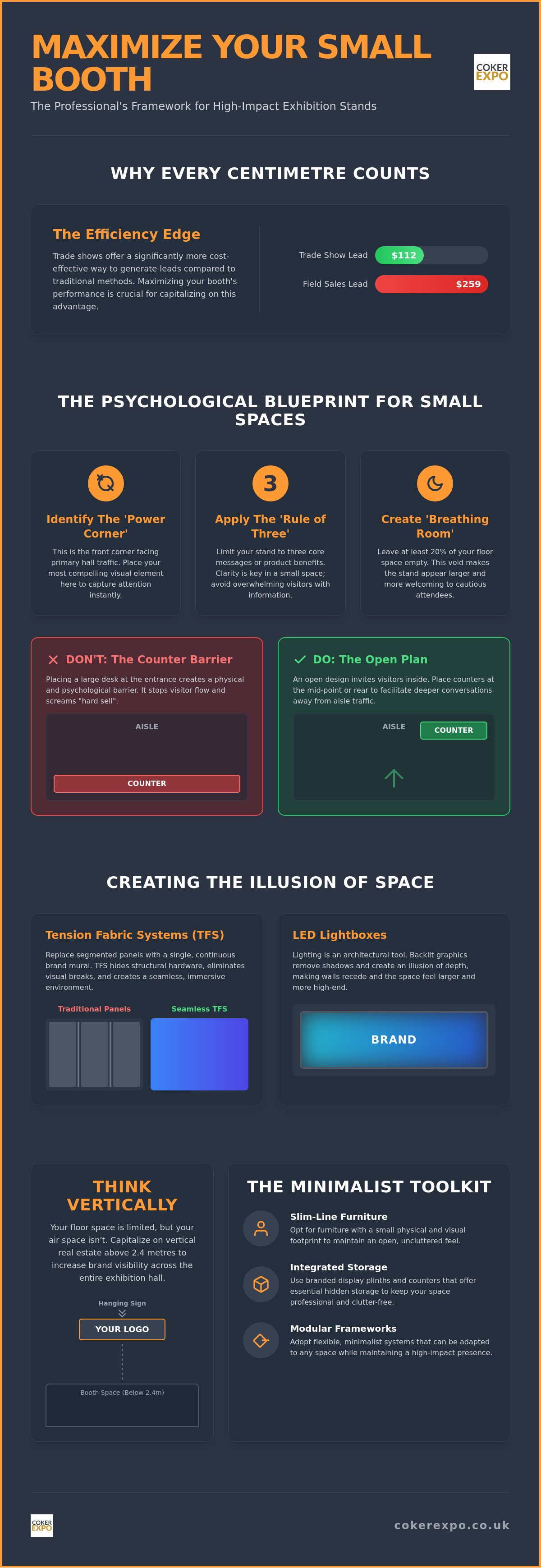
With the average cost per lead at a trade show now sitting at $112 compared to $259 for traditional field sales, every square centimetre of your floor plan must perform. You've likely felt the frustration of standing in a 10x10 linear booth, watching potential leads walk past as they're drawn to the massive, multi-level builds next door. It's a common pain point; clutter quickly makes a tight space feel unprofessional, and the challenge of maximising a small exhibition booth space can feel like an uphill battle against physics. You want a presence that looks custom and high-end, not a cramped storage closet for your marketing collateral.
We understand that efficiency is the foundation of a successful show. This guide provides a professional framework for 2026 to help you transform a modest footprint into a high-impact brand experience. You'll discover how to leverage tension fabric systems, vertical design, and dynamic lighting to remove visual boundaries and increase visitor footfall. We'll break down the technical strategies needed to ensure your stand looks authoritative and operates with total reliability, regardless of its size.
Key Takeaways
- Identify the ‘Power Corner’ to dictate visitor flow and apply the ‘Rule of Three’ to ensure your core messaging remains clear in confined environments.
- Utilise tension fabric systems and LED lightboxes to visually expand your footprint and achieve a seamless, high-end aesthetic without the bulk of traditional builds.
- Capitalise on vertical real estate above 2.4 metres with lighting truss and hanging displays to increase brand visibility across the entire exhibition hall.
- Master the art of maximising a small exhibition booth space by integrating slim-line furniture and branded display plinths that offer essential hidden storage.
- Adopt modular frameworks and minimalist design principles to eliminate clutter and maintain a professional, high-impact presence in high-traffic zones.
Strategic Planning: Overcoming the Psychological Constraints of a Small Footprint
Strategic planning is the primary differentiator between a stand that feels cramped and one that feels curated. When you're maximising a small exhibition booth space, every layout decision must serve a psychological purpose. Start by identifying your 'Power Corner'. This is typically the front corner facing the direction of the primary hall traffic. It's your most visible real estate and should host your most compelling visual element. To maintain clarity, follow the 'Rule of Three': limit your stand to three core messages or product benefits. Overloading a small space with information creates visual noise that drives visitors away.
Effective layouts avoid the 'counter-at-the-front' trap. Placing a large desk at the entrance creates a physical and psychological barrier that stops flow. Instead, an open-plan design invites visitors to step inside, making a 9 or 12 square metre area feel like a destination rather than a hurdle. You must also identify 'Dead Zones' early. These are the rear corners or areas behind structural pillars that often collect clutter. Reclaim these by using branded display plinths for storage or integrated literature racks, ensuring every centimetre contributes to the professional environment. Understanding the principles of exhibit design allows you to manipulate these small footprints for maximum engagement.
Defining Your Primary Objective
Your layout depends entirely on your goal. If you're lead-gathering, you need a clear path to a promotional counter. If you're product-demoing, you need a central 'hero' product display that acts as a focal point. Don't try to show your entire catalogue. A single, high-impact product creates a stronger memory than a cluttered shelf. In 2026, the 'Minimum Viable Booth' is defined as a space that delivers one clear solution with zero logistical friction.
Mapping the Visitor Journey in 9 Square Metres
The '3-second rule' dictates that a visitor should understand your value proposition before they even reach your perimeter. Don't block the entrance with bulky furniture. Leaving at least 20% of your floor space empty creates 'breathing room'. This void makes the stand appear larger and more welcoming to those wary of high-pressure sales environments. Position your exhibition counters at the mid-point or rear of the booth. This placement draws visitors into your space, facilitating longer, more meaningful conversations away from the busy aisle.
Visual Expansion: Using Lightboxes and TFS to 'Delete' Boundaries
Lighting is more than a functional requirement; it's a powerful architectural tool for altering spatial perception. When you're maximising a small exhibition booth space, the goal is to remove the visual hard stops created by matte walls and dark corners. LED lightboxes achieve this by illuminating graphics from within, which causes the surface to appear to recede. This backlighting creates an illusion of depth that standard spot-lighting simply cannot replicate. By ensuring uniform illumination across your display, you eliminate the shadows that typically make a small stand feel cramped and unprofessional.
Dynamic lightboxes offer a high-performance alternative to traditional digital screens. These systems use programmed LED sequences to create movement within a static graphic, drawing the eye without the physical bulk of TV monitors or mounting brackets. This keeps your footprint clear while providing the energy needed to stand out in a high-pressure trade show environment. For those seeking additional booth layout tips for small spaces, integrating these illuminated elements is often the most cost-effective way to make a 9-square-metre stand look like a bespoke, high-end build.
Seamless Graphics vs. Traditional Panels
Standard shell scheme graphic panels are often interrupted by aluminium uprights. These vertical breaks fragment your branding and highlight the physical limitations of the space. Tension Fabric Systems (TFS) allow you to wrap the entire interior of a shell scheme in a single, continuous brand mural. This seamless finish hides the structural hardware and creates an immersive environment. High-quality fabric printing is also a sound business investment; the materials are durable, crease-resistant, and easy to transport, ensuring your infrastructure remains pristine across multiple event cycles.
The Impact of Dynamic Illumination
In a busy hall, movement is the fastest way to capture attention. Dynamic lightboxes use animated light to simulate energy, such as a pulsing logo or a scrolling feature list. This technique guides the visitor’s eye directly toward your most important call-to-action without adding visual clutter. If you're looking for technical specifications on how to implement these systems, The Ultimate Guide to Exhibition Lightboxes provides a comprehensive breakdown. You can achieve a significant competitive advantage by selecting professional lightboxes that balance aesthetic value with ease of assembly on-site.
Vertical Thinking: Exploiting Height with Truss and Hanging Displays
When you're restricted by a 3x3 metre footprint, the only way to expand is up. The volume above the standard 2.4-metre shell scheme height represents your most valuable 'free' advertising real estate. Utilising this vertical space ensures you remain visible from across the exhibition centre, even when the aisles are crowded. Implementing an exhibition lighting truss allows you to create a symbolic 'ceiling' for your stand. This defined boundary makes your territory feel more permanent and professional without consuming a single square centimetre of floor space. It's a tactical necessity for maximising a small exhibition booth space in high-traffic halls.
Safety is paramount when moving into aerial territory. All overhead structures in UK venues must comply with strict rigging requirements and fire safety standards. This usually involves submitting structural drawings and method statements to the venue organisers well in advance of the show. While this adds a layer of logistical planning, the result is a stand that commands attention from the moment a visitor enters the hall. By lifting your branding into the air, you remove the physical and visual clutter that often plagues smaller footprints.
Adopting such a rigorous approach to structural quality is essential; for instance, the precision engineering provided by Sahara Doors & Metals LLC in architectural metalwork and shutter systems illustrates how high-performance materials can be used to create secure, authoritative environments.
Implementing Small-Scale Truss Systems
A simple goalpost truss provides a rigid framework for high-intensity lighting and signage. This industrial aesthetic adds a professional, engineered feel that reassures visitors of your brand’s technical competence. For a deeper dive into the logistics of these frameworks, read Truss Truss: The Ultimate Guide to Exhibition & Event Structures. These systems are designed for rapid assembly, allowing your team to focus on engagement rather than hardware troubleshooting during the build-up.
Hanging Fabric Displays
Aerial and hanging displays for events provide 360-degree branding that attracts attention from every angle of the hall. These lightweight structures are essential for maximising a small exhibition booth space because they lift your primary logo above the visual noise of ground-level displays. You must coordinate these overhead graphics with your ground-level exhibition stand design to maintain a cohesive brand identity. Always account for venue-specific lead times and rigging permissions, as these can vary significantly between secondary and major event centres.
Explore our range of Exhibition Lighting Truss hire options to secure your stand’s vertical presence and dominate the hall's skyline.
The Minimalist Toolkit: High-Impact Furniture and Modular Solutions
Furniture selection is the final layer in maximising a small exhibition booth space. In a restricted area, bulky desks or thick-legged tables create visual blockages that make the stand feel smaller than it is. Opt for 'transparent' furniture, such as acrylic stools or slim-line metal frames. These pieces provide the necessary utility without obstructing sightlines to your graphics. To showcase products effectively in tight quarters, use display turntables. These allow you to present a 360-degree view of a single item on a compact footprint, effectively replacing the need for multiple static pedestals and keeping the floor clear for visitor movement.
Modular infrastructure is superior to fixed builds for small-scale agility. Lightweight folding display boards and portable counters offer the flexibility to reconfigure your layout on the fly if visitor traffic patterns change. These systems are designed for rapid deployment and ease of transport, which are critical signatures of a professional operation. Branded display plinths serve a dual purpose by providing a high-visibility platform for your products while offering essential internal storage. This approach is fundamental to maximising a small exhibition booth space, as it ensures every piece of hardware performs at least two functions.
Hidden Storage and Clutter Management
A cluttered stand is a significant visitor deterrent. In a small booth, even a few stray bags or loose brochures can make the environment feel chaotic and unprofessional. Use promotional counters with integrated, lockable doors to house marketing materials, coats, and staff belongings. Keeping these items out of sight maintains the high-end aesthetic established by your shell scheme graphic panels. This disciplined approach to storage ensures your brand remains the primary focus and the stand stays tidy throughout the event.
Choosing the Right Flooring
Your choice of exhibition flooring acts as a psychological boundary. Using a texture or colour that contrasts with the venue’s aisle carpet creates the 'Welcome Mat' effect, which pulls visitors into your territory. Light-coloured flooring can make a 9-square-metre space feel more expansive and open by reflecting light rather than absorbing it. Cord carpet is the industry standard for durability in high-traffic small stands. It withstands heavy footfall while providing a clean, uniform base that complements your overall design and reinforces a sense of total reliability.
Securing Your Competitive Edge in 2026
Success on the trade show floor isn't determined by the size of your footprint, but by the precision of your execution. You've seen how strategic layout, the removal of visual boundaries through backlighting, and the exploitation of vertical real estate can redefine a compact stand. By prioritising a single hero product and maintaining a clutter-free environment with functional plinths, you turn a logistical challenge into a competitive advantage. Mastering the art of maximising a small exhibition booth space requires a shift from merely fitting in to standing out through engineered efficiency.
Since 1999, we've provided expert UK-based manufacturing for brands looking to dominate the hall without a massive build. We specialise in space-saving TFS and dynamic lightboxes that deliver a high-end, custom look with minimal assembly effort. Our team also offers full event management and planning support to alleviate the stress of your next exhibition. Explore CokerExpo's range of high-impact lightboxes and modular displays to secure the infrastructure your brand deserves. Your next event is an opportunity to prove that a small space can deliver a significant return on investment.
Frequently Asked Questions
How can I make a 3x3 shell scheme stand look custom?
You can achieve a custom look by installing Tension Fabric Systems (TFS) that wrap over the standard shell scheme uprights. This creates a continuous, high-end brand mural that hides the basic aluminium structure. Integrating wall-mounted display lightboxes adds a layer of depth and professional polish that distinguishes your stand from basic builds. It's a reliable method for creating a bespoke aesthetic within a standard footprint.
What is the best lighting for a small exhibition booth?
Uniform LED backlighting is the most effective choice for maximising a small exhibition booth space. Using lightboxes causes your graphics to glow from within, which visually pushes the walls back and makes the area feel more expansive. You should avoid relying solely on venue spotlights, as they often create harsh shadows that make small footprints feel cramped and unprofessional.
Can I use a hanging display in a small exhibition space?
You can use hanging displays as long as you comply with UK rigging safety regulations and venue-specific height restrictions. These structures are ideal for small stands because they utilise vertical real estate above 2.4 metres without consuming valuable floor space. Coordinating overhead branding with your ground-level design ensures you remain visible to attendees from the moment they enter the exhibition hall.
How do I attract visitors to a small stand when surrounded by big brands?
Attracting visitors requires clear, high-impact messaging and the total elimination of visual clutter. Use the 'Rule of Three' to focus on your core value proposition and employ dynamic lightboxes to simulate movement, which captures the eye faster than static displays. Contrasting exhibition flooring also helps by psychologically pulling visitors from the aisle into your clearly defined territory.
What furniture is essential for a small trade show booth?
Essential furniture includes slim-line stools, branded display plinths, and promotional counters with internal storage. These pieces help in maximising a small exhibition booth space by serving dual purposes: showcasing products and hiding logistical clutter like bags or extra brochures. Display turntables are also useful for presenting products from all angles without requiring multiple display stands that would otherwise crowd the floor.
Is it better to have a counter at the front or an open stand layout?
An open stand layout is almost always superior to placing a counter at the front. A front-facing counter acts as a physical and psychological barrier that prevents visitors from fully entering your space. Positioning your tradeshow counters at the mid-point or rear encourages prospects to step inside, leading to more meaningful and longer conversations away from the high-pressure noise of the busy aisle.
Einen Kommentar hinterlassen