

Upgrading a Standard Shell Scheme: The Professional Guide to High-Impact Exhibition Stands
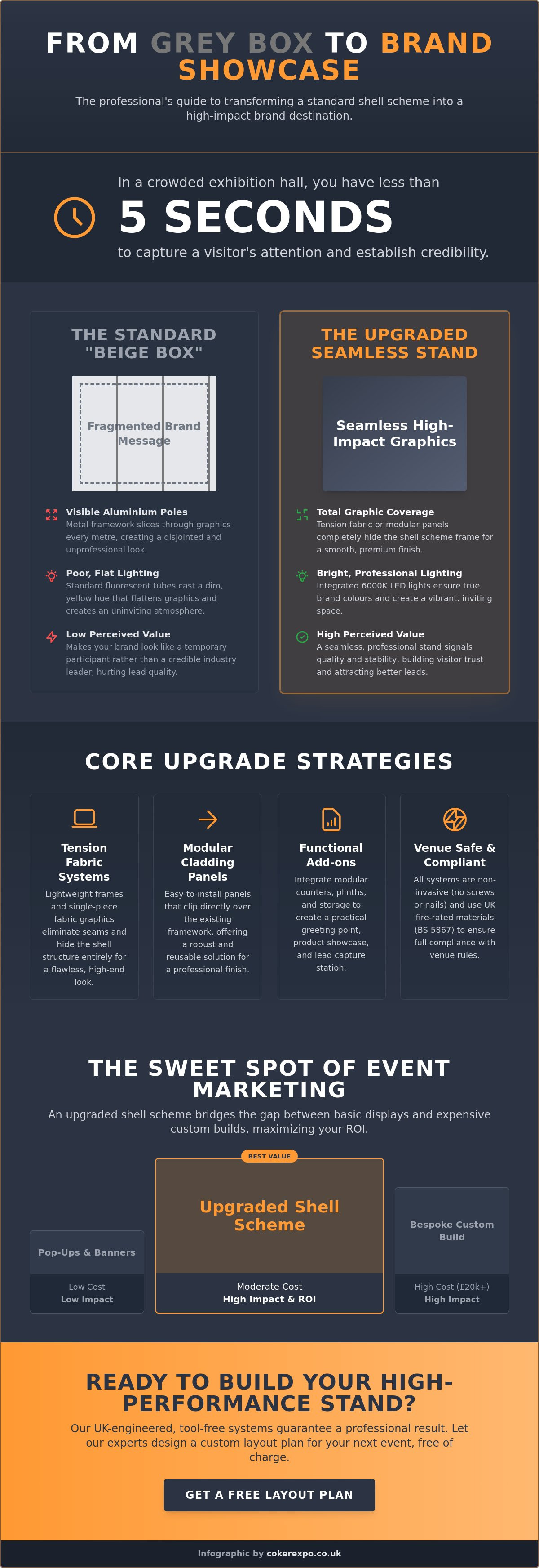
A standard shell scheme is often viewed as a restrictive "grey box", but research from the Center for Exhibition Industry Research indicates you have less than five seconds to capture a visitor's attention. You've likely experienced the frustration of standing behind a row of visible aluminium poles that disrupt your graphics and make your brand look identical to every other exhibitor in the hall. Upgrading a standard shell scheme is the most practical way to bridge the gap between a basic entry-level presence and a premium custom build without the bespoke price tag.
We understand that exhibition deadlines are unforgiving and floor space is a significant investment. This guide provides a professional roadmap for transforming those basic walls into a seamless, high-impact environment using modular hardware and tension fabric systems. You'll learn how UK-engineered, tool-free components allow you to hide the structural framework entirely while ensuring a fast, stress-free setup. We'll cover everything from architectural fabric graphics to integrated lighting to ensure your stand becomes a high-performance brand destination.
Key Takeaways
- Learn how to eliminate the "beige box" look by hiding unsightly aluminium poles with seamless fabric walling and integrated LED lighting.
- Discover cost-effective strategies for upgrading a standard shell scheme using modular hardware that mimics the impact of a bespoke custom build.
- Identify the most suitable upgrade tier for your marketing budget, ranging from high-impact graphic overlays to full structural modular transformations.
- Prepare for a flawless show day with a practical checklist covering tool-free assembly and technical considerations for systems like Octanorm and Sodem.
- Leverage UK-made hardware and expert design advice to ensure fast turnaround times and a robust, professional brand presence at any trade show.
What is a Shell Scheme and Why Should You Upgrade?
A standard shell scheme is the blank canvas of the exhibition hall, often called the "beige box" by industry veterans. It typically consists of a modular aluminium frame, 2.4-metre-high wall panels, and a fascia board featuring your company name in a standard typeface. While these packages are cost-effective, they are designed for utility rather than engagement. In a high-traffic environment like the NEC or ExCeL London, a basic stand often fails to capture attention because it lacks visual depth and brand personality. It makes your business look like a temporary participant rather than an industry leader.
Upgrading a standard shell scheme is about more than just aesthetics; it's a strategic move to build visitor trust. Psychology plays a major role in the trade show environment. Research from the Association of Event Organisers (AEO) indicates that visitors form an opinion on a brand's credibility within three seconds of seeing a stand. A professional, seamless appearance signals stability and quality. From a financial perspective, an upgrade represents the "sweet spot" of event marketing. It allows you to bridge the gap between low-cost pop-ups and bespoke builds that can easily exceed £20,000. You get a custom, high-end look for a fraction of the investment.
- Professional aesthetics drive higher footfall and better quality leads.
- Modular upgrades offer a reusable infrastructure for future events.
- A cohesive stand design eliminates the "cluttered" look of mismatched furniture and banners.
The Limitations of the Standard Package
Standard shell schemes are riddled with visual interruptions. The most significant issue is the visible aluminium poles that slice through your graphics every metre, fragmenting your brand message. Lighting is usually limited to a single fluorescent tube, which creates a flat, uninviting atmosphere. By applying modern exhibition stand design principles, you can hide these structural elements. Using tension fabric or modular cladding creates a smooth, high-performance finish that covers the framework entirely, giving the illusion of a permanent, bespoke build.
Venue Regulations and the "Non-Invasive" Rule
Venues are incredibly strict about how you interact with their equipment. Most organisers forbid exhibitors from using screws, nails, or permanent adhesives on the shell scheme panels. Damaging the hired frame results in heavy fines. To avoid these issues, many exhibitors source specialist supplies from Fosseway Tapes & Fixings Limited, who provide industrial-grade tapes and fixings that ensure a secure hold without damaging the venue's infrastructure. This is why upgrading a standard shell scheme requires a "non-invasive" approach. You should use free-standing modular systems or specialized clips designed to hang graphics without leaving a trace. All materials must also comply with UK health and safety standards, specifically BS 5867 for fire-retardant fabrics. Using a professional system ensures you stay compliant while achieving a premium look.
Core Strategies for Upgrading a Standard Shell Scheme
Upgrading a standard shell scheme requires a shift from simply filling a space to creating a bespoke environment. Most exhibitors rely on the basic aluminium grid provided by the organiser, which often interrupts branding every 1000mm. Successful stands hide this framework entirely. By using high-quality shell scheme graphic panels that mount over the poles, you convert a segmented booth into a smooth, professional canvas. This approach eliminates the "industrial" look of the venue hardware and allows your brand identity to take centre stage.
Lighting is the most overlooked tool for differentiation. Standard 5ft fluorescent tubes provided by contractors are often dim and cast a yellow hue that flattens your graphics. Professionals replace these with 6000K LED arm lights or backlit systems to ensure colour accuracy. Beyond aesthetics, functional additions like modular counters and plinths add necessary depth. These elements serve three purposes: they provide secure storage for brochures, create a natural greeting point for leads, and offer a platform for physical product demonstrations. A 1000mm high counter isn't just furniture; it's a strategic boundary that facilitates professional engagement.
If you're unsure which hardware fits your specific booth dimensions, speak to our technical team for a custom layout plan.
Tension Fabric Systems (TFS) for Total Coverage
Tension Fabric Systems are the gold standard for exhibitors who want to vanish the shell scheme entirely. These lightweight aluminium frames support a single, unbroken piece of dye-sublimated fabric. Because the fabric is stretched tight via a silicone edge, there are no visible joins or reflections from overhead hall lights. It's a robust solution that fits within the footprint of your allocated space. Most of our UK-made TFS kits feature tool-free assembly, allowing one person to skin a 3m wall in under 20 minutes without specialist contractors.
Illuminating Your Brand with Lightboxes
Strategic placement of lightboxes can increase stand footfall by up to 40% compared to non-illuminated displays. LED backlighting ensures that your primary message remains visible even in poorly lit corners of an exhibition hall. While static lightboxes provide a crisp, high-contrast look, dynamic versions can use programmed lighting sequences to draw the eye toward specific products. For a standard 3x3m stand, a single 2m high lightbox positioned on the back wall creates a powerful focal point that defines the entire space.
Upgrade Tiers: Choosing the Right Level for Your Budget
Selecting the right investment level is critical when upgrading a standard shell scheme. Your choice depends on your exhibition frequency and brand objectives. We categorise these upgrades into three distinct tiers to help you balance impact with expenditure. According to industry data, 76% of attendees are more likely to visit a stand that looks professional and cohesive rather than one relying on basic venue-supplied materials.
- Tier 1: Basic Graphic Overlay – This is the most cost-effective entry point. It involves using high-quality PVC or foam-board infill panels that fit directly into the shell scheme uprights. It ensures 100% brand visibility without structural changes.
- Tier 2: Modular Transformation – This level uses tension fabric systems (SEG) to cover the aluminium poles entirely. It creates a seamless, wall-to-wall graphic finish. Incorporating LED long-arm lights at this stage can increase stand engagement by up to 30%.
- Tier 3: The "Custom" Look – This tier mimics a bespoke build. It includes full-height graphics, integrated AV screens, and hidden storage areas. It's designed for brands that want to dominate the hall floor without the waste of a traditional timber build.
When evaluating ROI, consider your spend per square metre. A typical UK shell scheme upgrade ranges from £250 to £500 per square metre. If you're attending three or more shows annually, the cost per show drops significantly as you reuse the same hardware and graphics.
The "Custom-Look" Framework
To achieve a high-end aesthetic, you must break the "box" feel of the shell scheme. Removing the fascia board is a simple yet effective tactic. Most organisers allow this if you have a self-supporting structure inside. It creates an open, airy environment that feels like a space-only plot. For overhead branding that draws the eye from across the hall, many professionals use truss truss systems. These robust gantry structures support heavy lighting rigs and large-scale banners. Finish the look with raised flooring and furniture that matches your brand's colour palette to ensure a unified professional presence.
Comparing Costs and Build Times
Time is a hidden cost in the exhibition industry. A Tier 1 graphic installation usually takes one person about 45 minutes. In contrast, a Tier 3 modular setup might require 3 hours for a two-person team. However, our modular systems focus on tool-free assembly, which slashes labour costs and eliminates the need for specialist contractors.
Transport is another major factor. Traditional wooden panels require a Luton van and professional movers. Modular upgrades are designed for portability; a full 3x3 metre stand can often fit into the back of a standard estate car. This portability, combined with the fact that fabric graphics are washable and replaceable, makes upgrading a standard shell scheme a sustainable long-term business investment. You save on storage, shipping, and replacement costs over a two-year event cycle.
Practical Checklist for a Tool-Free Stand Upgrade
Success in upgrading a standard shell scheme depends on precision planning before you arrive at venues like the NEC or ExCeL London. You must identify the specific aluminium system provided by the organiser. While Octanorm is the UK industry standard, systems like Sodem or Burkhardt Leitner have different groove depths and pole widths. A 10mm discrepancy in your graphic measurements can lead to buckling or unsightly gaps between panels. Your goal is a seamless finish that hides the framework entirely.
Technical Specifications to Check
Always request the "internal clear" dimensions from the exhibitor manual. A standard 3m x 3m shell scheme provides less usable wall space because the aluminium uprights occupy roughly 15mm to 50mm of every corner and mid-section. If you're using tension fabric graphics, the frame must be calibrated to these internal measurements to avoid the "too big" trap where hardware won't fit between the poles.
- Power: Ensure your LED arm lights don't exceed the wattage limits of your basic socket strip. A standard 500W supply is common, so check your total draw.
- Fire Safety: All fabrics and PVC substrates must meet UK fire regulations, specifically BS5867 Part 2 Type B. Venue health and safety officers often perform spot checks on certifications.
The Essential Tool-Free Toolkit
Tool-free assembly is a non-negotiable requirement for modern exhibitors. It eliminates the need for expensive on-site contractors and reduces your build time to under two hours. Most modular systems now use thumb-screws or high-performance tension locks that click into place without a single hex key. This speed is vital when you've a limited window for setup before the hall opens.
Managing the "fascia removal" process is a critical step in upgrading a standard shell scheme. Most organisers allow the removal of the name board and front cross-pole if your stand is structurally independent. This opens up the space and creates a more bespoke, "space only" feel. For smaller stands or high-traffic areas where you need to distribute literature quickly, folding display boards serve as excellent quick-access information hubs that require zero technical expertise to deploy.
The breakdown should be as efficient as the build. High-quality modular kits pack into wheeled transit cases that fit into a standard estate car. This eliminates the £200 to £500 courier fees often associated with rigid panels or palletised freight. By choosing reusable, UK-made hardware, you ensure your investment remains protected for multiple show cycles.
Ready to transform your next event?
Explore our range of modular exhibition stand solutions
Professional Results with CokerExpo Modular Systems
CokerExpo operates as a Practical Specialist in the exhibition industry. We don't just provide hardware; we deliver the structural foundation for your brand's success. By manufacturing our hardware within the UK, we maintain total quality control and offer the fast turnaround times required for the high-pressure trade show environment. This local expertise ensures that every component meets rigorous standards for durability and performance, allowing you to focus on your marketing objectives rather than equipment failure.
Our bespoke modular designs allow for maximum flexibility when upgrading a standard shell scheme. We adapt our systems to fit your specific footprint precisely, ensuring no space is wasted. From the initial hardware supply to full event management and planning, our team handles the technical complexities. Whether you're exhibiting at the NEC Birmingham or ExCeL London, our systems provide a seamless, professional finish that completely masks the basic aluminium poles of a shell scheme. We provide the tools to turn a 3x3 metre box into a high-impact brand experience.
Why CokerExpo is the Preferred Partner for UK Exhibitors
Efficiency is the cornerstone of a successful show morning. We specialise in tool-free assembly systems that eliminate the need for complex manuals or expensive hired labour. Our comprehensive range includes high-impact LED lightboxes, Tension Fabric Systems (TFS), and robust promotional counters designed for the national trade show circuit. These elements offer reliable performance across multiple venues. Our clients benefit from hardware that's as easy to transport as it is to build, making the transition from delivery van to finished stand effortless and stress-free.
Next Steps: Transforming Your Next Event
Visualising your space is a critical part of the planning process. We provide a detailed 3D visual of your stand to show exactly how upgrading a standard shell scheme with our modular components will look before you commit. During our consultation, we'll advise on the best graphic substrates, such as silicone edge graphics or rigid panels, and the most effective lighting configurations to draw footfall. We take the guesswork out of exhibition planning by providing clear, technical advice grounded in decades of industry experience.
Ready to move beyond the basic booth? Upgrade your exhibition presence with CokerExpo today and see how our modular systems can redefine your trade show results.
Transform Your Next Exhibition Presence
A standard shell scheme is a blank canvas, but it doesn't have to limit your brand's potential. By focusing on high-impact modular systems and seamless tension fabric graphics, you can hide unsightly poles and create a bespoke look without the custom-build price tag. Speed and efficiency are non-negotiable in the trade show environment. This makes tool-free, rapid-assembly hardware the smartest investment for marketing managers who value their time and professional results.
Coker Expo has been a leader in the display industry since 1999. We understand that reliability is everything when the doors open. Our specialists design and manufacture our hardware right here in the UK, ensuring a fast turnaround and robust quality you can trust. Upgrading a standard shell scheme is the most effective way to elevate your professional image while maintaining the flexibility of a modular setup. Our decades of industry expertise ensure your stand is both impactful and easy to manage.
Explore our full range of shell scheme upgrade solutions and see how our technical authority can work for your business. We're ready to help you stand out from the crowd with confidence.
Frequently Asked Questions
Can I remove the fascia board from my shell scheme stand?
You can usually remove the fascia board, but you must obtain written permission from the event organiser first. Removing this header rail creates an open, inviting space that avoids the boxed-in look. In 90% of UK trade shows, the fascia is a non-structural element. If you remove it, ensure your stand remains structurally sound and that you've accounted for the loss of the name board by integrating branding into your wall graphics.
How do I know which shell scheme system the venue is using?
Identify your system by checking the technical section of your Exhibitor Manual or contacting the appointed shell scheme contractor directly. Octanorm and Sodem are the two most common systems used in UK venues like the NEC or ExCeL London. Knowing the specific profile is vital for upgrading a standard shell scheme because bracket fittings and panel dimensions vary by 2mm to 5mm between different manufacturers.
What is the best way to hide the aluminium poles on a shell scheme?
The most effective way to hide aluminium uprights is by using a tension fabric system or shell-clad clips that mount graphics over the poles. These methods create a seamless, wall-to-wall finish that covers the 50mm vertical extrusions entirely. By using 3mm PVC or 220gsm polyester fabric, you transform a basic frame into a smooth, professional backdrop that mimics a bespoke timber build without the associated labour costs.
Do I need special permission from the organiser to upgrade my stand?
You need permission for any modification that alters the structural integrity or exceeds the standard 2.4m height limit. Internal upgrades like clip-on panels or freestanding modular displays usually don't require formal approval. However, if your upgrading a standard shell scheme involves removing ceiling grids or fascia, you must submit a Risk Assessment and Method Statement (RAMS) to the organiser at least 30 days before the event.
How much time should I allow for a modular shell scheme upgrade?
Allow between 2 and 4 hours for a standard 3m x 3m modular upgrade. While our systems focus on tool-free assembly for speed, initial alignment and cable management for integrated lighting take time. A two-person team can typically install a full-wall tension fabric graphic in under 45 minutes. Always schedule your arrival for at least 6 hours before the hall closes to account for any logistical delays at the loading bay.
Can I reuse my shell scheme graphics at different shows?
You can reuse your graphics if the subsequent shows use the same shell scheme dimensions and system type. Most UK organisers standardise on 950mm or 970mm panel widths, so check these measurements before reprinting. High-quality 400-micron stop-light media or tension fabrics are durable enough for 5 to 10 uses if stored correctly in protective tubes to prevent creasing or edge damage during transit.
What lighting is best for a shell scheme upgrade?
LED arm lights with a 5000K daylight colour temperature are the best choice for clarity and energy efficiency. These 12W or 24W units provide consistent coverage without the heat generated by old halogen bulbs. For a premium look, consider backlit LED lightboxes. These units use internal perimeter lighting to make fabric graphics pop, ensuring your stand remains visible even in dimly lit corners of large exhibition halls.
Is it cheaper to upgrade a shell scheme or buy a pop-up stand?
Upgrading a shell scheme is often more cost-effective than buying a high-end pop-up stand when you consider the professional finish. While a basic pop-up might have a lower initial price, a modular upgrade provides a flat, seamless appearance that hides the frame entirely. Research from UK trade bodies suggests that stands with integrated, high-impact graphics see a 30% increase in footfall compared to those using basic portable displays.
Einen Kommentar hinterlassen