

Guide to Rigid Media Printing: Choosing the Right Boards
The most expensive exhibition graphic isn't the one with the highest initial price; it's the one that arrives at the venue with a crushed corner or proves too heavy for your shell scheme frame. Professional rigid media printing requires more than just high-resolution imagery. It demands a technical understanding of how different substrates perform under the logistical pressures of transport and assembly. You've likely faced the frustration of boards that warp under hall lights, or the logistical headache of a display that's simply too heavy for your team to mount safely.
We understand that reliability is your primary concern when investing in event infrastructure. This guide provides a practical breakdown of the UK's leading display boards, from the versatile resilience of DiBond to the lightweight efficiency of Foamex. You'll learn how to select the perfect substrate to ensure a professional look that lasts for multiple events, while also navigating the latest eco-friendly requirements. We will examine the specific mechanical properties of each material, helping you master the price-to-durability ratio for a seamless, high-impact exhibition presence.
Key Takeaways
- Understand why rigid media printing is the professional standard for achieving a perfectly flat, premium finish that won't curl or warp under exhibition hall lighting.
- Compare the technical specifications of Foamex, DiBond, and Acrylic to find the ideal balance between transport weight and long-term durability.
- Identify the correct substrates for your specific environment, whether you need fire-rated boards for indoor UK venues or weather-resistant materials for outdoor displays.
- Discover how to integrate rigid panels with existing exhibition hardware like lighting trusses and folding boards for a more robust and professional stand structure.
- Master the logistical side of display management, ensuring your graphics are easy to mount, simple to transport, and built to last through multiple event cycles.
What is Rigid Media Printing and Why Does it Matter for Your Brand?
Direct-to-substrate rigid media printing is a process where high-resolution inks are cured directly onto sturdy materials like PVC, aluminium, or wood. This technology, powered by industrial wide-format printers, creates a permanent bond between the graphic and the substrate. For B2B decision-makers, rigid media printing represents a shift from temporary, flimsy signage to durable display infrastructure. These boards are the standard for trade shows, retail point-of-sale displays, and professional directional signage.
The primary advantage of choosing rigid over flexible media is structural integrity. Flexible banners often suffer from curling edges, which can make a premium brand look neglected. Rigid boards provide superior flatness and a "built-in" look that integrates seamlessly with existing hardware. This is particularly critical for shell scheme graphic panels, where the substrate must withstand the bumps and scrapes of a high-traffic exhibition hall.
The Shift from Flexible Banners to Professional Boards
Expert UK exhibitors are moving away from traditional roller banners in favour of a more permanent, architectural appearance. This transition is driven by the need for visual precision. Unlike vinyl, which can stretch or distort over time, rigid panels maintain perfect alignment across large-scale displays. This allows for complex graphics to span multiple boards without breaking the visual flow. When planning your exhibition stand design, boards offer higher colour saturation and reduced glare. This ensures your messaging remains clear under the harsh overhead lighting common in venues like the NEC or ExCeL.
Durability vs. Portability: Finding the Balance
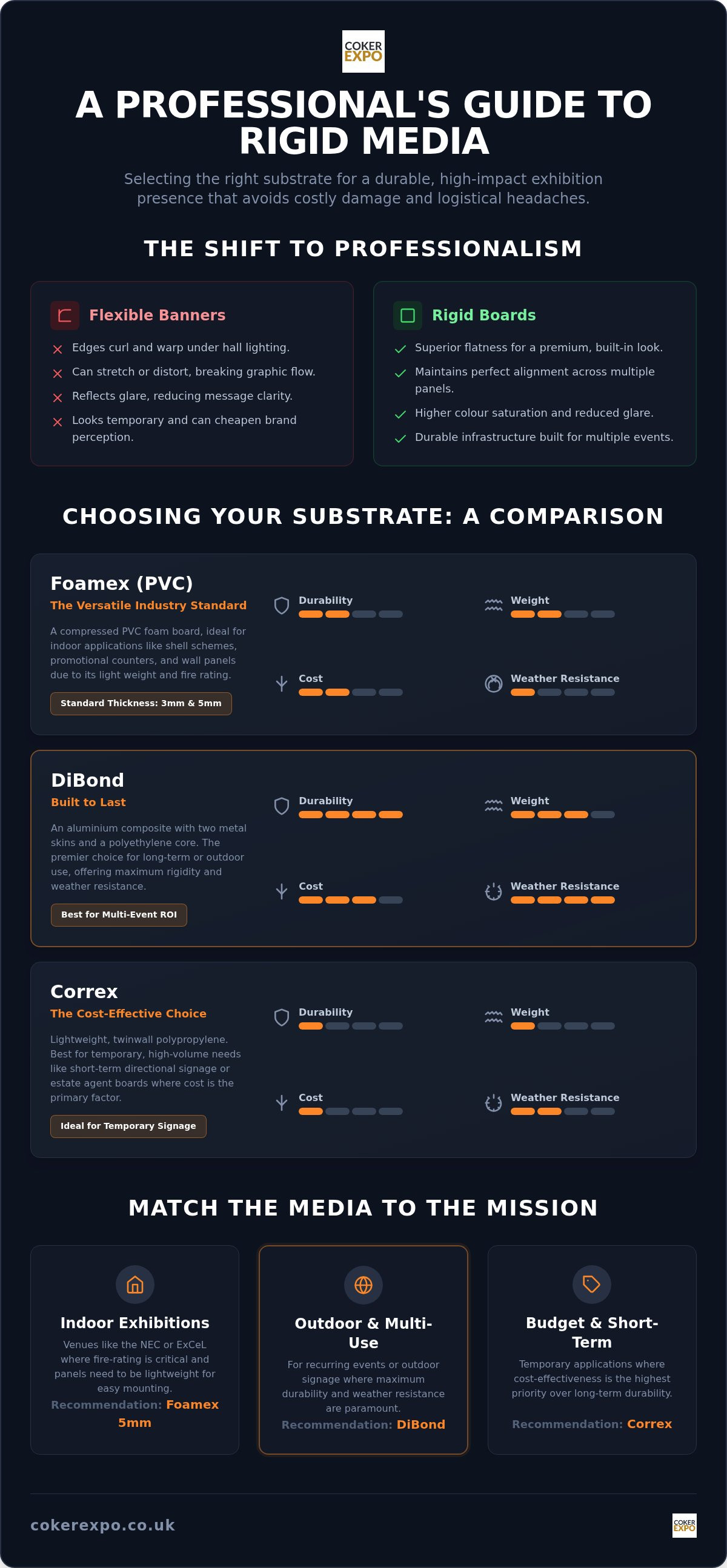
Matching the board thickness to your logistical needs is a key part of the procurement process. Substrates typically range from 3mm to 10mm. While thicker boards offer more impact resistance, they also increase transport weight and require more robust mounting solutions. For temporary indoor presentations, lightweight foam boards are an efficient choice. However, for recurring events, aluminium composite boards like DiBond offer a better return on investment. They possess the resilience to survive multiple transport cycles; cheaper, thinner substrates often need replacing after a single show due to corner damage or warping.
Comparing Core Materials: Foamex, DiBond, and Acrylic
Selecting the correct substrate for rigid media printing is a technical decision that impacts both your budget and your brand's physical presence. While various Sign Materials offer different aesthetic finishes, the mechanical properties of each board determine its suitability for specific environments. For temporary, high-volume needs, Correx serves as a cost-effective choice. This white twinwall polypropylene is lightweight and weather-resistant, making it ideal for short-term directional signage or estate agent boards where longevity isn't the primary concern.
Foamex PVC Signs: The Industry Standard
Foamex is the versatile workhorse of the UK exhibition sector. These compressed PVC foam boards are popular because they are fire-rated, easy to drill for mounting, and can be custom-cut into complex shapes. While 3mm panels offer a budget entry point starting at approximately £23.0, the 5mm variant is the standard for shell scheme graphic bundles. It provides the necessary rigidity to stand flat against venue walls without the weight of heavier composites. It's the ideal choice for promotional counters and indoor wall panels that require a clean, matte finish.
Printed Aluminium Signs (DiBond): Built to Last
DiBond is an aluminium composite material featuring two thin aluminium skins bonded to a polyethylene core. This sandwich construction delivers maximum rigidity with minimal thermal expansion, making it the premier choice for outdoor event signage and long-term site hoarding. The surface allows for high-resolution printing that preserves fine technical details or luxury product imagery. Its weatherproof properties ensure it won't warp or delaminate when exposed to rain or UV light. It represents a sound investment for infrastructure that must survive multiple transport cycles.
Acrylic and Perspex: The Premium Aesthetic
For luxury branding and high-end retail displays, Acrylic provides a high-gloss, crystal-clear quality. By reverse-printing onto clear acrylic sheets, you achieve a depth of field effect that protects the graphic behind a shatter-resistant, glass-like surface. This 5mm substrate is frequently used for feature walls in corporate lobbies or premium lighted displays where a "splash back" style is desired. If you aren't sure which material fits your stand requirements, you can browse our full range of professional rigid boards to compare technical specifications and weight profiles.
Selecting Media Based on Your Exhibition Environment
Choosing the right substrate for rigid media printing requires a precise assessment of the environmental stressors your display will face. An indoor shell scheme at the NEC has vastly different requirements than a directional sign at an outdoor festival. While aesthetic appeal is important, your choice must prioritise safety regulations, weight limits, and weather resistance to ensure your investment remains intact throughout the event cycle.
Weatherproofing and UV Resistance
For outdoor applications, managing wind, rain, and UV exposure is critical. DiBond remains the industry leader for long-term outdoor resilience. Its aluminium skins prevent the board from warping in direct sunlight, while UV-stable digital printing ensures your brand colours don't fade during national UK tours. For temporary outdoor placards, Correx is a practical alternative. This "white twinwall" polypropylene is waterproof and lightweight, making it easy to cable-tie to fences or posts. However, for any display facing significant wind loading, the structural rigidity of a composite board is essential to prevent the panel from buckling.
Sustainable and Lightweight Alternatives
The UK event sector is seeing a rapid shift towards sustainable infrastructure. The market for eco-friendly print materials is projected to reach $11.5 billion by 2030, according to industry research, driven by stricter corporate environmental goals. Printed cardboard display products offer a 100% recyclable solution for short-term branding. These boards are incredibly lightweight, which simplifies transport and reduces your carbon footprint. For office environments or directional signs where heavy mounting isn't possible, foam board provides a clean finish without the weight of PVC. Disposing of these graphics responsibly after a show is much simpler when using paper-based substrates.
Specialist Surfaces and Magnetic Solutions
Bespoke brand experiences often require more than standard plastic boards. Printing to wood creates a natural, high-end aesthetic perfect for lifestyle brands or rustic event themes. If your messaging needs to change frequently, magnetic sheets and custom-shaped magnetic signs allow for swappable graphics that snap directly onto metal surfaces. This flexibility is ideal for promotional counters where offers change daily. Whether you need the industrial strength of metal or the eco-credentials of cardboard, you can browse our full range of Rigid Boards and Signage from Coker Exhibition Systems Ltd (CokerExpo) to find the exact match for your next venue.
Professional Mounting and Integration with Exhibition Hardware
Professional rigid media printing is only as effective as the mounting system used to secure it. A high-quality board requires a precise fixing method to ensure it remains level, secure, and visually integrated with your stand structure. Whether you are attaching panels to folding display boards for a modular presentation or securing large-scale aerial branding to an exhibition lighting truss, the choice of adhesive or hardware is a critical technical decision. The goal is to move beyond standalone signage and create a unified, architectural environment.
Different substrates require specific fixing solutions to maintain their aesthetic integrity. Heavy-duty Velcro or magnetic tape is ideal for Foamex and Correx, allowing for rapid assembly and dismantling. For premium Acrylic displays, stainless steel standoff bolts provide a professional "floating" effect that adds physical depth to your branding. When transporting large format boards across the UK, use dedicated panel bags or flight cases. Edge protectors are essential; even a minor impact during transit can dent the corners of a DiBond sheet or crack the edge of an Acrylic panel, compromising the entire display.
Mounting Boards to Shell Schemes
Transforming a standard shell scheme into a bespoke environment involves covering the aluminium uprights with rigid panels. By using 5mm Foamex panels cut to the exact height of the shell scheme, you can create a "seamless" wall that hides the metal frame. It is vital to check the load-bearing capacity of the venue's framework before installation. While rigid media printing on lightweight PVC is generally safe, double-layering or using heavy wood substrates may require additional structural support. For exhibitors who need to swap messaging between sessions, magnetic sheets offer a fast-change solution that snaps directly onto the metal-framed structures without damaging the venue's property.
Finishing Touches for a Professional Look
The final impact of your display often depends on the precision of the finishing. Digital plotting allows boards to be "cut to shape," moving away from standard rectangles to create 3D brand logos or contoured headers. For high-end retail and corporate lobbies, investing in polished edges for Acrylic sheets is highly recommended; it removes the dullness of the saw cut and allows light to travel through the material. Combining these finished boards with LED exhibition lighting further enhances visibility. A well-placed spotlight or backlit panel ensures your rigid graphics remain the focal point of a crowded exhibition floor, projecting a sense of total reliability and craftsmanship.
Upgrade Your Exhibition Infrastructure with Professional Boards
Investing in the right substrate is a strategic decision that balances physical durability with logistical ease. We've explored how selecting between lightweight Foamex, resilient DiBond, or premium Acrylic ensures your display remains flat and impactful throughout a high-pressure event. Mastering rigid media printing isn't just about the graphic; it's about matching the material's mechanical properties to your specific venue requirements and mounting hardware to achieve a seamless, built-in look.
Our UK-based production facility provides custom cutting and digital plotting to meet your exact specifications. This ensures every panel fits your shell scheme or lighting truss perfectly. We focus on durable materials designed for repeat exhibition use, helping you maintain a professional finish that withstands the rigours of transport across multiple event cycles. With fast UK-wide shipping available on all orders, you can secure the essential infrastructure needed for your next show with total confidence. Our team is ready to handle bespoke requests to help you create a truly unique brand experience.
Shop the CokerExpo Rigid Board Collection today and ensure your brand makes a lasting, professional impression at your next event.
Frequently Asked Questions
What is the best rigid material for outdoor exhibition signs?
DiBond is the premier choice for outdoor rigid media printing due to its aluminium composite construction. It resists thermal expansion and UV degradation, ensuring graphics remain vibrant during UK winters. For temporary placards or short-term directional signage, Correx offers a waterproof, cost-effective alternative. While Correx is lighter, DiBond provides the structural integrity needed for high-wind environments and long-term site hoarding where resilience is a non-negotiable requirement.
Can I print on both sides of a rigid board?
Yes, most professional substrates support double-sided graphics. This is a common requirement for hanging displays, directional bollards, and freestanding plinths where the board is visible from multiple angles. We use high-opacity inks to prevent ghosting or "show-through" between sides. This technique is particularly effective with 5mm Foamex or DiBond, providing a robust solution for high-traffic aisles where 360-degree brand visibility is essential for maximum stand impact.
How do I choose between Foamex and DiBond for my exhibition stand?
The decision depends on your event frequency and venue environment. Foamex is the industry standard for indoor shell schemes because it's lightweight and cost-efficient for one-off shows. If you plan to reuse your graphics across multiple national events, DiBond is a superior investment. Its aluminium skins prevent corner damage and warping during transit. Choose Foamex for easy mounting on temporary frames and DiBond for long-term resilience and a more premium finish.
Are rigid boards easy to transport for national UK events?
Transporting rigid boards is straightforward if you use the correct protection. Lightweight materials like Foamex and foam board are easily handled by a small team and fit into standard van dimensions. For larger rigid media printing projects, we recommend using dedicated panel bags or flight cases to prevent edge damage. Our UK-based production ensures that all boards are packed securely for national fulfilment, arriving at your venue ready for immediate assembly.
What is the most eco-friendly rigid media option for trade shows?
100% recyclable printed cardboard is the most sustainable choice for modern trade shows. As the industry moves toward stricter environmental standards, paper-based boards offer a low-carbon alternative to traditional plastics. These boards are lightweight, reducing transport emissions, and can be disposed of in standard recycling streams after the event. They provide a professional, matte finish suitable for indoor displays, directional signage, and temporary promotional plinths that require an eco-conscious footprint.
How do I mount an Acrylic sign to a wall or exhibition frame?
Acrylic signs are typically mounted using stainless steel standoff bolts to create a high-end "floating" effect. This involves drilling four corner holes and securing the panel away from the wall or frame. For exhibition stands where drilling isn't permitted, high-bond double-sided tape or heavy-duty Velcro can be used on the reverse of the panel. Ensure the mounting surface is clean and level to support the weight of the 5mm acrylic sheet safely.
Laisser un commentaire