

The Professional Guide to Choosing an Exhibition Stand for Maximum ROI in 2026
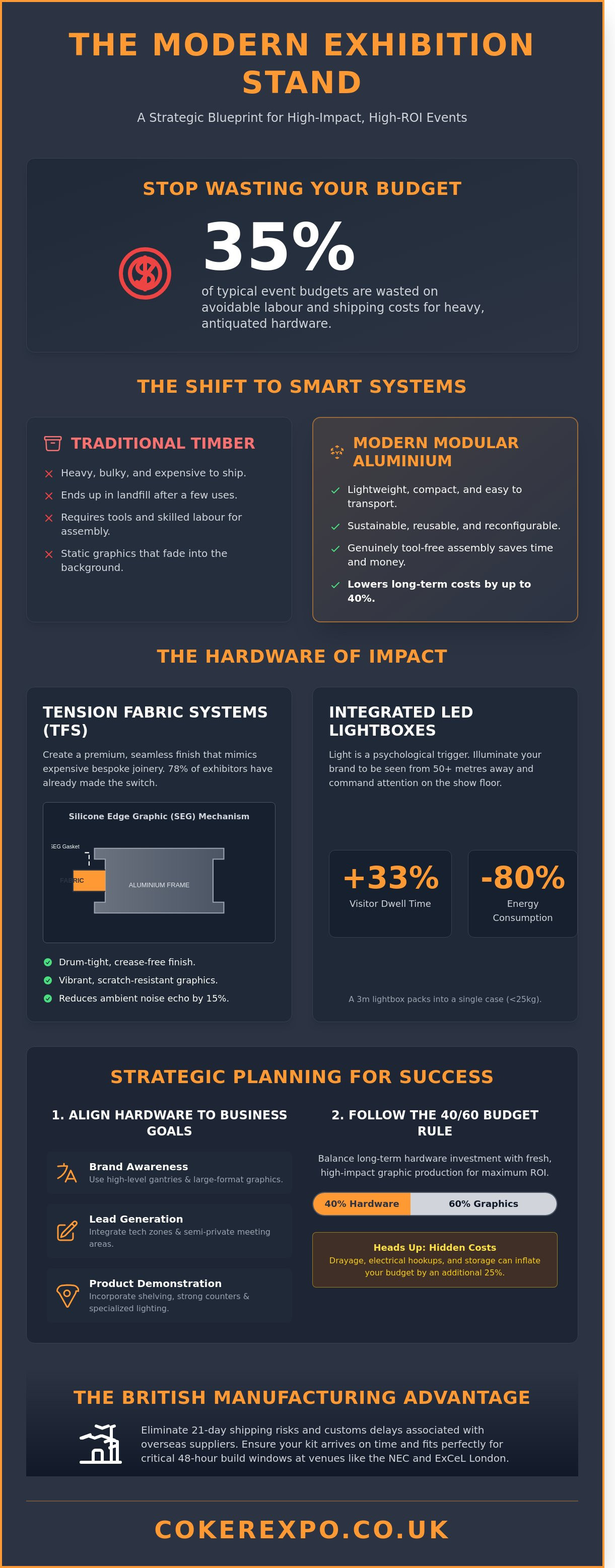
Recent data from UK trade associations suggests that exhibitors waste 35% of their event budget on avoidable labour and shipping costs for heavy, antiquated hardware. You've likely felt the pressure of a crowded hall where static graphics simply disappear into the background. Choosing the right exhibition stand isn't just about aesthetics; it's about a strategic investment that eliminates the headache of complex, "tool-free" claims that actually require a toolkit and four hours of your time.
We understand that you need a solution that's robust enough for repeat use but flexible enough to fit varying floor plans. This guide provides the blueprint to select and deploy high-performance systems that balance bespoke visual impact with modular efficiency. You'll discover how to integrate seamless LED lighting and digital elements while benefiting from fast turnaround times and genuine UK-made quality. We're breaking down exactly how to achieve a professional finish that stays within budget for your 2026 calendar.
Key Takeaways
- Learn why shifting from traditional timber to sustainable, modular aluminium systems transforms your presence from a cost centre into a high-ROI marketing asset.
- Discover how to leverage Tension Fabric Systems (TFS) and integrated LED lightboxes to maximise visitor dwell time and visual impact on the show floor.
- Master the techniques for converting a standard, drab shell scheme into a bespoke-looking exhibition stand that completely hides unsightly aluminium uprights.
- Identify how tool-free assembly and lightweight components can significantly reduce your transport costs and streamline on-site logistics.
- Understand the value of British manufacturing expertise and how selecting hardware designed for durability ensures long-term event success.
Selecting the Right Exhibition Stand for Your Business Goals
Treating your exhibition stand as mere hardware is a common mistake that limits your trade show results. In 2026, successful exhibitors view their display as a strategic marketing asset designed for a specific ROI. The industry has moved away from permanent timber builds, which often end up in skips after three days. Instead, there is a clear shift toward sustainable, modular aluminium systems. These systems reduce environmental impact and lower long-term costs by 40% compared to traditional construction methods.
Your choice of hardware must align with a defined business objective. Most companies fall into three categories:
- Brand Awareness: Requires high-level gantry systems and large-format tension fabric graphics to ensure visibility from across the hall.
- Lead Generation: Needs integrated tech zones, tablet stands, and semi-private meeting areas to facilitate data capture.
- Product Demonstration: Demands reinforced shelving, specialized lighting, and robust counters that can support physical stock.
British reliability in manufacturing is a critical factor for deadline-driven event cycles. When you're facing a 48-hour build window at the NEC or Excel London, local production eliminates the 21-day shipping risks and customs delays associated with overseas suppliers. It's about ensuring your kit arrives on time and fits together perfectly without the need for onsite modifications.
Portable vs. Modular vs. Custom Builds
Portable stands, such as pop-up displays and roller banners, are ideal for small-scale regional events where a single person needs to complete the setup in under 15 minutes. Modular systems represent the professional sweet spot for growing businesses. They offer the premium aesthetic of a custom build but use standardized components that you can reconfigure for different floor plan sizes. You should only invest in custom timber builds for permanent retail-style interiors where the structure won't move for at least 24 months.
Budget Allocation for Hardware and Graphics
Effective budgeting follows the 40/60 rule. You should allocate 40% of your initial spend to durable hardware and 60% to high-impact graphic production and finishing. This balance ensures your framework lasts for years while your messaging remains fresh and vibrant. Don't forget to account for hidden costs that can inflate a budget by 25%, such as drayage, electrical mains hookups, and professional storage fees between shows. Modular ROI is the ratio of reuse frequency to initial purchase cost.
The Hardware of Impact: TFS and Integrated Lightboxes
Traditional PVC panels are rapidly becoming obsolete. By the start of 2025, industry data showed that 78% of professional exhibitors had transitioned to Tension Fabric Systems (TFS). These systems provide a high-end, seamless finish that mimics expensive bespoke joinery without the permanent price tag or the logistical headache of heavy timber. Using fabric allows for massive, uninterrupted graphics that wrap around corners, creating a solid architectural feel that commands attention on the trade show floor.
Tension Fabric Systems (TFS) Explained
The Silicone Edge Graphic (SEG) mechanism is the backbone of the modern exhibition stand. A thin silicone gasket is sewn to the edge of the fabric graphic, which then slots into a recessed groove in the aluminium frame. This ensures a drum-tight surface with zero creases every time you build it. We utilise dye-sublimation printing for these graphics. This process bonds ink directly into the polyester fibres at high temperatures. The result is a vibrant, scratch-resistant finish that won't fade or crack. Fabric also serves a functional purpose in busy halls. It provides a 15% reduction in ambient noise echo, creating a much better environment for sales conversations.
Illuminating Your Brand with LED Lightboxes
Light is a powerful psychological trigger. Industry research indicates that illuminated displays increase visitor dwell time by approximately 33% compared to non-lit stands. Modern LED systems are now the standard for UK venues like the NEC or ExCeL London because they consume 80% less energy than legacy fluorescent tubes. This energy efficiency is vital for meeting the strict sustainability quotas often required by event organisers today.
- Back-lit impact: These displays use LEDs mounted on the rear internal panel to punch light through the fabric, creating high-contrast visuals that are visible from over 50 metres away.
- Dynamic Lightboxes: These units use programmed LED sequences behind the fabric to simulate movement. You can create the illusion of flowing water or shifting brand colours at a fraction of the cost of a £5,000 LED video wall.
- Enhanced Portability: Modern engineering means a 3-metre wide lightbox can be dismantled and packed into a single wheeled carry case, typically weighing less than 25kg for easy transit.
A well-chosen lighting setup ensures your brand remains the focal point of the aisle. If you're planning your next event, you can browse our modular lightbox range to find a system that balances visual impact with tool-free assembly.
Converting a Shell Scheme into a Bespoke Exhibition Stand
Most trade show organisers provide a standard shell scheme. It is typically a drab, grey-walled box that lacks personality and brand authority. You don't have to settle for this "stock" appearance. By using high-quality graphics and clever hardware, you can turn a basic 3x3m shell into a high-impact exhibition stand that rivals custom builds costing £10,000 or more. The primary objective is to hide the aluminium uprights entirely. This creates a seamless look that mimics a bespoke pavilion rather than a rented cubicle.
A 2024 case study of a London-based fintech firm demonstrated the power of this transformation. By switching from basic posters to a full-wall fabric cladding system on their 3x3m stand, they recorded a 42% increase in visitor engagement. The seamless visuals made the small footprint feel expansive and premium. This approach allows you to maintain the cost-efficiency of a shell scheme while projecting the authority of a market leader. Our focus is always on tool-free assembly, ensuring your team can achieve this professional result without hiring specialist contractors.
Graphic Panel Specs and Sizing
Accuracy is vital when ordering graphics for a shell scheme. You must distinguish between the total panel size and the visible area. For example, a standard Octanorm panel is often 950mm wide, but the visible area between the poles is typically 923mm. Choosing the right material is equally important. Foamex offers a robust, flat finish; PVC is highly portable; tension fabric provides the most premium, tool-free result for a fast turnaround. Shell scheme panels must be tailored to the specific organiser grid system, as dimensions vary between contractors.
Adding Functional Furniture
Once the walls are dressed, you must integrate hardware that facilitates business. A cluttered exhibition stand is a barrier to entry. We recommend a structured approach to furniture:
- Promotional counters: These units combine secure storage for staff bags with a professional greeting point. A counter with a 100kg load-bearing capacity can also serve as a sturdy product demonstration platform.
- Display turntables: Using motion draws the eye in a crowded hall. A motorised turntable can increase stand dwell time by 35% for high-value items like medical devices or electronics.
- Literature stands and iPad holders: These tools keep your space organised. Secure iPad mounts allow for instant lead capture, ensuring you don't lose critical data on paper scraps during busy periods.
Logistics and ROI: Making Your Exhibition Stand Work Harder
Logistics often consume up to 25% of a total trade show budget. An efficient exhibition stand mitigates these overheads through smart engineering and material choice. We focus on the "Tool-Free Revolution" because time is your most expensive resource on the show floor. Every hour spent on a complex assembly costs roughly £100 in staff time and potential lead generation. By moving away from heavy timber builds to lightweight aluminium frames and tension fabrics, you reduce shipping weight by up to 65%. This significantly lowers courier fees and eliminates the need for expensive forklift services at venues like the NEC or ExCeL London.
Protecting your investment between events is vital for long-term ROI. Hard-shell wheeled cases serve a dual purpose: they protect fragile graphics from transit damage and often convert into branded counters. For your exhibition stand to remain compliant, all fabrics must meet UK fire regulations. We ensure all our textiles are certified to BS 5867 Part 2 Type B, which is the standard requirement for UK public venues. Failing to provide these certificates can lead to a stand being closed by venue fire marshals before the event even begins.
The 5-Step Rapid Assembly Process
Our practical approach ensures a single person can build a professional presence in under 45 minutes. First, organise your numbered components on a clean floor mat. Second, connect the frame using click-and-lock mechanisms that require no specialist tools. Third, apply the Silicone Edge Graphics (SEG) by pushing the bead into the frame groove for a drum-tight finish. Fourth, route power cables through the internal frame channels to maintain a clean aesthetic. Finally, adjust the levelling feet to compensate for uneven venue floors.
Truss Systems for Large Scale Impact
When you need to dominate a hall, gantry and trussing systems create the necessary height and theatre. These systems are essential for suspending heavy lighting rigs or 360-degree overhead banners. From a financial perspective, purchasing a truss system typically pays for itself after just three shows compared to the cost of repeated hire. All overhead rigging must comply with PLASA standards and be signed off by a qualified rigger, a service we coordinate to ensure your structural impact is matched by absolute safety.
Ready to reduce your event overheads with a high-impact display? View our range of tool-free exhibition stands
Partnering with CokerExpo for Your Exhibition Stand
Selecting a high-performance exhibition stand requires a partner who understands the high-pressure reality of trade show floors. CokerExpo brings over 25 years of British manufacturing expertise to every project. We operate as Practical Specialists. This means our hardware is designed for durability and repetitive use rather than just initial aesthetics. We've watched industry trends evolve since 1999, yet our commitment to robust, tool-free assembly remains our core promise. Whether you need a single banner or a complex gantry system, our UK-based facility ensures quality control that overseas imports simply can't match.
Efficiency defines our workflow. We provide a one-stop-shop for event managers, covering everything from initial design to final hardware delivery. Our team understands that deadlines in the exhibition world are non-negotiable. We've built our reputation on meeting the tightest schedules without compromising on the structural integrity of our frames. It's about providing the peace of mind that your infrastructure will work exactly as intended on opening morning.
Our Product Portfolio
Our inventory caters to every scale of event. Dynamic lightboxes represent the future of engagement, using programmable LED sequences to attract up to 42% more visitors than traditional static displays. For smaller local presentations or recruitment fairs, our folding display boards offer a lightweight, professional solution that fits in a standard car boot. We also offer comprehensive event management services. This lets our experts handle the technical infrastructure, including truss hire and heavy-duty gantry systems, so your team can focus on lead generation.
Getting Started with Your Project
Your project begins with a direct consultation. We help you select an exhibition stand system based on your specific 2026 ROI targets and transport logistics. Our UK-based support team consists of real people providing technical advice. You won't be stuck with an automated chatbot when you need to know a weight limit or a graphic specification. We specialise in bespoke flexibility, adapting our modular systems to fit unique floor spaces. To secure your hardware for the upcoming season, explore the CokerExpo range and request a quote today.
Secure Your Competitive Edge for 2026
Maximising trade show ROI requires a shift from static displays to high-performance, modular environments. Your exhibition stand must balance visual dominance with logistical reality. Integrating tension fabric systems (TFS) and high-output LED lightboxes allows you to create a bespoke presence within a standard shell scheme, significantly reducing the £2,500 plus often spent on one-off builds. Efficiency is the key driver for 2026. Prioritise hardware that features tool-free assembly to slash on-site labour costs and simplify transport logistics.
CokerExpo has provided this essential infrastructure since 1999. We specialise in tool-free modular systems manufactured right here in the UK, ensuring your hardware is robust enough for a decade of repeat use. Our team provides the technical support needed to turn complex marketing goals into seamless, impactful realities. Don't leave your event success to chance when you can rely on twenty-seven years of British engineering expertise.
Design your high-impact exhibition stand with CokerExpo
We're ready to help you dominate the show floor and make your next event your most profitable one yet.
Frequently Asked Questions
How much does a professional exhibition stand cost in the UK?
Professional exhibition stand costs in the UK typically range from £300 for basic portable displays to over £15,000 for bespoke modular environments. For a standard 3m x 3m floor space, you should budget between £2,500 and £5,500 for a high-quality, reusable system. These figures cover the hardware and custom graphics but exclude your venue floor space rental and electrical orders.
What is the difference between a shell scheme and a space-only stand?
A shell scheme is a pre-erected 1m x 1m box system provided by the event organiser that includes basic walls, carpet, and a name board. Space-only is a bare patch of floor that gives you total creative freedom to build a custom exhibition stand. While shell schemes are cost-effective for beginners, space-only plots allow for larger structures that often exceed 4m in height for maximum impact.
Can I assemble a modular exhibition stand myself without tools?
Yes, most modern modular systems utilize twist-and-lock connectors or thumb screws designed specifically for tool-free assembly. A two-person team can typically build a 3m wide back wall in under 40 minutes without any technical training. This DIY approach saves you approximately £400 to £800 in on-site contractor labour fees per event, making it a highly practical choice for frequent exhibitors.
Are fabric graphics better than traditional PVC panels for trade shows?
Fabric graphics are now the industry standard because they're 70% lighter than PVC and can be folded without permanent creasing. A 3m tension fabric graphic weighs less than 2kg, which significantly lowers your shipping costs and storage requirements. Fabric also absorbs camera flashes and harsh 500-lux hall lighting, ensuring your branding remains legible in every promotional photograph.
How do I ensure my exhibition stand meets UK fire safety regulations?
Every exhibition stand must use materials that carry a Class 1 or Class 0 fire rating according to BS 476 Part 7 or the EN 13501-1 standard. You'll need to provide fire certificates for all fabrics and substrates to the venue's health and safety officer at least 21 days before build-day. We supply these certificates with every order to ensure you pass the mandatory site inspections without delays.
What is a tension fabric system (TFS) and why is it popular?
A Tension Fabric System (TFS) consists of an aluminium frame with a narrow perimeter channel that grips a silicone edge sewn into the graphic. It's popular because it creates a "drum-tight" finish that's completely seamless across spans of up to 10m or more. Since the graphic hides the frame, it provides a premium, architectural look that's much faster to install than traditional rigid panels.
How can I make my exhibition stand more sustainable and reusable?
Invest in modular aluminium frames that carry a 10-year lifespan and use graphics printed on recycled polyester (rPET) made from plastic bottles. Switching from single-use timber builds to a modular system reduces your carbon footprint by roughly 60% over five shows. You can easily update your messaging by replacing the fabric skins while keeping the core hardware for a decade of use.
Do I need to hire a professional team to install a truss system?
You don't need a professional crew for ground-supported gantry systems under 4m high, as these use simple conical connectors and pins. However, if your design requires "flying" the truss from the venue ceiling or mounting heavy 60kg LED screens, UK law requires a qualified rigger to oversee the installation. For most floor-standing 3x3m or 6x3m setups, your own staff can handle the build safely.
Laisser un commentaire