

The Ultimate Guide to slimline display lightboxes
Why do some high-end brand graphics lose their impact the moment they're installed in a narrow corridor or a busy trade show booth? It's a common frustration for managers who invest in premium large format printing, only to have the final result marred by visible hotspots or a frame that's simply too bulky for the space. You likely expect your hardware to enhance your brand, not detract from it.
Choosing the correct slimline lightbox, edgelit or backlit, is the most critical decision you'll make for your display infrastructure. This guide provides the technical clarity needed to ensure uniform illumination and a sleek, professional aesthetic. We'll help you master the engineering differences between these systems so you can achieve maximum visual impact without the logistical stress of difficult maintenance or complex assembly.
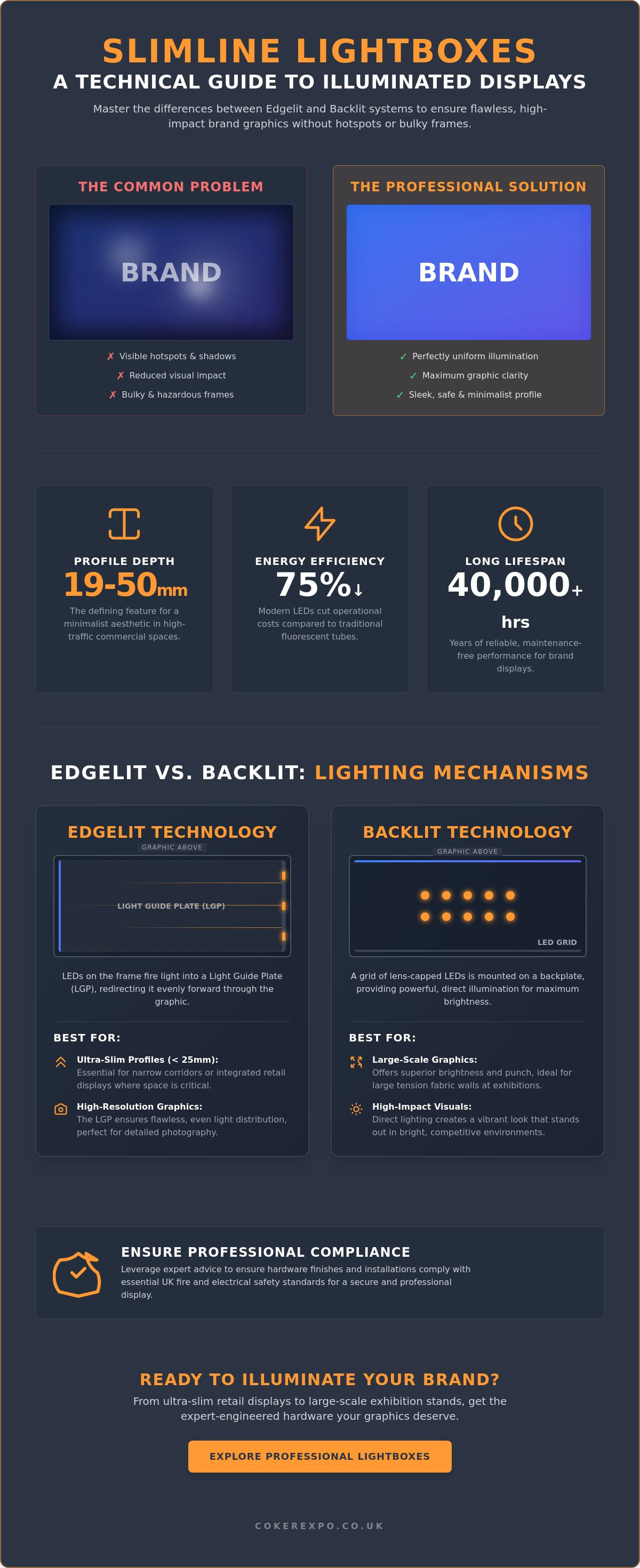
We'll examine how edgelit systems offer the thinnest profiles for tight environments while modern backlit arrays provide unmatched luminosity for larger graphics. You'll also learn how switching to LED technology can reduce energy usage by 75% and offer a lifespan exceeding 40,000 hours. This overview covers everything from light diffusion to ease of graphic changes, giving you a clear roadmap for selecting high-performance hardware that represents a sound business investment.
Key Takeaways
- Identify the optimal profile depth between 19mm and 50mm to balance minimalist aesthetics with safety requirements in high-traffic commercial environments.
- Master the technical differences of a slimline lightbox, edgelit or backlit, to determine if your display requires a perimeter-fired light guide plate or a direct LED grid.
- Select the correct hardware for your specific media, ensuring high-gloss films or seamless tension fabrics achieve maximum clarity without hotspots.
- Leverage professional expertise to customize hardware finishes and ensure all installations comply with essential UK fire and electrical safety standards.
What Defines a Slimline Lightbox in Professional Displays?
In a professional environment, space is a premium asset that directly influences hardware selection. A slimline lightbox is defined by its profile depth, typically measuring between 19mm and 50mm. This reduced footprint isn't just about a sleek, minimalist aesthetic; it's a practical necessity for compliance and safety. In high-traffic corridors or narrow exhibition stands, bulky frames can create hazards or violate accessibility standards. Choosing between a slimline lightbox, edgelit or backlit, requires understanding how these dimensions affect the final visual output.
The primary engineering challenge with these systems is achieving uniform light distribution without the physical depth traditionally used for diffusion. In older, deeper boxes, the distance between the light source and the graphic allowed the light to spread naturally. With slimline hardware, manufacturers must use advanced LED-backlit display technology to eliminate hotspots and shadows that can ruin expensive brand graphics. This precision ensures that whether you're using retail POS displays or corporate lobby signage, the illumination remains perfectly even across the entire surface.
The Evolution of Slimline LED Technology
Display technology has moved away from bulky fluorescent tubes toward high-efficiency LED strips. This shift allowed for a significant reduction in frame thickness while actually increasing the lumen output. Micro-LEDs have been instrumental in this transition, providing the intensity needed to punch through thick graphics from a very shallow mounting position. For the purpose of technical specification, the industry defines the "slimline" standard as any display unit with a total profile depth under 50mm.
Wall-Mounted vs. Suspended Slimline Formats
Wall-mounted units are the most common choice for permanent retail signage, often featuring snap-frame edges for rapid graphic updates. They offer a low-profile solution that integrates seamlessly into existing architecture. Conversely, suspended lightboxes maximize vertical space in exhibition halls, providing high-visibility branding without consuming valuable floor area. For those managing complex event setups, choosing the right slimline lightbox, edgelit or backlit, is essential, as detailed in The Ultimate Guide to Exhibition Lightboxes. Both styles rely on the same core principles of heat management and light diffusion to maintain graphic clarity.
Edgelit vs. Backlit: Comparing the Lighting Mechanisms
Understanding the internal architecture of your display hardware is essential for achieving professional results. The primary difference between a slimline lightbox, edgelit or backlit, lies in how the LEDs are positioned relative to the graphic. Edgelit systems utilize a perimeter-based approach where LEDs are mounted on the inner frame, firing light inward. This light is then redirected toward the viewer using a specialized Light Guide Plate (LGP).
Backlit mechanisms take a more direct route. They feature a grid of LEDs mounted on a backplate directly behind the graphic. Historically, these units required significant depth to prevent "spotting," where the individual LED dots become visible through the print. However, modern engineering has introduced lens-capped LEDs that spread light at wider angles. This allows for a much shallower profile without sacrificing the punchy, high-contrast look that direct lighting provides.
Efficiency also varies between these two configurations. Edgelit units are often more energy-efficient for smaller displays because they require fewer LEDs to illuminate the surface. For a deeper technical analysis of edge-lit backlight structures, one can see how optical patterns on the LGP are calculated to ensure uniformity. If you're looking for reliable hardware that balances these technical requirements, you can explore the range of professional lightboxes available for bespoke projects.
When to Choose Edgelit Technology
Selecting a slimline lightbox, edgelit or backlit, often comes down to the specific dimensions of your media. Edgelit technology is the superior choice in the following scenarios:
- Ultra-slim requirements: It's the best option for profiles under 25mm where rear-mounting hardware is physically impossible.
- Precision optics: The LGP ensures perfectly even distribution, making it ideal for high-resolution photography.
- Standard poster sizes: Edgelit is the industry standard for A4 through A1 snap-frames in retail settings.
The Strength of Modern Backlit Slimline Units
While edgelit wins on thinness, modern backlit units offer superior performance for large-format Tension Fabric Systems (TFS). Because the light travels a shorter distance from the source to the fabric, these units achieve higher brightness levels. This makes them the preferred choice for environments with high ambient light, such as glass-fronted exhibition halls or bright corporate lobbies. The direct grid ensures that even the largest fabric graphics remain vibrant and shadow-free across their entire surface area.
Choosing the Right Hardware for Your Brand Graphics
Selecting the optimal slimline lightbox, edgelit or backlit, depends heavily on the specific media you intend to display. High-gloss graphics like Duratrans or specialist films require the optical precision of an edgelit system. The Light Guide Plate (LGP) in these units eliminates the tiny imperfections that direct lighting might reveal on a reflective surface. This ensures a flawless, photographic finish that is essential for luxury retail or close-range viewing where every detail is scrutinized.
Tension Fabric (SEG) has become the standard for large-scale professional displays. These graphics benefit most from backlit configurations. A direct grid of LEDs provides the necessary intensity to saturate the fabric, resulting in deeper blacks and more vibrant colour contrasts. While some managers worry about sagging or shadows in a slim frame, modern engineering ensures that the tension remains consistent across the entire graphic area. This maintains a perfectly flat and illuminated surface that creates a high-impact, seamless look.
Snap-Lock Frames vs. Tension Fabric Systems
Snap-lock frames are the practical choice for environments requiring frequent graphic rotations, such as weekly retail promotions. They offer unmatched convenience for on-site staff who need to update messaging quickly without specialist tools. For a more premium, frameless appearance at major events, Tension Fabric Systems are superior. If you're planning an upcoming event, you may also find The Ultimate Guide to Shell Scheme Graphic Panels useful for coordinating your total display strategy.
Durability and Maintenance in High-Traffic Areas
Operational longevity is a key factor in your infrastructure investment. Edgelit systems generally offer better heat dissipation because the LEDs are located on the frame, which helps extend the life of delicate graphic films. Professional-grade components typically provide over 50,000 hours of service, ensuring your display remains bright for years. Additionally, the slimline profile significantly simplifies logistics. These units are easier to transport and store, making them the ideal hardware for national roadshows and high-pressure event schedules. To secure high-performance hardware for your next project, you can browse our professional lightboxes to find the exact specification for your brand.
Maximising Exhibition Impact with CokerExpo Lightboxes
Achieving a significant impact in high-pressure environments requires more than just high-quality hardware; it requires a partner that understands the logistical reality of the UK exhibition circuit. As seasoned experts, we ensure that every slimline lightbox, edgelit or backlit, meets rigorous domestic fire safety and electrical standards. This commitment to compliance alleviates the regulatory stress often faced by event managers when coordinating with venue health and safety officers. Our hardware isn't just a display; it's a reliable component of your brand's professional infrastructure.
Customisation is central to our approach. While technical specifications ensure performance, the aesthetic finish ensures brand alignment. We offer tailored frame finishes that match your corporate identity, allowing the hardware to disappear into the design or act as a bold architectural statement. For larger installations, these slimline units integrate seamlessly with complex Truss systems, providing high-visibility focal points within a larger event structure. This flexibility allows you to scale your presence from a single retail unit to a multi-level exhibition stand without compromising on light quality or frame consistency.
Practical Logistics: Assembly and Transport
We prioritise the physical experience of the operator. Our slimline units are manufactured using lightweight aluminium, which significantly reduces shipping costs and simplifies manual handling. Many of our systems feature tool-free assembly options, allowing for rapid setup even when deadlines are tight. CokerExpo slimline units arrive "ready to plug and play" for immediate use, ensuring your team can focus on visitor engagement rather than technical troubleshooting.
Next Steps for Your Display Strategy
Every professional environment has unique requirements. If a standard A-size doesn't fit your architectural constraints, we can provide bespoke quotes for non-standard dimensions. Our team also offers consultation on graphic design to help you create "light-friendly" artwork that maximises the specific benefits of your chosen slimline lightbox, edgelit or backlit system. This ensures your blacks remain deep and your highlights stay crisp. To explore the best hardware for your next project, View our full range of Slimline Lightboxes and secure a display solution built for long-term resilience.
Investing in High-Performance Display Infrastructure
Selecting the right slimline lightbox, edgelit or backlit, is a strategic decision that directly impacts both your brand's visual clarity and your team's logistical efficiency. You now understand how edgelit systems provide the optical precision required for high-gloss films, while modern backlit arrays deliver the punchy, direct illumination necessary for large-format tension fabrics. Both technologies offer the shallow profiles required to maintain safety and aesthetics in high-traffic professional environments.
Founded in 1999, CokerExpo brings decades of expertise as specialists in UK-based display hardware and event management. Our durable aluminium frames are specifically designed for repeat event use, representing a sound business investment for national roadshows and international exhibitions. We're committed to providing hardware that's simple to transport and fast to assemble, alleviating the typical stresses of event setup. Explore our range of professional Slimline Lightboxes to secure a reliable, high-impact solution for your next installation. Your brand deserves the infrastructure to stand out.
Frequently Asked Questions
What is the main difference between edgelit and backlit lightboxes?
The primary difference lies in the placement of the LEDs and how the light is distributed across the graphic. Edgelit units house LEDs within the inner perimeter of the frame, firing light into a light guide plate that redirects it toward the viewer. Backlit units use a grid of LEDs mounted on a backplate directly behind the image. Choosing the correct slimline lightbox, edgelit or backlit, depends on your desired frame thickness and the type of media being displayed.
Can I change the graphics in a slimline lightbox myself?
Yes, these systems are specifically designed for rapid, tool-free graphic updates by on-site staff. Snap-lock frames allow you to flip the edges open and swap films in seconds without removing the unit from the wall. For TFS Tension Fabric systems, the silicone edge of the graphic simply pushes into a dedicated channel in the frame, ensuring a taut, professional finish every time you update your messaging.
Do slimline lightboxes require a special power supply?
Most professional slimline units are designed for "plug and play" use with standard UK 3-pin power outlets. They typically include an external 12V or 24V transformer that converts domestic power to the low voltage required by the LED components. This configuration simplifies installation in retail or exhibition environments where access to specialized electrical contractors may be limited or restricted by venue regulations.
Are slimline lightboxes suitable for outdoor use?
Standard indoor slimline units aren't suitable for outdoor environments as they lack the necessary IP ratings to protect against moisture and dust. Using them outside can lead to electrical failure or damage to the internal optics. For external applications, you should select hardware specifically engineered for environmental resilience, such as weather-rated external notice boards or dedicated outdoor displays for events.
How long do the LEDs in a slimline lightbox typically last?
High-quality LEDs in professional display hardware typically offer a lifespan of 50,000 hours or more. If your display operates for 10 hours a day, the lighting components can remain functional for over 13 years without requiring maintenance. This longevity makes LED systems a far more reliable and cost-effective business investment than older fluorescent technology, which required regular tube and ballast replacements.
Which lighting technology is better for large-scale fabric displays?
Backlit technology is the superior choice for large-scale Tension Fabric Systems because it provides direct, high-intensity illumination. While edgelit systems are excellent for smaller posters, they can struggle to maintain uniform brightness in the center of very large fabric graphics. A backlit LED grid ensures that even the largest displays achieve deep colour saturation and remain completely free of shadows or dim spots across the entire surface.
Einen Kommentar hinterlassen