

Custom Branded Display Plinths: The Professional Guide to Product Elevation in 2026
A display plinth is often the most underestimated piece of infrastructure on an exhibition stand, yet it is the primary bridge between your brand's vision and a visitor's first touch. You've likely felt the anxiety of a heavy prototype wobbling on a flimsy base or the frustration of seeing expensive graphics peel away after a single use. Choosing the right custom branded display plinths is about more than just aesthetics; it's about securing a durable, professional focal point that survives the rigors of a national tour.
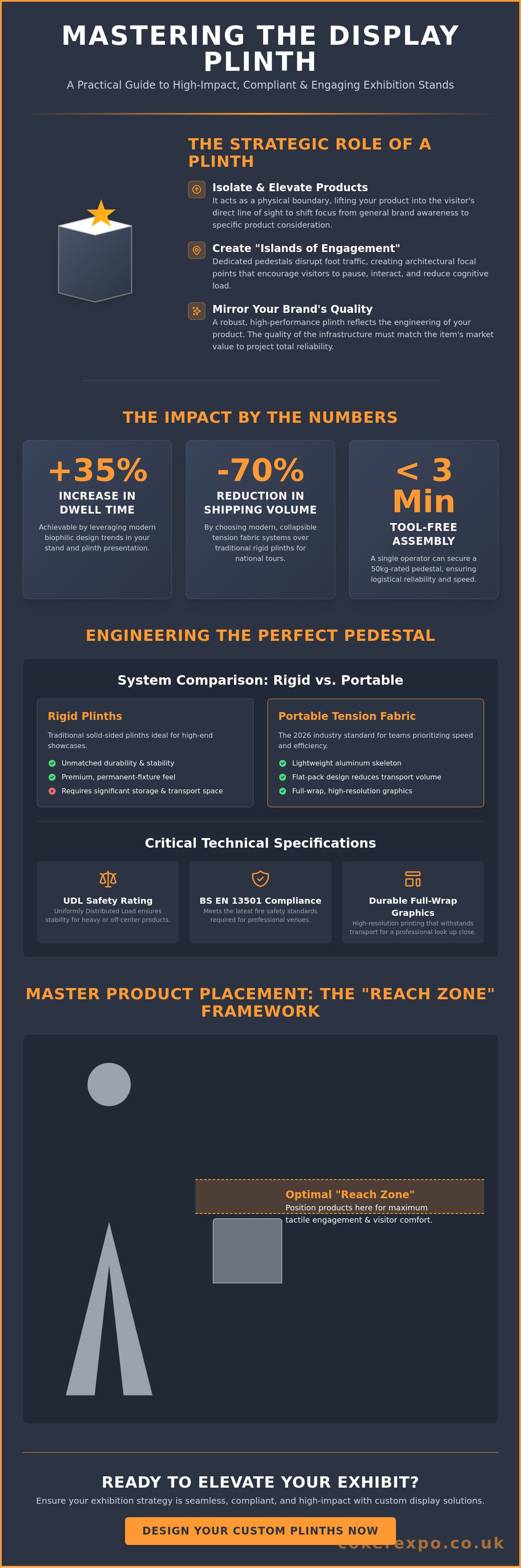
We understand that logistical reliability is your top priority when managing a high-pressure event schedule. This guide will help you master product elevation by providing practical insights on hardware selection and the latest 2026 industry standards. You'll learn how to navigate the critical shift toward BS EN 13501 fire safety compliance and how to leverage biophilic design trends that can increase visitor dwell time by up to 35%. We'll break down the technical specifications and branding techniques needed to ensure your exhibition strategy remains seamless, compliant, and high-impact.
Key Takeaways
- Learn how to transform your exhibition space into "islands of engagement" by using dedicated pedestals to isolate and highlight your most important products.
- Identify the best materials for your specific needs, from sleek acrylic to portable tension fabric, and learn how to specify custom branded display plinths that meet technical UDL safety requirements.
- Master the "Reach Zone" framework to ensure your products are positioned at the optimal height for tactile engagement and visitor comfort.
- Discover how to integrate your display pedestals with larger infrastructure, such as exhibition lighting truss, to create a cohesive visual hierarchy that leads visitors through your stand.
The Strategic Role of Custom Branded Display Plinths in Exhibition Design
A display plinth is a specialized pedestal engineered to isolate and elevate key products within a professional environment. While often categorized generally as a display stand, its strategic function is far more precise. It acts as a physical boundary that separates your most valuable hardware from the floor and the surrounding noise of a busy trade show. By lifting a product into the visitor's direct line of sight, you facilitate a psychological shift from general brand awareness to specific product consideration.
In a crowded shell scheme or space-only stand, these pedestals create "islands of engagement." They disrupt the flow of foot traffic and encourage visitors to pause. This transition is vital. You don't want people just walking past your logo; you want them interacting with your inventory. Custom branded display plinths serve as the physical handshake between your brand and the visitor. They provide a stable, professional platform for tactile interaction.
Quality is a non-negotiable factor in "brand mirroring." If you're showcasing high-end industrial components or precision medical devices, the plinth must reflect that same level of engineering. A flimsy or generic base suggests a cheap product. Investing in robust, high-performance hardware ensures that the infrastructure supporting your product matches its market value. It projects a sense of total reliability to decision-makers who value craftsmanship.
Why Elevation Matters: Creating Focal Points
Clutter is the enemy of engagement. In a typical exhibition hall, visual noise is constant. A dedicated pedestal provides a clutter-clearing effect by creating a clean, architectural focal point. It guides visitor movement by establishing natural stopping points on your stand. When you place a product on a plinth, you're telling the visitor exactly where to look. This deliberate placement reduces cognitive load. It makes it easier for potential clients to focus on your unique selling points without distraction.
Branding Beyond the Logo
Modern branding has moved past simple logo placement. Effective custom branded display plinths utilize full-wrap graphics to tell a deeper story. You can use textures and colors that complement the featured item, creating a cohesive visual experience. This level of detail requires high-resolution large format printing. Because visitors stand close to these pedestals, every detail is visible. Crisp, durable graphics ensure your brand looks professional under close-up inspection, even after multiple national tours. It's about achieving a significant impact in a professional environment through precision.
Engineering the Perfect Pedestal: Materials and Specifications
High-performance display hardware is defined by the synergy between structural integrity and aesthetic finish. When selecting custom branded display plinths, the material choice dictates more than just the look; it determines the system's longevity through the logistical lifecycle of a national tour. Acrylic offers a sleek, glass-like finish ideal for high-end tech, while natural wood textures provide warmth for lifestyle brands. For teams prioritizing speed, tension fabric systems have become the 2026 standard for portability.
Engineering a safe pedestal requires a technical understanding of Uniformly Distributed Load (UDL). This metric ensures your product remains stable regardless of its footprint on the top plate. Adhering to professional exhibition design standards is essential when calculating load-bearing requirements for heavy industrial prototypes. Modern custom branded display plinths now utilize tool-free assembly, using internal locking mechanisms that allow a single operator to secure a 50kg-rated pedestal in under three minutes. This resilience ensures the hardware survives frequent transport without the structural degradation common in cheaper, screw-fix alternatives.
Choosing Between Rigid and Portable Systems
The choice between solid-sided and collapsible systems depends on your transport infrastructure. Traditional rigid plinths offer unmatched durability and a premium "permanent" feel, but they require significant storage space. Modern collapsible fabric versions utilize a lightweight aluminum skeleton. These flat-pack designs are significantly more efficient for national transport, as they reduce shipping volume by up to 70%. While fabric systems are excellent for graphics, products requiring high tactile interaction or heavy weight often benefit from the absolute stability of a rigid top-plate. If you're unsure which system fits your inventory, you can view our full range of professional display pedestals to compare specifications.
Lighting and Digital Integration
A plinth shouldn't just hold a product; it should illuminate it. Internal LED systems create a "glow" effect that draws the eye downward, anchoring the visitor's attention. Integrated cable management is now a standard requirement, allowing for hidden power runs to digital screens or interactive product demos. For a truly high-tech environment, consider using dynamic lightboxes as a backdrop to your plinths. This combination creates a synchronized lighting experience that makes your product elevation feel like a deliberate, high-performance installation rather than a last-minute addition.
The Selection Framework: Matching Plinths to Product and Venue
Selecting the right hardware requires a methodical approach that balances product specifications with visitor ergonomics. To ensure your custom branded display plinths perform effectively, we recommend a three-point check: Weight, Height, and Interaction level. You must first verify that the plinth's load capacity exceeds the product's weight to prevent structural failure. Next, determine the interaction level. Is the product a "look but don't touch" high-value item, or is it designed for tactile engagement? For high-value inventory, integrating lockable acrylic hoods provides essential security without compromising visibility.
Calculating the required footprint is equally critical for booth flow. A plinth that is too large for its space creates a bottleneck, while one that is too small looks like an afterthought. Aim for a "Reach Zone" approach. This ensures products are positioned within a comfortable 900mm to 1100mm height range for tactile interaction. If your product requires a power source or digital integration, ensure the footprint allows for internal cable management to maintain a clean, professional appearance. You can consult our technical team for a bespoke plinth specification that matches your specific inventory requirements.
The Psychology of Height: Eye-Level vs. Waist-Level
The height of your pedestal dictates how visitors perceive the value of your product. Small technical items or precision components require higher pedestals, typically 1000mm or more. This prevents visitors from hunching over, which can create a physical barrier to engagement. Conversely, larger machinery or heavy industrial equipment benefits from lower, podium-style plinths. These provide a sense of scale and stability. A reliable rule of thumb for professional settings is to keep critical details at a 30 to 45-degree viewing angle below eye level. This positioning facilitates natural reading and inspection without physical strain.
Navigating Venue Logistics
Venue flooring is rarely perfectly level. Thick carpeting or uneven floor tiles can make lightweight pedestals wobbly. To mitigate this, prioritize custom branded display plinths with wide, weighted bases that offer superior stability. The finish of the plinth is also a logistical factor. In high-traffic environments, choose matte or textured finishes that resist fingerprints and scuffs. These materials maintain a "day one" appearance throughout the duration of a multi-day event. To create additional context for your product clusters, consider using folding display boards as informative backdrops. This combination defines a clear "island of engagement" while providing the necessary surface area for technical specifications and brand storytelling.
Cohesive Stand Strategy: Integrating Plinths with Larger Systems
Successful exhibition design relies on a clear visual hierarchy. While your overhead branding captures attention from across the hall, custom branded display plinths act as the final conversion point. They lead the visitor's eye from high-level brand messages down to the intimate details of your product. This integration ensures that the stand feels like a singular, engineered environment rather than a collection of loose furniture. When your plinths match the tension fabric systems (TFS) used on your perimeter walls, you achieve a seamless aesthetic that projects professional authority.
Structural synergy is equally important. In complex space-only stands, custom branded display plinths often work in tandem with an exhibition lighting truss. The truss provides the high-intensity downlighting required to make products "pop," while the plinth provides the stable, branded base. This vertical alignment creates a dedicated zone of focus. It signals to the visitor that the item on display is the centerpiece of your technical showcase. By aligning the hardware specifications of your pedestals with your primary structural systems, you simplify the on-site build and ensure total reliability.
Using Plinths in Shell Scheme Environments
Space is a premium in standard 3x3m shell scheme plots. You can maximize these limited footprints by using tiered plinth arrangements. This approach allows you to display multiple products at varying heights without overcrowding the floor. Plinths are also highly practical tools for hiding unsightly venue infrastructure. You can strategically place a pedestal to conceal venue pillars or electrical sockets, turning a logistical eyesore into a branded focal point. To maintain a unified look, coordinate your plinth graphics with your shell scheme graphic panels. Using the same print technology across all surfaces ensures that colors and brand textures remain consistent under harsh exhibition lighting.
The "Exhibition Ecosystem" Approach
Adopting an ecosystem approach to your hardware procurement eliminates the risk of mismatched branding. When you source your entire kit from a single specialist, you guarantee color consistency across your plinths, counters, and wall systems. This is vital for maintaining brand integrity. Modular plinth systems offer the best return on investment because they can be reconfigured for different stand sizes throughout the year. A system that works as a standalone pedestal at a small regional event can become part of a larger cluster at a national trade show. This flexibility ensures your infrastructure remains a sound business investment for years to come. For a tailored approach to your next event, consult with CokerExpo for a bespoke display plinth solution that integrates perfectly with your existing exhibition strategy.
Elevate Your 2026 Exhibition Strategy
Mastering product presentation requires more than just placing an item on a pedestal. It's about balancing structural engineering with the psychology of visitor engagement. By selecting hardware that meets the latest fire safety standards and utilizing the "Reach Zone" for ergonomics, you create a professional environment that invites interaction. Your custom branded display plinths should be the seamless final link in your stand's visual hierarchy, bridging the gap between high-level branding and the physical product.
We provide the essential infrastructure to ensure your success on the trade show floor. Our team specializes in high-impact large format printing and offers expert design advice for even the most complex bespoke exhibition requirements. With all production based in the UK, we guarantee fast fulfillment and the tangible quality that only domestic manufacturing provides. Don't let logistical stress compromise your brand's impact. Explore our range of professional branded display plinths and secure a reliable foundation for your next national tour. We're ready to help you turn your next exhibition into a high-performance conversion point.
Frequently Asked Questions
How much weight can a standard exhibition plinth hold?
Standard exhibition plinths typically support a Uniformly Distributed Load (UDL) of 50kg to 75kg. This capacity is sufficient for most industrial prototypes, medical devices, and consumer electronics. For significantly heavier inventory, we recommend specifying a reinforced internal skeleton. Always verify the UDL rating rather than the total weight capacity to ensure the load is safely spread across the top plate for total stability.
Can I change the graphics on my branded plinth for different events?
You can easily update the graphics on your custom branded display plinths to suit different marketing campaigns or product launches. Tension fabric systems allow for a fabric sleeve that slides over the frame, while rigid systems use replaceable graphic panels. This modularity makes the hardware a versatile, long-term business investment that adapts to your evolving exhibition calendar without requiring the purchase of new hardware.
What is the best height for a display plinth at a trade show?
The optimal height for a display plinth is generally between 900mm and 1100mm for products requiring tactile engagement. This range ensures visitors don't have to hunch over to inspect details. If you're displaying larger equipment or heavy machinery, a lower podium style plinth of 450mm to 600mm is more appropriate. This maintains a comfortable viewing angle and a better sense of scale for the visitor.
Are portable fabric plinths as stable as solid wooden ones?
Portable fabric plinths are engineered for high stability and can match the performance of solid wooden versions when correctly assembled. While wooden plinths offer a traditional, rigid feel, modern fabric custom branded display plinths utilize internal aluminum structures and weighted bases to provide a secure platform. The choice usually depends on your logistical needs; fabric systems excel in transport efficiency, while wood is often preferred for permanent environments.
Do custom branded plinths come with a warranty?
Our professional display hardware typically includes a warranty that covers the structural integrity of the frame and locking mechanisms. While specific terms depend on the system selected, we prioritize durability to ensure your equipment survives multiple national tours. We recommend checking the individual product specifications for the precise duration of coverage for both the hardware and the graphic finishes to ensure your investment is fully protected.
How long does it take to manufacture and deliver a bespoke display plinth?
Standard manufacturing and delivery for a bespoke display plinth usually takes between 5 and 10 working days from the approval of artwork. Because we utilize UK-based production, we can often accommodate tighter deadlines for high-pressure event schedules. We suggest contacting our team early in your planning phase to confirm current lead times and ensure your branding is perfectly executed for your next specific exhibition requirement.
Laisser un commentaire