

The Comprehensive Guide to Outdoor Bulletin Boards and Notice Boards in 2026
Did you know the global market for professional display hardware is projected to reach $3.6 billion by the end of 2026? Most site managers understand that high-performance outdoor bulletin boards and notice boards are the frontline of their communication strategy, yet many still struggle with units that warp or leak after a single season. It's a frustrating cycle of replacement that drains budgets and undermines your professional image.
We're here to help you break that cycle. This guide will help you master the technical specifications, regulatory requirements, and material choices needed to select durable, secure hardware for any professional environment. You'll learn how to achieve a maintenance-free solution that stands up to both the elements and vandals while remaining fully compliant with local planning laws and accessibility regulations. We will examine critical IP-rated weatherproofing, ballistic-grade glazing, and the specific 2026 ADA requirements for mounting height and tactile characters to ensure your investment serves its purpose for years to come.
Key Takeaways
- Understand the critical technical distinction between water-resistant and truly weatherproof housings to eliminate moisture ingress and protect your documents.
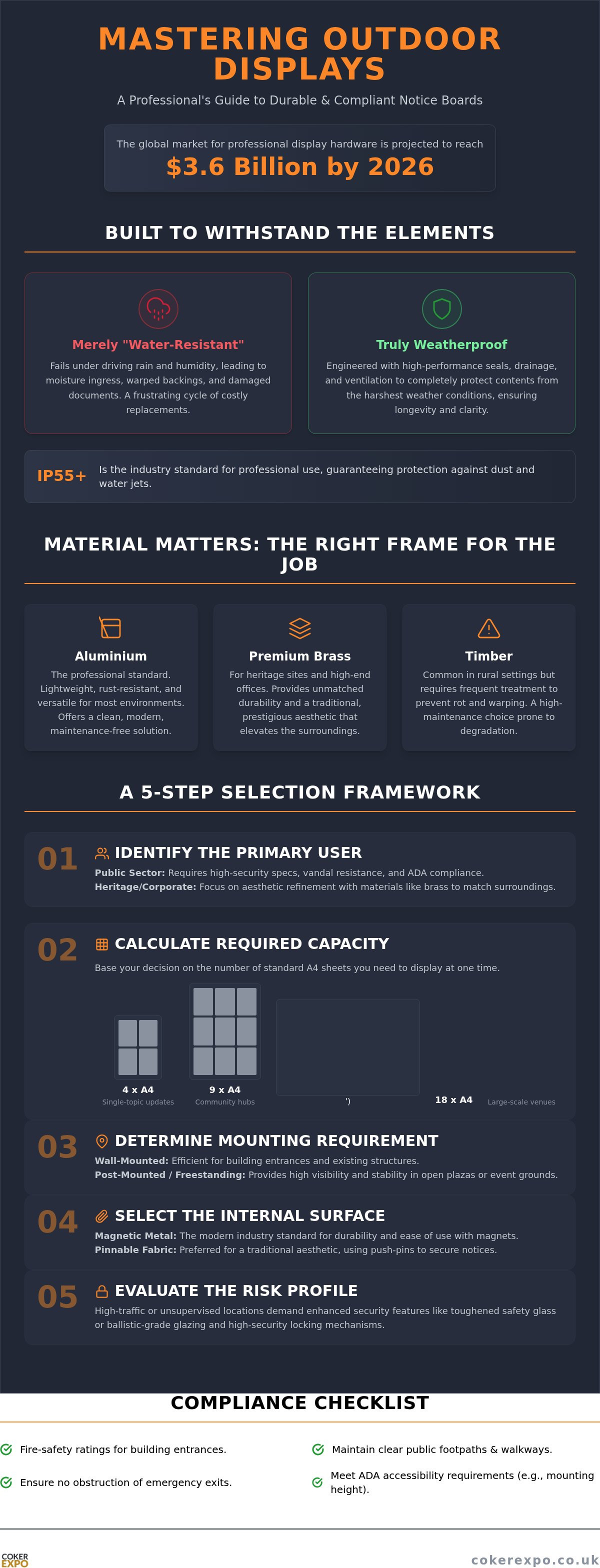
- Use our 5-step selection framework to calculate the exact capacity and material specifications needed for your outdoor bulletin boards and notice boards.
- Navigate complex regulatory requirements, from fire-safety ratings in building entrances to maintaining clear public footpaths and emergency exits.
- Learn how to position notice boards as central information anchors that complement other exhibition hardware for a cohesive professional environment.
- Select high-performance materials like aluminium or premium brass cases to ensure a maintenance-free, secure display that withstands the UK climate.
Choosing Durable Outdoor Bulletin Boards and Notice Boards for Year-Round Visibility
A professional outdoor notice board serves as a resilient, sealed display system engineered specifically for high-traffic external environments. While the History of bulletin boards stretches back to simple public announcements on wood, modern requirements for durability and security have transformed these units into sophisticated infrastructure. These systems act as a vital communication hub for public information and event schedules, but their success depends entirely on their ability to protect content from the unpredictable UK climate. Selecting high-quality outdoor bulletin boards and notice boards involves more than just picking a size; it requires a deep dive into material science and environmental engineering.
Understanding the technical distinction between "water-resistant" and truly "weatherproof" external housings is critical for any procurement manager. A water-resistant board might withstand a light drizzle, but it often fails under the pressure of driving rain or fluctuating humidity. Truly weatherproof outdoor bulletin boards and notice boards utilise high-performance seals and structural engineering to prevent moisture ingress entirely. Without these features, UV degradation and dampness will quickly destroy your printed materials and the board's internal backing, leading to a poor professional image and wasted resources.
Weatherproofing Standards: Understanding IP Ratings and Seals
In the B2B sector, Ingress Protection (IP) ratings provide the only objective measure of a board's resilience. For professional external use, an IP55 rating or higher is the industry standard. This ensures the unit is protected against dust and low-pressure water jets from any direction. Reliable units feature internal drainage channels and heavy-duty silicone gaskets that create a consistent seal when the door is locked. To maintain clarity, quality boards incorporate ventilation gaps to prevent internal condensation build-up, ensuring notices remain legible regardless of rapid temperature shifts.
Material Science: Aluminium vs. Brass vs. Timber Frames
Material choice directly dictates the maintenance lifecycle of your display. Anodised aluminium is the standard for most professional environments due to its lightweight, rust-resistant properties and ease of installation. For heritage sites or high-end offices, premium brass notice cases offer unmatched durability and a traditional aesthetic that aluminium cannot replicate. While timber frames are common in rural settings, they require frequent treatment to prevent rot and warping. Metal frames represent a superior business investment because they offer a maintenance-free solution that won't degrade over time.
A 5-Step Selection Framework for Professional External Displays
Selecting the right hardware for a professional environment requires a systematic approach to ensure long-term return on investment. You shouldn't treat this as a simple furniture purchase; it's an investment in your site's essential infrastructure. By following a logical framework, you can eliminate the logistical stress of choosing between hundreds of different specifications. When planning your next project, reviewing a range of professional external notice boards ensures you meet all specific technical criteria without compromise.
- Identify the primary user: Public sector installations demand high-security specs and ADA compliance. In contrast, heritage sites or professional offices often require the aesthetic refinement of brass notice cases to match their surroundings.
- Calculate required capacity: Base your decision on standard A4 sheet counts. A 4xA4 board is sufficient for single-topic updates, but large-scale venues or community hubs typically require 9xA4 or 18xA4 units to manage high volumes of information.
- Determine the mounting requirement: Wall-mounted units are efficient for building entrances. If you are placing a display in an open plaza or event ground, post-mounted or freestanding outdoor bulletin boards and notice boards provide the necessary visibility and structural stability.
- Select the internal surface: Choose your backing material based on how often you'll change notices. Magnetic metal is the modern industry standard for durability, while pinnable fabrics are preferred for a traditional aesthetic.
- Evaluate the risk profile: High-traffic, unsupervised locations require higher security ratings and anti-vandal features to prevent tampering.
Glazing and Security: Toughened Glass vs. Polycarbonate
Security is a major concern for publicly accessible displays. Polycarbonate glazing is the preferred choice for high-risk areas because it is virtually shatterproof and offers superior impact resistance against vandalism. However, for environments where clarity is the priority, toughened safety glass provides excellent scratch resistance and remains clear over years of use. For public security, we recommend units with "allen key" locks. These are far more tamper-resistant than traditional barrel locks because they require a specific tool for access, discouraging opportunistic theft or unauthorised posting.
Internal Surfaces: Magnetic Metal vs. Pinnable Fabric
The choice of internal surface affects both hygiene and maintenance. Magnetic metal backings are ideal for damp environments because they don't harbour mould and are easy to wipe clean. They provide a sleek, professional look that fits modern corporate or event settings. If you prefer a traditional community feel, self-healing pinnable fabrics are available. These hide pinholes well, but they require more frequent cleaning in high-humidity conditions to maintain a professional appearance. To keep any surface looking its best, simply use a non-abrasive cleaner during your quarterly maintenance checks.
Regulatory Compliance and Best Practices for Public Notice Boards
Installing outdoor bulletin boards and notice boards in public spaces involves navigating a complex landscape of legal obligations. It's a technical requirement that goes beyond simple aesthetics. You must ensure that any permanent display does not obstruct public footpaths or interfere with emergency exit routes. For local councils and public bodies, these boards are essential infrastructure for fulfilling statutory requirements, such as the posting of planning notices or financial audits. Using professional-grade hardware ensures these documents remain secure and legible, which builds community trust and supports effective place-making.
Fire safety is another critical factor often overlooked during procurement. When you place notice boards in building entrances or internal corridors, you must select units made from fire-rated materials. These specifications prevent the display from becoming a fuel source in the event of an emergency. By choosing compliant hardware, you protect your organisation from liability while maintaining a professional environment. If you need assistance selecting a system that meets these rigorous standards, explore our range of external notice boards to find a solution that balances safety with durability.
Accessibility and the Equality Act 2010
To comply with the Equality Act 2010, your displays must be accessible to all users, including wheelchair users and those with visual impairments. We recommend a mounting height where the baseline of the lowest tactile character or notice is between 48 and 60 inches from the ground. Readability is equally vital. High-contrast internal backings, such as white magnetic metal with black text, ensure that information is clear for everyone. Glare-reducing glazing supports DDA (Disability Discrimination Act) compliance by minimising reflections from sunlight, ensuring the content is visible from various angles and lighting conditions.
Planning Permission and Safety Standards for Permanent Installations
In the UK, many small-scale displays fall under "Deemed Consent" rules, meaning you won't always need a formal planning application. However, larger post-mounted units or those in conservation areas often require specific permission from your local authority. You should always check local ordinances before breaking ground. Beyond the paperwork, structural safety is paramount. For freestanding units, the mounting posts must be engineered to withstand high-wind zones. This requires deep-root concrete foundations or heavy-duty base plates to ensure the unit remains stable during extreme weather events, protecting both the public and your investment. For broader site security needs, you can learn more about Romford Fencing Ltd to source durable fencing and post systems that complement your display infrastructure.
Professional Display Infrastructure: Integrating Notice Boards into Event Planning
In the high-pressure environment of large-scale events and trade shows, outdoor bulletin boards and notice boards act as the essential "information anchor." While digital displays have their place, physical notice boards provide a reliable, low-maintenance reference point that doesn't rely on power sources or software updates. For a cohesive aesthetic, you should match your external displays with other high-impact hardware like professional lightboxes. This creates a unified brand presence that guides visitors seamlessly from the building exterior to the main event floor.
Effective exhibition stand design often incorporates these boards for wayfinding and dynamic scheduling. By placing a secure notice board at the entrance of a temporary structure or outdoor pavilion, you give attendees a central location to check session times and site maps. This reduces logistical stress for your staff and improves the overall visitor experience. Using professional-grade hardware ensures these schedules remain protected from wind and rain, maintaining a sharp, legible appearance throughout the event's duration.
Brass Notice Cases for Heritage and Executive Environments
The choice of materials has a significant psychological impact on brand perception. For high-end corporate events or heritage venues, premium brass notice cases project a sense of stability and prestige that standard aluminium cannot match. Executive venues prefer these discreet, high-finish cases because they complement traditional architecture while offering modern security. To keep these premium finishes looking their best in outdoor settings, a simple polish with a soft cloth and specialized metal cleaner every few months is all that's required to prevent tarnishing and maintain the professional sheen.
Bespoke Display Solutions and Event Management
Successful event management relies on placing information exactly where visitors need it most. By strategically positioning outdoor bulletin boards and notice boards at decision points, you can control visitor flow and prevent bottlenecks. These units are particularly effective when integrated with folding display boards to manage the transition between indoor and outdoor zones. This approach provides a consistent communication strategy that follows the attendee's journey from the car park to the keynote hall.
Explore our full range of external notice boards and display cases to find the infrastructure your next event needs for total reliability and impact.
Secure Your Site Infrastructure with High-Performance Displays
Selecting the right hardware is a technical decision that directly impacts your brand’s authority and public safety. You now have the framework to choose between polycarbonate and toughened glass, navigate UK planning laws, and ensure full accessibility for all visitors. High-quality outdoor bulletin boards and notice boards are more than just frames; they're essential communication anchors that protect your information from the elements while maintaining a professional aesthetic.
Since 1999, we've acted as specialists in event infrastructure, providing national UK delivery on all professional hardware. Whether you require the modern efficiency of anodised aluminium or the heritage appeal of premium brass notice cases, we provide the durability your environment demands. Our focus remains on delivering reliable, maintenance-free solutions that represent a sound business investment. View our professional range of outdoor notice boards and display cases today to find the perfect fit for your venue. We're ready to help you build a more secure and informative professional space.
Frequently Asked Questions
Do outdoor notice boards require planning permission in the UK?
Most small-scale outdoor notice boards fall under "Deemed Consent" rules for advertisements, meaning they don't require formal planning permission. However, you must consult your local authority if you're installing large post-mounted units or if your site is located in a conservation area. It's always safer to verify local ordinances before starting a permanent installation to avoid potential legal complications.
How do I prevent condensation from building up inside my external notice board?
Preventing condensation requires selecting a unit with integrated ventilation gaps and ensuring these vents aren't obstructed during installation. These gaps allow air to circulate, balancing internal and external temperatures to stop moisture from forming on the glazing. For high-humidity environments, look for boards that feature internal drainage channels to manage any incidental moisture ingress effectively.
What is the most durable material for a notice board located near the coast?
Anodised aluminium and premium brass are the most durable materials for coastal environments where salt spray is a constant factor. Unlike timber which rots or standard steel which rusts, these materials offer superior corrosion resistance. High-grade brass notice cases are particularly effective for heritage sites near the sea because they develop a protective patina rather than degrading over time.
Can I change the orientation of my outdoor notice board after purchase?
You generally can't change the orientation of professional outdoor bulletin boards and notice boards after purchase. The manufacturing process fixes the position of drainage channels, door hinges, and gas struts to ensure the unit remains weatherproof in its intended position. You must decide on portrait or landscape orientation at the procurement stage to ensure the hardware functions correctly.
What is the difference between magnetic and pinnable outdoor boards?
Magnetic boards use a coated steel backing and magnets to hold notices, while pinnable boards use self-healing fabric or cork for pins. We recommend magnetic surfaces for external use because they don't harbour mould in damp conditions and are much easier to wipe clean. This choice ensures your display remains professional and hygienic even after years of exposure to the elements.
How high should an outdoor notice board be mounted for accessibility?
For full accessibility compliance, mount your board so the baseline of the lowest notice is between 48 and 60 inches from the ground. This height ensures that wheelchair users and those with visual impairments can easily view the content. It's a critical technical requirement for public sector sites and professional venues aiming for total inclusivity in their communication strategy.
Laisser un commentaire