

Fire Retardant Fabric Graphics for Exhibitions: The Guide to Safety and Impact
Your exhibition stand's visual impact means nothing if the venue manager orders its removal before the doors even open. With the UK government currently transitioning away from BS 476 toward the EN 13501 "Reaction to Fire" standard, the pressure to ensure your materials are fully compliant has never been higher. You've likely felt the stress of trying to navigate these shifting regulations, worrying that choosing fire retardant fabric graphics for exhibitions might mean settling for dull colors or low-quality materials that fail to represent your brand effectively.
We understand that compliance shouldn't be a barrier to creativity. It's entirely possible to meet strict B1 or M1 fire retardancy ratings while still deploying high-impact, vibrant displays that attract footfall. This guide provides a practical roadmap to mastering safety essentials for UK venues like the NEC or ExCeL. You'll learn how to identify the correct certifications, understand the implications of the September 2026 regulatory updates, and select durable fabric systems that deliver a significant return on investment.
Key Takeaways
- Navigate the transition from BS 476 to the EN 13501 "Reaction to Fire" standard to ensure your stand meets the latest UK venue safety requirements.
- Discover how fire retardant fabric graphics for exhibitions achieve a premium, seamless aesthetic using Tension Fabric Systems (TFS) without compromising on safety.
- Master essential maintenance techniques for cleaning and storing your graphics to preserve their fire-rated properties and visual quality for long-term use.
- Integrate certified fire-safe graphics with versatile infrastructure like shell scheme panels and lighting truss to create a cohesive, professional brand presence.
- Reduce logistical risk by sourcing UK-manufactured, certified materials that ensure total compliance and prevent the possibility of exhibition bans.
Understanding Fire Retardant Standards for UK Exhibition Fabrics
Fire safety is the absolute baseline for any professional display. In the UK, fire retardant (FR) fabric refers to materials specifically designed or treated to resist ignition when exposed to a small flame. Venue managers at major halls like the NEC or Olympia London require documented proof that all materials meet these safety thresholds. Using uncertified fire retardant fabric graphics for exhibitions can lead to immediate stand closure. It could also void your public liability insurance in the event of an incident, leaving your business exposed to significant legal risk.
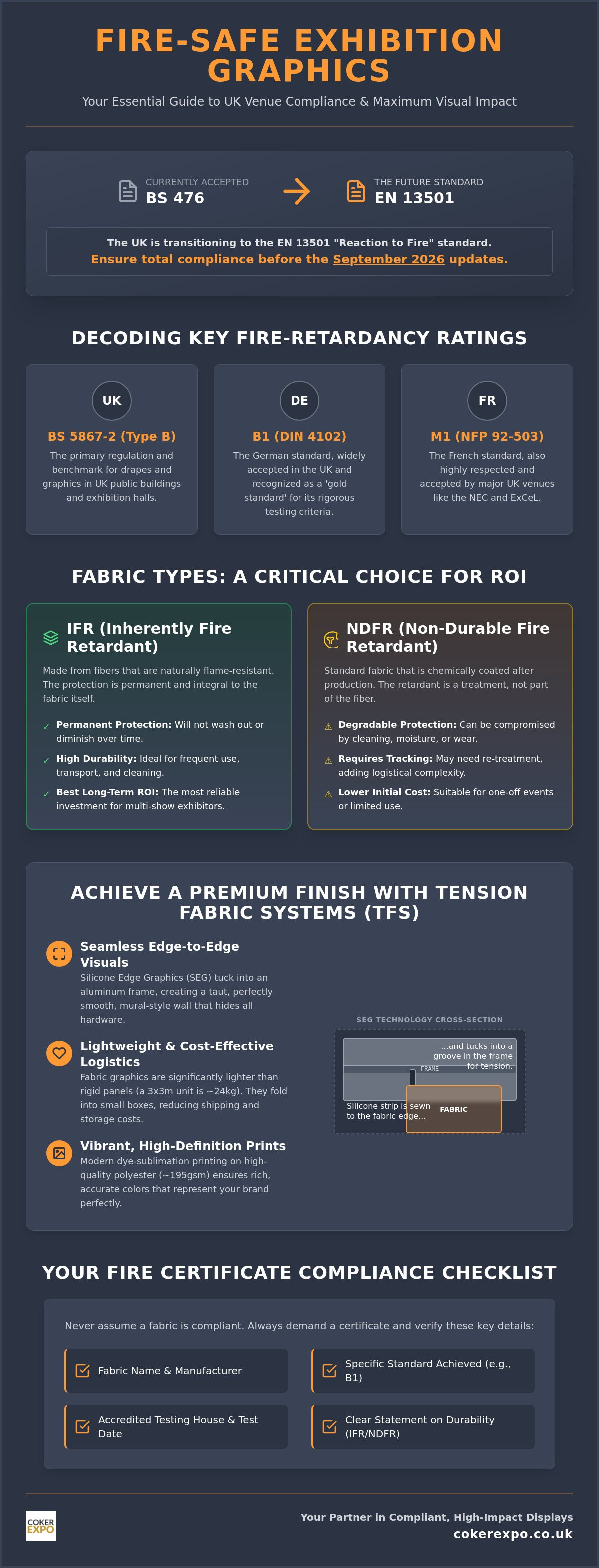
Understanding Fire-retardant fabric standards is essential for anyone managing a trade show budget. The primary regulation for UK exhibition drapes and graphics is BS 5867-2:2008. Specifically, Type B is the benchmark for public buildings. While the UK is currently transitioning toward European EN 13501 standards, BS 5867 remains a frequently cited requirement in venue manuals. These standards ensure that if a fire starts, your graphics won't act as a fuel source, providing critical time for evacuation.
BS5867 vs. B1: Navigating the Certification Maze
You'll often see materials listed with a B1 or M1 rating. B1 refers to the German DIN 4102 standard, while M1 is the French NFP 92-503 standard. Both are recognized as gold standards across Europe. Most UK venues accept these certifications because their testing criteria are exceptionally rigorous. However, never assume a fabric is safe just because a supplier says so. Always request a physical fire certificate before placing an order. A legitimate certificate should include:
- The name of the fabric and the manufacturer.
- The specific test standard achieved (e.g., BS 5867 Type B or DIN 4102 B1).
- The date of the test and the name of the accredited testing house.
- A clear statement on whether the rating is permanent or requires re-treatment after cleaning.
Inherently Fire Retardant (IFR) vs. Treated (NDFR) Fabrics
The method used to achieve safety matters for your long-term ROI. Inherently Fire Retardant (IFR) fabrics are made from fibers that are naturally flame-resistant. This protection is permanent; it won't wash off or diminish over time. This makes IFR the superior choice for high-frequency exhibitors using tension fabric systems. Treated fabrics, known as Non-Durable Fire Retardant (NDFR), are chemically coated after production. While cheaper for one-off events, these coatings can degrade in high humidity or after cleaning. If you plan to reuse your fire retardant fabric graphics for exhibitions, IFR represents the most reliable business investment. It removes the logistical stress of tracking treatment dates and ensures your hardware is always ready for the next show.
Choosing the Right Fabric Graphic System for Maximum Brand Impact
Visual impact is just as critical as safety when you're competing for attention in a crowded hall. Tension Fabric Systems (TFS) have become the industry standard for creating professional, mural-style walls that hide the underlying frame completely. These systems rely on high-performance polyester, typically around 195gsm, which provides the necessary density to prevent light leakage while remaining lightweight for transport. Choosing fire retardant fabric graphics for exhibitions ensures that your stand remains compliant without sacrificing the vibrant, high-definition print quality that modern dye-sublimation techniques offer.
Fabric has largely replaced PVC in professional environments due to its sustainability and logistical advantages. A standard 3x3m backlit unit using fabric graphics weighs approximately 24kg, making it significantly easier to handle than rigid alternatives. This shift isn't just about weight; it's about the ability to fold and ship graphics in small boxes, reducing courier costs and storage requirements. When sourcing materials, ensure your supplier uses fire-rated inks that bond with the substrate, maintaining the overall safety rating of the finished display.
Silicone Edge Graphics (SEG) and Tension Frames
SEG technology is the secret to a seamless finish. A silicone strip is sewn into the perimeter of the fabric, which then tucks into a recessed groove on the aluminum frame. This method is central to effective exhibition stand design because it allows for edge-to-edge branding. The tension created by the frame pulls the fire-rated polyester tight, removing all creases and providing a perfectly flat surface for your marketing message. It's a reliable way to achieve a premium look that can be installed by a single person in minutes.
Backlit Fabric Graphics for LED Lightboxes
Illumination can increase stand traffic significantly in high-traffic areas. However, lighting adds a layer of complexity to safety. Specialized fabrics like 'Samba' or 'Powerstretch' are designed specifically for exhibition lightboxes to provide even light diffusion without hot spots. While these fabrics are translucent, they must still adhere to strict Fire safety standards for exhibitions to prevent heat build-up from becoming a hazard. Balancing opacity and light transmission is key to ensuring your brand glows without compromising on the B1 or BS 5867 ratings required by the venue. For those looking to upgrade their presence, exploring professional tension fabric systems is a sound investment in both safety and visual ROI.
Practical Maintenance and Installation of Fire-Rated Graphics
Proper handling ensures your investment remains compliant and visually striking show after show. To achieve a drum-tight finish on-site, always start by inserting the corners of the silicone edge graphic into the frame first; then work toward the center of each rail. This prevents the fabric from bunching or skewing during installation. If you notice minor creases after transport, a handheld steamer can safely refresh the polyester without compromising the safety rating. You must avoid aggressive chemical cleaners or bleach, as these can strip away non-durable fire retardant treatments and leave your stand non-compliant.
Venue floor managers have the authority to inspect stand materials at any time during build-up. Under UK fire safety regulations, the responsibility for proving compliance falls entirely on the exhibitor. We recommend creating a dedicated "Safety File" for every event. This file should contain physical and digital copies of your fire certificates for all fire retardant fabric graphics for exhibitions. Having these documents readily available on a tablet or in a printed folder prevents unnecessary logistical delays and projects a sense of total reliability to venue officials.
The Venue Audit: Preparing for Fire Safety Inspections
Inspectors look for specific markers of authenticity. Beyond the certificate, some venues require graphics to have small fire-rating tags sewn into the seam. Ensure your supplier provides these if they are a requirement for your specific hall. Keeping a digital backup of your certificates on a cloud drive is a smart fail-safe. If a physical copy is lost during the high-pressure build-up phase, you can still provide instant proof of compliance to the safety officer.
Longevity and Reusability of Fabric Graphics
The lifespan of your graphics depends heavily on the type of retardant used. Inherently Fire Retardant (IFR) fabrics are the most durable choice because the safety properties are built into the fiber. These don't require re-testing after cleaning. In contrast, treated fabrics (NDFR) may need a fresh application of fire-retardant spray if they become damp or are washed. Store your graphics in padded bags away from direct sunlight to protect both the print vibrancy and the chemical integrity of the finish. If you need certified replacements or a new high-performance system, order your high-impact fabric graphics here.
Elevating Your Display with CokerExpo’s Fire-Safe Solutions
Choosing the right partner for your exhibition infrastructure is a critical business decision that impacts both your safety compliance and your brand's perceived value. We don't just supply hardware; we provide the essential framework for your success. Every piece of fire retardant fabric graphics for exhibitions we produce is backed by our commitment to high-performance materials and rigorous testing. By manufacturing locally in the UK, we maintain total control over the quality and certification of our substrates, ensuring they meet the high standards required by major national venues.
Our integrated approach allows you to combine various display elements into a single, cohesive brand environment. For example, many exhibitors find success by integrating fire-rated fabric graphics with our shell scheme graphic panels. This combination allows for a professional, seamless look that maximizes the utility of a standard shell scheme space. Our bespoke large-format printing services are tailored to navigate the complexities of UK safety regulations, providing you with peace of mind and a visually superior result.
From TFS to Lightboxes: Our Integrated Approach
Our tension fabric systems are the preferred choice for exhibitors who value a premium, crease-free finish. These systems are designed for high-impact visual storytelling and offer a level of sophistication that traditional PVC banners cannot match. One of our recurring brand promises is the ease of assembly; our portable fabric frames and counters can be constructed in minutes without specialist tools. This simplicity of construction serves as a powerful psychological hook for busy managers, reducing on-site stress while ensuring maximum brand recall through crisp, illuminated graphics.
Expert Support for Your Next UK Exhibition
Logistical reliability is at the heart of everything we do. Our event management and planning services ensure that your stand is compliant from day one, handling the technical details so you can focus on visitor engagement. Because we operate from a UK-based production facility, we offer a typical lead time of 5 to 10 working days for custom-printed graphics. This fast turnaround is a hallmark of our service, providing the agility needed in the high-pressure, deadline-driven world of trade shows. Contact us today for a tailored quote and discover how our fire-safe graphic solutions can transform your professional environment.
Securing Your Brand’s Future on the Exhibition Floor
Mastering fire safety isn't just about avoiding a venue ban; it's about building a foundation of total reliability for your brand. By prioritizing certified materials and maintaining a robust safety file, you eliminate the logistical stress that often precedes a major show. High-quality fire retardant fabric graphics for exhibitions offer a superior alternative to traditional materials, providing a seamless, high-impact aesthetic that is both easy to transport and simple to install. Choosing the right hardware ensures your display remains a durable, reusable asset for years to come.
At CokerExpo, we leverage over 25 years of exhibition industry experience to deliver infrastructure that works. Our expert UK-based large format printing facility produces certified BS5867 and B1 compliant materials, ensuring your stand meets the highest safety standards without sacrificing visual clarity. We focus on providing the essential tools you need to stand out in high-traffic environments while maintaining full regulatory peace of mind. Explore our range of fire-rated Tension Fabric Systems and Lightboxes to elevate your next event presence. We look forward to supporting your success with hardware that is built to perform.
Frequently Asked Questions
What is the difference between BS5867 and B1 fire ratings?
BS5867 is the British Standard specifically for curtains and drapes in public buildings. B1 refers to the German DIN 4102 standard, which is widely recognized across Europe. While both ensure materials are flame retardant, UK venue manuals often cite BS5867 Type B as the primary requirement for fabric graphics. Most major exhibition halls accept B1 as a suitable equivalent because its testing protocols are exceptionally rigorous.
Do I need a fire certificate for every fabric graphic on my stand?
You must hold a valid fire certificate for every piece of fabric used on your display. Venue safety officers frequently conduct spot checks during the build-up phase and will demand proof of compliance. If you use multiple types of fire retardant fabric graphics for exhibitions, ensure you have the corresponding paperwork for each substrate. A digital copy is usually acceptable if it can be presented immediately on a tablet or smartphone.
Can I wash my fire-retardant exhibition graphics?
It depends on whether the fabric is Inherently Fire Retardant (IFR) or chemically treated (NDFR). IFR fabrics maintain their safety properties permanently and can be washed according to the manufacturer's instructions. Chemically treated fabrics often lose their fire retardancy when laundered. You should always check the original certificate or consult your supplier before attempting to wash any display graphics to avoid compromising venue safety standards.
Is tension fabric more fire-safe than traditional PVC banners?
Neither material is inherently safer; compliance depends entirely on the specific product's fire rating. However, modern tension fabric systems are often preferred because the polyester used is specifically engineered to meet B1 or BS5867 standards. While PVC banners are available in fire-rated versions, fabric graphics offer the added benefit of being lightweight and easier to store without damaging the safety finish through heavy creasing or cracking.
How long does a fire-retardant treatment last on exhibition fabric?
Inherently Fire Retardant fabrics remain safe for the entire life of the product. For treated fabrics (NDFR), the lifespan of the fire-retardant coating can vary based on environmental factors like humidity and how often the material is handled. Most industry professionals recommend re-testing or replacing treated graphics every 12 to 24 months to ensure they still meet fire retardant fabric graphics for exhibitions requirements. Regular inspection for visible degradation is a critical safety practice.
What happens if a venue safety officer finds non-compliant graphics?
The safety officer has the authority to order the immediate removal of any non-compliant material from the hall. This can result in a partially empty stand or the complete closure of your display before the event begins. In extreme cases, using uncertified materials can lead to fines or being banned from future events at that venue. Maintaining a complete safety file is the only way to prevent these costly logistical disruptions.
Laisser un commentaire