

High-Impact Exhibition Displays: The Ultimate Guide for 2026
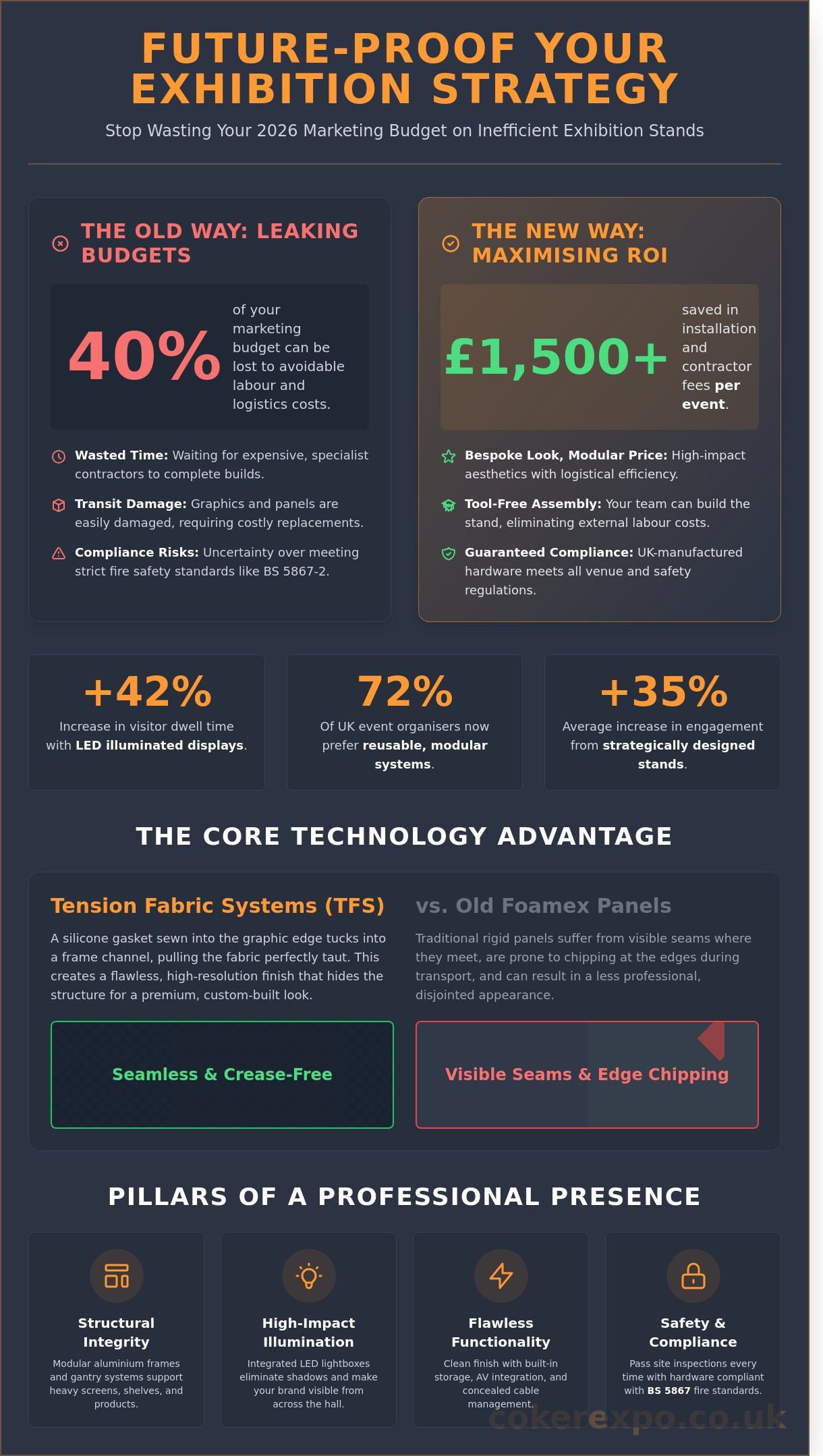
Your 2026 marketing budget is likely leaking up to 40% in avoidable labour and logistics costs before your stand even opens to the public. You've likely felt the frustration of waiting for expensive contractors to finish a build while worrying if your graphics survived the van journey or if they comply with the latest BS 5867-2:2008 fire safety regulations. It's an unnecessary drain on both your time and your bottom line that can be rectified with the right equipment.
This guide ensures you never face those hurdles again by showing you how to select professional exhibition displays that combine high-impact aesthetics with genuine tool-free assembly. We'll help you secure a stand that looks bespoke but functions with the logistical efficiency of a modular system; this approach can save you over £1,500 in installation fees per event. We'll explore the hardware that eliminates specialist labour, strategies to prevent transit damage, and the specific British standards your equipment must meet to pass site inspections every time.
Key Takeaways
- Learn why shifting from disposable stands to sustainable, reusable systems is the most effective way to future-proof your B2B marketing strategy.
- Discover how to command attention on the trade show floor using high-impact LED lightboxes and seamless tension fabric systems for a professional finish.
- Master the "Lego" principle of modular exhibition displays to build a scalable, high-quality presence that evolves with your business needs.
- Navigate complex UK safety regulations and logistics at major venues like the NEC and ExCeL while ensuring compliance with BS 5867 fire standards.
- Optimise your event ROI by prioritising UK-manufactured hardware designed for tool-free assembly and logistical efficiency.
The Strategic Role of Exhibition Displays in 2026
The landscape of B2B marketing has reached a digital saturation point. While screen-based outreach offers scale, it cannot replicate the high-trust environment of a face-to-face meeting. A deep understanding trade shows reveals that physical presence remains the most potent tool for closing complex deals. By 2026, industry data suggests a 15% increase in event attendance as professionals seek authentic interaction over virtual webinars. High-quality exhibition displays act as the physical manifestation of your brand's digital promise, providing a tangible touchpoint that builds immediate credibility.
Sustainability has moved from a corporate buzzword to a strict procurement requirement. In 2024, 72% of UK event organisers reported a preference for reusable modular systems over "build-and-burn" timber stands. This shift isn't just ethical; it's financial. Investing in a robust aluminium frame allows for graphic refreshes across multiple years, reducing long-term capital expenditure by approximately 40% compared to bespoke single-use builds. Our systems focus on longevity, ensuring that your initial investment continues to deliver value across an entire event calendar.
High-performance environments are built on specific technical pillars that influence visitor psychology. By integrating strategic lighting and defined zones, exhibitors can increase dwell time by 35% on average. A professional setup typically includes:
- Structural Integrity: Modular aluminium frames or gantry systems that support heavy media and shelving.
- Visual Impact: High-resolution tension fabric graphics featuring precision dye-sublimation printing.
- Illumination: Integrated LED lighting to eliminate shadows and highlight key product features.
- Functionality: Secure built-in storage, AV integration, and concealed cable management for a clean finish.
Beyond the Banner: Defining Modern Display Hardware
Hardware has evolved significantly from the basic pop-up banners used in previous years. We've moved towards integrated modular architectures that offer the look of a custom-built stand with the flexibility of a portable kit. Height is a critical factor in a crowded 5,000-square-metre hall. Using a 4-metre gantry or a backlit tower ensures your brand is visible from the entrance. Our tool-free assembly systems mean your team isn't wasting two hours with hex keys; they're ready to engage visitors immediately. Professional hardware choices reflect brand authority. A seamless, robust structure tells a prospect that your business is stable and pays attention to detail.
Identifying Your Exhibition Goals
Strategic planning starts with matching your hardware mix to your primary objective. If you're focused on lead generation, your layout needs dedicated demo stations and integrated lead-capture technology. For brand awareness, large-format graphics and high-impact lighting take priority. Budgeting requires a pragmatic approach. We recommend allocating 30% of your total event budget specifically for hardware and graphics. For a standard 3x3m shell scheme in the UK, a professional hardware investment usually starts around £1,200. Space-only plots offer more creative freedom but require robust, self-supporting exhibition displays that comply with strict venue health and safety regulations. You'll also need to account for logistics, as professional-grade kits require dedicated flight cases for safe, repeatable transport.
Illuminating Your Brand: LED Lightboxes and Tension Fabric Systems
LED lightboxes are the single most effective way to grab attention in 2026. Data from recent trade events shows that illuminated exhibition displays increase visitor dwell time by 42% compared to non-lit alternatives. By using high-intensity diodes to saturate the fabric from within, these systems eliminate the shadows and washed-out colours that often plague traditional spot-lit stands. The visual punch of a backlit graphic ensures your brand remains visible from across a crowded hall, even in venues with poor overhead lighting.
The mechanics of Tension Fabric Systems (TFS) rely on a perimeter channel within a robust aluminium frame. A silicone gasket, sewn directly into the edge of the fabric graphic, tucks into this channel to pull the material taut. This creates a perfectly flat, "no-join" finish that hides the underlying structure completely. Tension Fabric Systems represent the industry standard for crease-free, high-definition exhibition graphics. Unlike traditional 3mm Foamex panels, which suffer from visible vertical seams and "edge-chipping" during transit, TFS allows for a single, continuous graphic spanning up to 10 metres without a break.
Modern dye-sublimation printing has rendered older PVC and rigid board methods obsolete for high-end exhibition displays. In this process, heat bonds the ink directly into the polyester fibres rather than just sitting on the surface. This results in a finish that won't crack or peel. For brands looking to push boundaries, dynamic lightboxes now offer the ability to add movement. By placing programmable LED lattices behind the fabric, you can create subtle animations, such as moving clouds or flowing water, which catch the peripheral vision of attendees more effectively than any static image.
The Benefits of Fabric Graphics
- Portability: A 6-metre wide fabric graphic folds down into a 40cm x 40cm carry bag, offering a 90% reduction in transport volume compared to rigid panels.
- Durability: These graphics are remarkably resilient; they're washable at 30 degrees and naturally resistant to the scratches that typically ruin Foamex during setup.
- Eco-friendly: We use recyclable polyester and reusable aluminium frames, significantly reducing the 2.5 tonnes of waste the average trade show stand generates.
Maximising Impact with Integrated Lighting
Choosing between edge-lit and back-lit systems depends on your frame depth. Edge-lit systems use powerful LEDs mounted to the inner frame to cast light across the graphic, making them ideal for slimline displays. Back-lit systems use a ladder of LEDs positioned directly behind the image for maximum brightness and zero hot-spots. Colour temperature is equally vital. We recommend a 6500K "Daylight" white for a crisp, modern aesthetic, whereas a 3000K "Warm" white suits luxury or heritage brands aiming for a softer feel.
Safety is a non-negotiable aspect of any hire. Every electrical component we supply undergoes rigorous PAT testing to ensure it functions perfectly under the high-demand environments of UK venues. Ensuring your setup aligns with Global Exhibition Health and Safety Standards is essential for a smooth handover on build day. If you're planning a show at the Farnborough International Exhibition Centre, our team can help you select the right hardware to meet both your aesthetic goals and venue power restrictions.
Modular vs. Bespoke: Maximising ROI without Compromising Design
Many exhibitors still hold the outdated belief that "portable" equates to "budget" or "flimsy." This misconception costs UK businesses thousands in wasted marketing spend every year. High-end modular exhibition displays now utilise structural grade 6063 T6 aluminium, delivering the same architectural rigidity as a traditional timber build but with significantly lower overheads. At CokerExpo, we see clients transition to modular systems not just to save money, but to gain a level of agility that fixed builds cannot match.
The "Lego" principle is central to this logic. These systems function on a precision-engineered grid, allowing you to scale your presence as your business grows. If you start with a 3x3 metre back wall this year, you don't need to scrap it when you secure a larger 6x4 metre space next season. You simply add more frames. Industry data from 2023 shows that 82% of repeat exhibitors prefer modular systems because they can adapt to varying floor plans without requiring a completely new design phase.
Calculating the Total Cost of Ownership (TCO) over a three-year event cycle reveals the true financial advantage. A bespoke, single-use timber stand often costs upwards of £15,000 per show when you factor in build, strike, and disposal fees. In contrast, a premium modular system requires an initial £6,000 investment. With annual graphic updates costing roughly £1,400, your three-year total spend sits at approximately £10,200. This represents a saving of nearly £35,000 compared to three separate custom builds, all while maintaining a high-end, professional aesthetic.
You achieve a "bespoke" look through clever graphic application rather than expensive joinery. Tension fabric graphics wrap around frame corners to hide the hardware entirely. This creates a monolithic, seamless surface that is indistinguishable from a permanent wall. By using high-density sublimation printing, the colours remain vibrant and the fabric stays taut, ensuring your brand looks premium under harsh trade show lighting.
The Practical Advantages of Modular Systems
Tool-free assembly is a game changer for Hampshire marketing teams. Specialist contractor fees often start at £65 per hour, but our modular frames use simple connector kits that your own staff can manage. A standard 20-square-metre stand can be built in under 120 minutes. Because the kit is reconfigurable, the same hardware works for a 3x3 shell scheme or a 6x4 island stand. Compact flight cases also reduce drayage and transport costs, often fitting into a standard estate car rather than a £450 courier van.
When to Invest in Custom Elements
You don't have to choose one or the other; the most effective exhibition displays are often hybrids. We recommend blending standard modular frames with bespoke elements like custom-shaped product plinths or branded counters to add unique touchpoints. Integrating digital tech is equally straightforward. We use heavy-duty VESA mounts to secure 55-inch 4K screens directly into the frame system. For those needing height, combining modular lightboxes with structural gantry systems provides the necessary support for overhead branding without the weight of traditional timber.
Logistics and Safety: Navigating UK Exhibition Requirements
Exhibition success depends on technical compliance as much as visual impact. When you're booked into the NEC, ExCeL, or Olympia, you'll encounter a strict regulatory environment that demands precision. These venues operate under the eGuide, a unified set of health and safety standards that governs every element of your exhibition displays. Failing to adhere to these rules can result in costly delays, fines, or even a refusal to open your stand to the public. Our team ensures every piece of hardware and fabric we supply meets these rigorous UK benchmarks, allowing you to focus on your visitors rather than red tape.
Fire Safety and Compliance in the UK
British fire safety standards are some of the most stringent in the world. All fabric graphics and display materials must comply with BS 5867 Part 2 Type B. You'll need to keep physical or digital fire certificates on hand during the build-up phase. Venue floor managers frequently inspect stands to verify these documents. We ensure our materials are Inherently Flame Retardant (IFR). This means the fire-retardant properties are woven into the yarn itself, rather than just being a surface treatment that can wear off after cleaning. It's a critical distinction that ensures your stand remains compliant for multiple event cycles. If you use non-durable treatments, you risk a failed inspection if the fabric has been dampened or stored in humid conditions.
Streamlining Transport and Build-Up
Logistics at the "Big Three" venues require a disciplined approach to timing. For instance, the NEC often provides specific 2nd-tier unloading windows for smaller self-build exhibitors that last only 30 to 60 minutes. To maximise this time, we prioritise tool-free assembly and modular components. A standard 2.5-metre tall lightbox should be fully operational in under 45 minutes by a single person. Your choice of packaging is equally vital. While padded carry bags work for local Hampshire events, we recommend custom flight cases for national tours to protect your investment from the rigours of freight handling and forklift movements. Having an organised 'on-stand' kit is also essential. This should include spare power cables, a basic cleaning kit for fabric graphics, and a copy of your electrical testing certificates.
Safety documentation is the final hurdle for the modern exhibitor. If you're opting for a self-build approach, you must submit a Risk Assessment and Method Statement (RAMS) at least 21 days before the event. This document details how you'll manage risks, such as manual handling or working at height. Our team provides the technical data sheets and structural calculations you need to satisfy venue organisers quickly. In an industry where a 48-hour turnaround is often the difference between success and failure, having your paperwork in order is non-negotiable. We've supported clients through hundreds of builds at Olympia and the NEC, ensuring that every structural calculation is verified and every electrical component is PAT tested before it leaves our warehouse.
Ready to ensure your next event is both compliant and high-impact? View our range of compliant exhibition displays today.
Creating a Professional Presence with CokerExpo Solutions
CokerExpo operates as 'The Practical Specialist' because event managers don't need jargon; they need hardware that works under pressure. We've built our reputation on a no-nonsense approach to event hardware, focusing on the mechanical reliability and aesthetic precision required for high-stakes trade shows. Our UK-based manufacturing facility allows us to oversee every stage of production, ensuring that 100% of our frames meet strict quality benchmarks before they leave the warehouse. This local control means we often deliver custom solutions within a 5-day lead time, a timeframe that offshore competitors simply cannot match.
Our design philosophy centres on the exhibitor's experience. We understand that the final hour of a build is often the most stressful, so we've engineered our systems to be as intuitive as possible. By prioritising tool-free assembly, we've reduced the average setup time for a standard 3x3m stand by approximately 45 minutes. It's not just about looking good on the floor; it's about the logistics of getting there. From the initial brief where we define your space requirements to the final delivery at your Hampshire venue, our team manages the technical complexity so you can focus on your visitors.
Our Core Display Technologies
Our premium LED lightboxes use high-output diodes rated for 50,000 hours of continuous use, delivering a consistent 6000K colour temperature that ensures your graphics look vibrant. For larger installations, our modular TFS (Tension Fabric System) frames provide the structural backbone. These frames are available in 50mm and 100mm depths, allowing for seamless, large-scale exhibition displays that remain lightweight. For smaller footprints, our folding display boards and shell scheme graphics offer a cost-effective way to transform a basic booth into a branded environment in under 15 minutes.
Partnering for Success
We provide more than just hardware; we offer a full-service partnership for complex builds across South East England. This includes expert event planning and the provision of heavy-duty truss and structural gantry solutions for clients needing to suspend lighting or heavy AV equipment. We humanise technical hardware by focusing on the user journey, ensuring every component is labelled and every flight case is packed for logical extraction. Our goal is to make the physical build the easiest part of your marketing strategy.
Ready to elevate your brand's physical presence at your next event? Explore our full range of exhibition displays and request a quote today to see how our British-made systems can streamline your setup and maximise your visual impact.
Future-Proof Your 2026 Event Strategy
Success at trade shows in 2026 hinges on balancing high-impact aesthetics with logistical efficiency. Whether you opt for modular systems to maximise ROI or bespoke gantry for a unique footprint; your hardware must meet stringent UK safety regulations while remaining easy to deploy. High-performance branding isn't optional; it's the foundation of your brand's physical presence on the floor.
Since 1999, CokerExpo has provided the infrastructure for thousands of successful UK events. Our expert UK-based manufacturing ensures every component, from portable LED lightboxes to heavy-duty event trussing, delivers robust performance. We specialise in tool-free, rapid-assembly systems that often reduce setup times by 40% or more compared to traditional timber builds. This efficiency allows your marketing team to focus on lead generation rather than complex construction.
Maximise your event impact with CokerExpo's professional exhibition displays
Your next exhibition is a significant investment; it's vital to choose hardware that works as hard as you do. We're ready to help you dominate the hall.
Frequently Asked Questions
What is the difference between a shell scheme and a space-only stand?
A shell scheme is a pre-constructed stand package provided by the organiser that typically includes modular walling, grey carpet, and a name board. These units usually come in standard 3x3m or 6x3m configurations, providing a basic framework for your branding.
In contrast, a space-only stand is a designated area of bare floor space where you're responsible for every element of the build. Space-only plots usually start at 18 square metres and offer 100% creative freedom, whereas shell schemes have strict height limits, often capped at 2.4 metres.
Do I need a professional team to assemble my exhibition display?
You don't necessarily need a professional team because many modern exhibition displays use tool-free assembly systems. Our modular lightboxes feature numbered components that click together in under 20 minutes without specialist equipment. This DIY approach saves on labour costs and gives you total control over your schedule.
For large-scale bespoke structures exceeding 4 metres in height, hiring a professional installation crew is advisable. Specialist teams ensure compliance with venue health and safety regulations and handle the structural sign-offs required by UK fire marshals.
Are fabric graphics better than traditional PVC or foamex panels?
Tension fabric graphics are superior to PVC or foamex for most trade shows due to their seamless finish and ease of transport. Fabric prints use dye-sublimation technology to prevent cracking and weigh 75% less than rigid panels. This makes them much cheaper to ship and easier for one person to handle.
While foamex is cost-effective for small one-off signs, fabric graphics can be folded, machine-washed at 30 degrees, and reused across multiple events. They eliminate the unsightly join lines often seen with traditional panels, creating a high-end, professional aesthetic.
What are the fire safety requirements for exhibition stands in the UK?
All materials used in UK exhibition halls must be fire-retardant to BS 5867 Part 2 Type B or Euroclass B-s1, d0 standards. Venue organisers require a valid fire certificate for every fabric graphic and substrate used on your stand before you're allowed to open.
We provide these certificates with every order to ensure your display meets the strict safety protocols enforced by major UK venues like the NEC or ExCeL London. Using non-certified materials can result in the venue authorities demanding the immediate removal of your display.
How can I make my exhibition stand more sustainable?
You can increase sustainability by switching to modular aluminium frames that have a 10-year lifespan and are 100% recyclable. 85% of our clients now choose graphics printed on recycled PET fabrics made from salvaged plastic bottles.
By hiring a display rather than commissioning a single-use timber build, you reduce your carbon footprint by approximately 60% per event. Choosing LED lighting over traditional halogen bulbs also reduces energy consumption by 80% while providing a brighter, more consistent light source.
Can I reuse my modular display for different stand sizes?
Yes, modular systems are specifically designed to scale up or down to fit various floor plans. A 6-metre backwall can be reconfigured into two 3-metre displays or a corner stand by simply removing or adding frame sections.
This versatility means one investment covers your entire 12-month event calendar. You don't need to buy new hardware for every show; you only need to update your fabric graphics if your messaging changes, making it a highly cost-effective strategy for growing businesses.
What is the typical lead time for a custom-printed exhibition display?
The typical lead time for a custom-printed display is 5 to 10 working days from the moment you approve the final artwork. We understand the high-pressure nature of event planning, so we offer a 48-hour express service for urgent requirements.
Planning at least 3 weeks in advance is recommended to allow for shipping and a pre-event test build at your own premises. This ensures you're familiar with the assembly process before you arrive at the venue under a tight deadline.
How do I choose between a lightbox and a standard non-illuminated frame?
Choose a lightbox if you want to increase your stand's visibility, as illuminated graphics attract 40% more foot traffic than non-lit alternatives. LED illumination makes colours pop and ensures your branding is legible from 25 metres away in a crowded hall.
Standard non-illuminated exhibition displays are better suited for very well-lit environments or when you're working within a tighter budget. However, for most Hampshire trade shows, the small extra investment in lighting provides a much higher return on investment through increased lead generation.
Laisser un commentaire