

The Professional Buying Guide to Rope and Post-Queue Systems for 2026
A rope and post-queue system is a silent brand ambassador that defines the "VIP" experience before a visitor even speaks to your staff. You've likely encountered the alternative: cheap-looking finishes that tarnish within weeks or lightweight posts that topple at the slightest nudge. It's frustrating when your hardware fails to match the quality of your event branding, especially when thin, fraying ropes create an impression of neglect rather than exclusivity.
We understand that for high-stakes environments, reliability is just as important as aesthetics. Discover how to select the perfect balance of prestige and crowd control for your venue with our expert guide to rope and post systems. We'll examine the technical specifications required for a durable setup, including weight requirements for stability and the 2010 ADA Standards for Accessible Design that dictate physical spacing. This guide provides a clear framework for choosing infrastructure that offers easy assembly and a professional finish that lasts through 2026 and beyond.
Key Takeaways
- Understand the psychological impact of using "prestige stanchions" to elevate brand perception compared to standard retractable barriers.
- Compare the durability and maintenance requirements of chrome, brass, and powder-coated finishes to protect your long-term hardware investment.
- Identify the best applications for luxurious velvet versus durable twisted polypropylene ropes based on your venue's environment and traffic levels.
- Apply the "1.5-metre rule" to your rope and post-queue system to ensure optimal stability and the classic "swag" aesthetic.
- Master a step-by-step layout planning process to improve visitor flow while maintaining the high-end look your venue requires.
Elevating Brand Impact with Rope and Post-Queue Systems
A rope and post-queue system is far more than a simple barrier; it's a prestige stanchion setup that communicates the value of your brand before a visitor even interacts with your team. While retractable plastic belts are functional for utility environments, they lack the tactile authority of a physical rope. Using these systems creates a clear psychological distinction between general access and exclusive exhibition areas. This infrastructure works best when integrated with other high-end hardware, such as exhibition lightboxes, to create a cohesive and premium environment.
Choosing a stanchion with a heavy rope indicates that the space beyond is curated and high-value. This setup is essential for defining VIP zones or managing visitor flow at luxury product launches where the environment must reflect the quality of the items on display.
The Psychology of the "Red Carpet" Entrance
Rope barriers signal exclusivity and high value to event attendees by tapping into the "red carpet" aesthetic. At high-traffic trade shows, these systems manage expectations by creating a structured entry point that feels like an invitation rather than a restriction. It's a subtle way to filter traffic while maintaining a welcoming atmosphere. The visual weight of a post influences visitor movement by creating a perceived physical boundary that people naturally respect. This helps maintain order without the need for aggressive signage or additional security personnel.
Function Meets Form: Beyond Crowd Control
Beyond simple queue management, a rope and post-queue system serves as a protective boundary for high-value displays like dynamic lightboxes. They create professional "waiting lounges" around promotional counters and branded plinths, giving visitors a designated space to engage with your staff. Reliability is a core requirement for these setups. Every post must feature a weighted base to ensure stability in busy public spaces. This prevents the logistical stress of toppling hardware and ensures your setup remains pristine throughout the event duration. High-performance hardware represents a sound business investment because it protects both your visitors and your brand's reputation for quality.
Choosing Your Finish: Chrome, Brass, and Black Stanchions
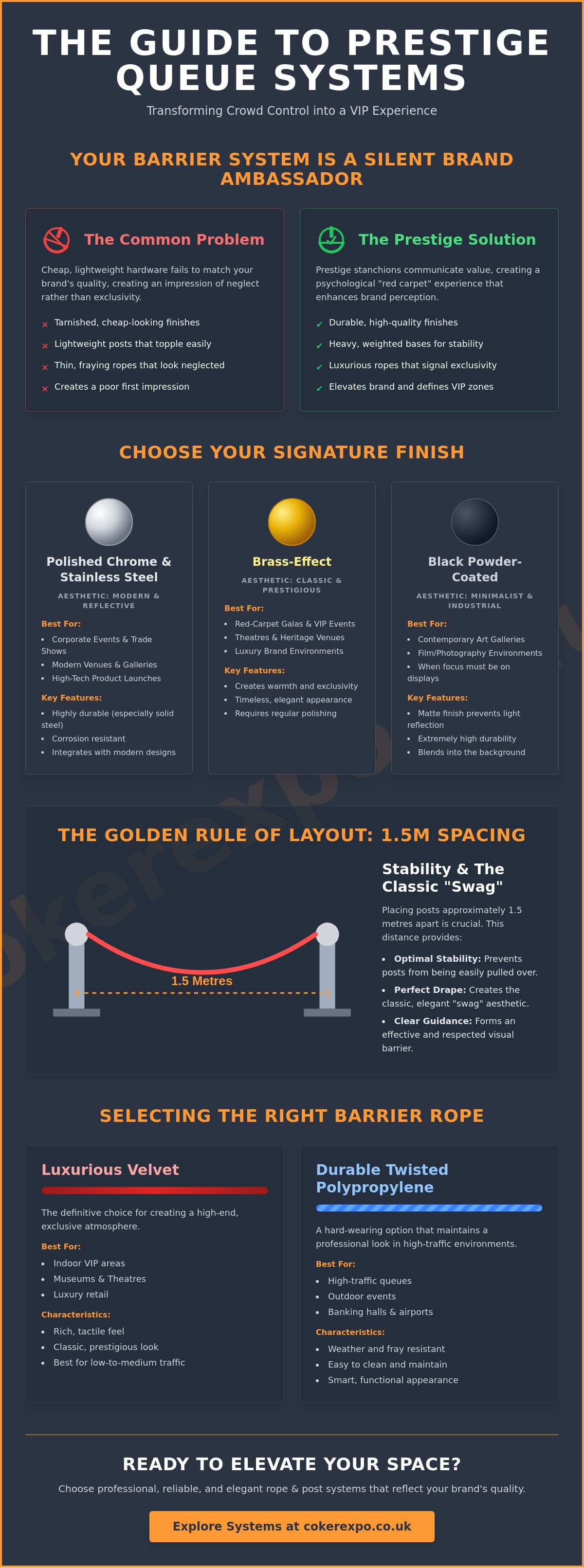
Selecting the right finish for your rope and post-queue system depends on both the venue's aesthetic and the expected footfall. While aesthetics drive the initial choice, the technical construction determines how long that hardware remains professional. High-traffic environments demand materials that resist scratches and tarnishing. Stainless steel and powder-coated finishes offer the highest durability, ensuring your investment doesn't look worn or "cheap" after just a few events. Choosing the wrong material can lead to tarnished surfaces that undermine your brand's prestige.
Polished Chrome and Stainless Steel
Polished chrome is the industry standard for modern corporate events and large-scale trade shows. Its highly reflective surface helps it integrate seamlessly with exhibition stand design by mirroring the surrounding lighting and graphics. From a technical perspective, solid stainless steel is superior to simple chrome plating. It provides natural corrosion resistance and a heavier physical presence. This weight is a critical safety feature; it prevents the posts from shifting when ropes are pulled or leaned upon by visitors.
Brass-Effect and Black Powder-Coated Alternatives
Brass-effect stanchions are the definitive choice for heritage venues, traditional theatres, and red-carpet galas. They provide a sense of warmth and established prestige that chrome cannot replicate. On the other end of the spectrum, black powder-coated posts offer a minimalist, industrial look. These are ideal for contemporary art galleries or high-tech product launches where the hardware should disappear into the background to keep the focus on the product.
When considering lighting, matte black is often the better choice for areas with heavy photography or filming. Glossy finishes can cause distracting lens flares under intense exhibition lighting. Regardless of the finish you select, ensuring your layout adheres to Crowd Management Safety guidelines is essential for preventing accidents in dense crowds. A stable, well-placed system protects both your guests and your equipment.
Maintenance is the final factor in your decision. High-shine surfaces like polished brass and chrome require regular cleaning with a microfibre cloth to remove fingerprints and oils. In busy environments, these marks can quickly make premium hardware look neglected. Powder-coated black finishes are significantly more forgiving and require less frequent buffing to maintain their professional appearance. If you're ready to upgrade your venue's flow, you can view our durable rope and post barriers to find the right match for your branding.
Selecting the Right Barrier Ropes: Velvet vs. Twisted
The choice of rope material determines the physical experience of your queue. While the post provides the structure, the rope provides the aesthetic finish. A high-quality rope and post-queue system relies on the weight and drape of the barrier to create a professional boundary. Using a dedicated rope and post-queue system allows you to adjust the tension to suit the specific layout and lighting of your room. Proper tension prevents the rope from pulling the posts out of alignment, which is a common failure in poorly planned setups.
Colour psychology plays a significant role in visitor perception. Red ropes are the definitive choice for awards ceremonies and high-end hospitality. Blue ropes often suit corporate environments or financial institutions, projecting a sense of stability and trust. Black ropes offer a modern, neutral alternative that works well in galleries or high-tech product launches. Always ensure the end-clip finish matches your post finish exactly; using a brass clip on a chrome post immediately diminishes the professional impact of the setup.
Velvet Ropes: The Ultimate VIP Aesthetic
Velvet ropes provide a tactile, soft-barrier approach that is synonymous with luxury. They are best suited for indoor environments where the primary goal is brand elevation rather than heavy-duty crowd control. Because velvet is a natural dust magnet, regular maintenance is required to keep it looking pristine. Using a lint roller or a soft brush once per week prevents the fabric from looking dull. These ropes offer a high-density foam core that maintains its circular shape, preventing the "thin" look common in low-quality alternatives.
Twisted Ropes: Durability for Busy Environments
Twisted polypropylene ropes offer significantly higher tensile strength, making them the superior choice for high-pressure queue management. They provide a traditional, nautical aesthetic that works well in public buildings or outdoor venues. Polypropylene is a robust synthetic material that maintains its integrity and colour for several seasons even when exposed to fluctuating humidity and sunlight. These ropes are designed to withstand the physical strain of visitors leaning on the barrier in dense crowds.
For a system that balances aesthetics with extreme resilience, browse our collection of rope and post barriers to find the right material for your venue.
Professional Setup: Planning Your Queue System Layout
Designing an efficient layout requires more than just placing hardware in a line. A rope and post-queue system must balance visitor flow with the physical limitations of your venue. Start by measuring the total linear distance of the area you intend to cordon off. You should account for entry and exit points, ensuring they are wide enough to meet the 2010 ADA Standards for Accessible Design, which require a minimum clear width of 36 inches for wheelchair access.
The 1.5-metre rule is the professional standard for achieving the ideal rope drape. Placing posts further than 1.5 metres apart causes the rope to pull on the stanchions, which compromises stability and creates a "tight" look that lacks prestige. Conversely, placing them too close together results in excessive slack that can become a trip hazard. Maintaining this consistent spacing ensures that the weighted bases can effectively resist the lateral pressure of a moving crowd. It's a simple technical adjustment that significantly improves the durability of your setup.
Communication is the final layer of a professional setup. Integrating sign holders into the top of your posts allows you to provide directions or promotional messaging while guests wait. This reduces the burden on your staff and keeps visitors informed. When the event concludes, the CokerExpo range is designed for rapid knockdown. Most components feature a simple screw-in assembly that doesn't require tools, allowing for fast transport and compact storage in high-pressure event environments.
Calculating Post Quantities
It's easy to underestimate the number of posts required for a complex queue. Linear distance doesn't always equal effective barrier length, especially when corners are involved. Every change in direction requires an additional post to maintain the tension of the system. To calculate your requirements accurately, use this industry-standard formula:
- (Total Linear Distance in Metres / 1.5) + 1 = Number of Posts needed.
For example, a 6-metre straight run would require 5 posts. If your layout includes a 90-degree turn, you should add one extra post to that corner to ensure the ropes don't cut across the walking path. This prevents visitors from accidentally snagging the rope as they round the corner.
The CokerExpo Collection Advantage
Our Rope and Post collection features 6 key variations, providing the flexibility needed for bespoke event requests. We prioritize the physical experience of the operator. This means our hardware is simple to construct yet heavy enough to remain secure once in place. Whether you need a temporary VIP area or a permanent guidance system, our products represent a sound business investment in your venue's infrastructure. We focus on speed of fulfillment so you have the essential tools ready for your next deadline.
Browse the full Rope and Post range at CokerExpo to secure high-performance hardware for your next event.
Invest in Professional Infrastructure for Your Venue
Achieving the perfect balance of visitor flow and aesthetic prestige depends on the quality of your hardware. A professional rope and post-queue system does more than manage crowds; it reinforces your brand's commitment to excellence through stable, weighted bases and high-performance finishes. By applying the 1.5-metre spacing rule and selecting materials that match your venue's lighting, you ensure a layout that's both safe and visually striking. It's a sound business investment that protects your equipment and your guests simultaneously.
CokerExpo has provided UK-based expertise since 1999, offering reliable solutions for the most demanding event environments. We provide national delivery on all stanchion systems to ensure you meet your project deadlines without stress. Our hardware's designed for rapid assembly, so your team won't waste valuable time during high-pressure setups. Whether you're planning a red-carpet gala or a high-traffic trade show, we have the technical knowledge to support your bespoke requests. We prioritize the physical experience of the operator, ensuring every post is easy to transport and construct. Secure the essential infrastructure your venue requires today.
Shop the Premium Rope and Post Collection
Frequently Asked Questions
How far apart should rope and post barriers be placed?
Place your posts exactly 1.5 metres apart to achieve the professional "swag" effect. This specific distance ensures the rope drapes naturally without putting unnecessary lateral tension on the stanchions. If you exceed this distance, the rope will pull the posts out of alignment, which compromises the stability of your layout. Sticking to this measurement also helps maintain clear, accessible pathways that comply with 2010 ADA physical spacing requirements.
What is the difference between a retractable belt and a rope barrier?
The primary difference lies in the psychological impact on your visitors and the intended environment. A retractable belt is a utility tool designed for high-volume, functional crowd control in airports or retail settings. A rope and post-queue system is a prestige setup that signals exclusivity and high brand value. While belts are efficient for rapid throughput, ropes are the preferred choice for VIP zones and luxury exhibition spaces where aesthetics are a priority.
Can I use rope and post systems outdoors?
You can use these systems outdoors, provided you select weather-resistant materials like twisted polypropylene ropes. Unlike velvet, polypropylene doesn't absorb moisture or rot when exposed to rain. We recommend using stainless steel or black powder-coated posts for these environments because they offer superior corrosion resistance. These finishes maintain their professional appearance despite exposure to fluctuating humidity and sunlight, making them a sound long-term business investment for outdoor venues.
How do I clean and maintain chrome stanchion posts?
Clean your chrome posts using a soft microfibre cloth to remove fingerprints and surface oils that accumulate in high-traffic areas. You should avoid using abrasive chemicals or scourers that can permanently scratch the polished finish. For persistent marks, a damp cloth with a mild detergent is usually sufficient for restoration. Regular buffing ensures the hardware continues to reflect your venue's lighting and maintains the premium aesthetic your event branding requires.
Are the bases of the posts heavy enough for high-traffic areas?
Every post in our collection features a professional-grade weighted base designed specifically for stability in busy public spaces. These bases provide a low centre of gravity to prevent the hardware from toppling if a visitor accidentally leans on the rope. This is a critical safety feature that protects your guests and ensures your queue layout remains exactly where you positioned it. Reliable weight is what distinguishes professional hardware from lightweight, cheap-looking alternatives.
Can I add signage to my rope and post-queue system?
You can easily integrate sign holders into the top of most stanchion posts to communicate directly with your guests. These attachments allow you to display directional information or promotional messaging while visitors wait in the queue. Adding signage turns your barrier system into an active communication tool that reduces the burden on your event staff. It helps manage visitor expectations and improves the overall flow of your event without requiring additional personnel.
Laisser un commentaire