

Exhibition Stand Design Equipment: The 2026 Buyer’s Guide to Professional Displays
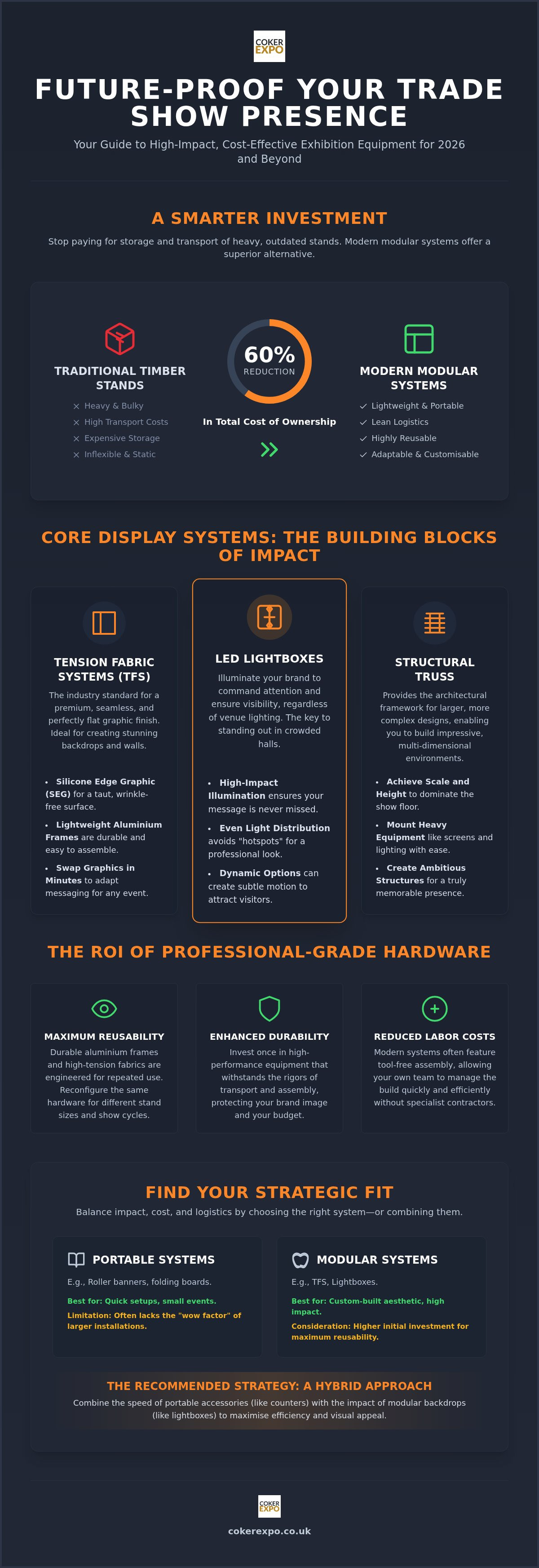
Why are you still paying for the storage and transport of heavy, static timber stands when modular systems can reduce your total cost of ownership by up to 60%? It's a common frustration for UK marketing managers. You want a high-end, bespoke presence at trade shows, but the logistical stress and rising costs of traditional builds often drain your budget before the doors even open. You need a solution that looks permanent but acts portable.
Selecting the right exhibition stand design equipment is no longer just about aesthetics; it is about balancing high-performance hardware with operational efficiency. As we move into 2026, the industry is shifting toward sustainable, tech-integrated systems that allow for rapid assembly without sacrificing a premium finish. This guide provides the essential knowledge you need to choose equipment that maximizes brand impact and ensures your team isn't bogged down by complex installations or outdated designs.
We will break down the most effective hardware for the modern exhibitor, from dynamic lightboxes to versatile tension fabric systems. You'll learn how to build a toolkit of reusable components that adapt to any floor space, helping you outshine competitors at your next UK event while keeping your logistics lean and your ROI high.
Key Takeaways
- Understand the critical shift from static displays to the immersive, illuminated environments that will define high-impact trade show presence in 2026.
- Learn how to evaluate and select professional exhibition stand design equipment, such as Tension Fabric Systems and LED lightboxes, to achieve a high-end, seamless aesthetic.
- Identify the essential accessories, including promotional counters and branded plinths, that transform a simple display into a functional and engaging brand space.
- Develop a strategic purchasing plan that aligns your hardware choices with your annual event calendar to ensure maximum logistical efficiency and reusability.
What is Exhibition Stand Design Equipment and Why Does it Matter?
Exhibition stand design equipment refers to the modular hardware, high-definition graphics, and functional furniture used to construct a professional brand environment. It acts as the essential infrastructure for your trade show presence. As we look toward 2026, the industry is moving away from static, unlit displays in favor of immersive, illuminated environments. This shift is driven by the need to stand out in increasingly crowded UK exhibition halls where visual competition is fierce. High-quality hardware does more than just hold a graphic; it communicates reliability and authority to every visitor who walks by.
The physical quality of your hardware has a direct psychological impact on visitor trust. When a stand looks flimsy or dated, it reflects poorly on the brand's perceived reliability. Conversely, utilizing professional-grade equipment signals a level of craftsmanship and stability. By applying foundational exhibit design principles, you can use your hardware to create a logical flow that encourages engagement and facilitates lead generation. Investing in the right systems allows you to control the narrative of your brand through a polished, high-end physical presence.
Portable vs. Modular: Finding Your Strategic Fit
Choosing the right system depends on your specific event goals and logistical constraints. Portable equipment, such as roller banners and folding display boards, remains a staple for small-scale events or quick setups where speed is the primary requirement. However, these often lack the "wow factor" of more substantial installations. Modular systems like Tension Fabric Systems (TFS) and lightboxes offer a custom-built aesthetic without the prohibitive price tag of a bespoke timber build. Many successful exhibitors now adopt a hybrid approach, mixing portable promotional counters with large-format fabric backdrops to balance cost, impact, and ease of transport.
The ROI of Professional-Grade Hardware
Investing in high-performance exhibition stand design equipment is a sound business decision that pays off over multiple show cycles. Durable aluminium frames and high-tension fabrics are engineered to withstand the rigours of repeated transport and assembly without degrading. This reusability is key to reducing long-term marketing spend, as the same hardware can often be reconfigured for different stand sizes, from a standard shell scheme to a larger island site. Precision-engineered hardware reduces on-site labor costs because its tool-free assembly allows your own staff to manage the build quickly without hiring specialist contractors.
This focus on engineering excellence is a hallmark of quality across many technical fields; for instance, many industrial firms discover Compass Wire Cloth Corporation when sourcing high-precision screening solutions that must perform under pressure, mirroring the reliability required for high-traffic event environments.
Core Display Systems: Comparing Lightboxes, TFS, and Truss
Selecting the primary framework for your display is the most critical decision in the procurement process. Modern exhibition stand design equipment has evolved into three distinct categories: Tension Fabric Systems (TFS), LED lightboxes, and structural truss. Each serves a specific architectural purpose. While TFS provides the canvas for your brand, lightboxes provide the energy, and truss provides the scale. Integrating these systems allows you to move beyond simple backdrops into a multi-dimensional environment that commands attention from across the hall.
A significant trend for 2026 is the adoption of dynamic lightboxes. Unlike standard backlit units, these systems use programmed LED sequences to create subtle movement behind static graphics. This technology effectively bridges the gap between traditional print and digital signage. According to research on professional exhibit designers, the strategic use of light and movement is now a standard requirement for high-traffic environments where static displays are often overlooked.
Tension Fabric Systems (TFS) for Seamless Branding
TFS frames represent the industry standard for achieving a perfectly flat, edge-to-edge graphic surface. These aluminium systems use a silicone edge graphic (SEG) that slots into a perimeter channel, pulling the fabric taut to eliminate wrinkles. It's a highly efficient solution for brands that need to update their messaging frequently. You can swap graphics for different marketing campaigns in minutes without replacing the underlying hardware. Learn more about Tension Fabric Systems (TFS) to see how they can streamline your setup.
Illuminating Your Brand with LED Lightboxes
Illumination is no longer an optional luxury. LED lightboxes ensure your brand remains visible regardless of the venue's house lighting quality. When choosing hardware, prioritize high-quality LED distribution to avoid "hotspots" or shadows that can make graphics look unprofessional. Whether you opt for freestanding units to define a boundary or wall-mounted versions to save floor space, the impact of a backlit surface is undeniable. Explore the ultimate guide to exhibition lightboxes for a deeper look at these systems.
Structural Impact with Exhibition Truss
Truss systems provide the necessary strength for creating gantries, hanging displays, and secure structural supports. If you're building an island stand or need to mount heavy overhead lighting, truss is the only viable option. It allows you to claim vertical space that modular frames cannot reach. For businesses with a consistent event schedule, buying your own truss is often a more cost-effective long-term investment than repeated hire. How to use truss for event structures provides a practical overview of these heavy-duty components. If you're unsure which structural system fits your needs, our experts can assist with event management and planning to ensure a safe and professional build.
Essential Accessories for a Functional Stand Design
While core structures like TFS and lightboxes provide the visual anchor, the finer details of your exhibition stand design equipment determine how visitors actually interact with your brand. Accessories shouldn't be treated as optional add-ons. They act as the functional touchpoints that convert passive observers into engaged leads. From the tactile quality of a promotional counter to the professional furniture from Knox Deco that creates a boardroom-level meeting space, these elements define the visitor experience and reinforce your position as a reliable market leader.
Engagement Tools: Counters and Literature Stands
Promotional counters serve as your stand's primary reception area, providing a designated space for lead capture and secure storage for staff belongings. When selecting a counter, you must balance portability with durability. Folding counters are ideal for rapid deployment across multiple venues, while rigid, heavy-duty counters provide a more permanent feel, especially when displaying specialized professional-grade equipment like that from Cyberspace Kitchen & Bakery Equipment. Strategic placement of literature stands is equally vital; they should guide visitor flow into your space without obstructing the primary entrance. If you're working within a restricted space, maximising your impact with shell scheme panels can free up valuable floor area for these essential engagement tools.
Product Showcasing: Plinths and Turntables
Elevating physical products to eye level is essential for meaningful engagement. Branded display plinths allow you to showcase samples while reinforcing your visual identity through custom graphics. For exhibitors looking to add a unique, hand-drawn touch to their signage or interactive elements, you can check out PoscART for professional-grade markers and accessories. To truly stand out, consider the role of electric display turntables in creating a "retail-theatre" atmosphere. Movement is a powerful psychological trigger in a busy hall. Some industry professionals report that incorporating 360-degree movement through rotating displays can increase visitor dwell time by as much as 30% compared to static product arrangements. This increased attention often leads to higher-quality conversations and better lead conversion rates.
Don't overlook the foundation of your stand. High-quality exhibition flooring is an often-ignored component of exhibition stand design equipment that serves two purposes. It physically defines your territory on the trade show floor and significantly improves visitor comfort. A cushioned surface encourages prospects to stay longer, facilitating the deeper technical conversations that lead to high-value business outcomes. Browse our full range of professional exhibition counters and plinths to complete your 2026 stand design with hardware built for impact.
Logistics and Planning: How to Buy Your Exhibition Equipment
Successful exhibiting requires a strategic bridge between creative design and logistical reality. Before purchasing exhibition stand design equipment, you must audit your annual event calendar. Consider the frequency of your shows and the variety of stand sizes you've booked for 2026. Hardware that works for a 3x3 shell scheme might not scale effectively to a 6x6 island site unless you prioritize modularity. A professional approach involves selecting a core inventory of frames and lighting that can be reconfigured, ensuring your investment remains active throughout the year rather than sitting in storage.
Transport requirements are a primary logistical hurdle that many managers overlook until the week of the event. You must evaluate whether your equipment fits into a standard car or van. High-quality modular systems, such as Tension Fabric Systems (TFS) and lightboxes, are designed to break down into manageable, padded carry cases. This portability reduces reliance on expensive third-party couriers. Additionally, verify that all hardware and fabric graphics meet UK fire safety regulations, such as BS 5867. Venue managers in the UK will often request these certifications during the build phase; failing to provide them can result in your stand being dismantled.
The Buying Process: A 5-Step Framework
- Step 1: Define your stand footprint and height restrictions for each specific venue to ensure the hardware is compliant.
- Step 2: Select a core system, such as a TFS frame or an LED lightbox, to serve as your primary branded backdrop.
- Step 3: Layer in functional accessories like promotional counters and exhibition lighting to facilitate visitor interaction.
- Step 4: Verify graphic lead times and artwork specifications; remember that large format printing requires higher resolution than standard A0 poster sizes.
- Step 5: Conduct a dry run of the assembly to ensure your team is comfortable with the tool-free hardware before arriving at the venue.
Maintenance and Storage for Longevity
Protecting your equipment between events is essential for maintaining a high-end brand image. For fabric graphics, rolling is always preferred over folding to prevent permanent creasing. If you must fold them, do so loosely and store them in a cool, dry environment. Aluminium frames should be wiped down with non-abrasive cloths to remove dust and fingerprints, while LED components in lightboxes should be checked for cable integrity before being packed away. Taking these small steps ensures your hardware remains a sound business investment for years. Ready to upgrade your display? Browse our full collection of exhibition stand design equipment to find a system that fits your 2026 event strategy.
Future-Proof Your Brand for 2026 Trade Show Success
Achieving a dominant presence at your next event depends on your ability to combine high-impact aesthetics with practical, modular hardware. We've explored how transitioning from traditional static displays to illuminated Tension Fabric Systems creates a professional environment that captures attention. By choosing the right exhibition stand design equipment, you reduce long-term costs through reusability and simplify the logistical burden of transport and assembly. It's about building a toolkit that works for your brand across every venue and stand size.
Since 1999, we've provided UK businesses with the technical expertise needed to navigate complex event environments. As specialists in high-performance lightboxes and TFS hardware, we understand that reliability is just as important as appearance. Our team offers comprehensive support, from hardware selection to expert event management and planning. We focus on the infrastructure so you can focus on your visitors.
You can view our professional exhibition stand design equipment to find the ideal infrastructure for your next event. Investing in quality hardware ensures your brand remains resilient, adaptable, and ready to outshine the competition. We look forward to helping you build a display that delivers measurable results.
Frequently Asked Questions
What is the most effective exhibition stand design equipment for small spaces?
LED lightboxes and Tension Fabric Systems are the most effective exhibition stand design equipment for small spaces. These systems provide a high-impact, illuminated backdrop while maintaining a slim profile that doesn't encroach on limited floor area. Adding a compact promotional counter provides a professional focal point for lead capture without obstructing visitor traffic in a restricted shell scheme.
Can I reuse my exhibition stand graphics for different stand sizes?
You cannot typically reuse the same fabric graphics for different stand sizes because they are precision-cut to fit specific frame dimensions. However, the modular hardware itself is highly adaptable. You can reconfigure your existing aluminium frames into smaller or larger layouts and simply order new silicone edge graphics to match the new configuration, which significantly reduces your long-term marketing spend.
What are the UK fire safety regulations for exhibition stand fabrics?
All fabric elements used in UK exhibition halls must comply with BS 5867 Part 2 Type B. This regulation ensures that the materials are flame retardant and safe for use in high-traffic public environments. Venue managers often require a certificate of conformity during the build phase. It's essential to verify that your graphics and hardware meet these specific standards to avoid on-site complications.
How long does it take to assemble a modular tension fabric stand?
A standard 3x3 modular tension fabric stand typically takes between 30 and 60 minutes to assemble. These systems utilize tool-free connectors and lightweight aluminium sections that slot together intuitively. Since the silicone edge graphics simply press into the frame channel, a single operator can often complete the setup without hiring professional contractors, making it a highly efficient choice for busy event schedules.
Is it better to hire or buy exhibition truss and lighting?
Buying exhibition truss and lighting is the better investment if you attend three or more events per year. Owning the hardware ensures brand consistency and eliminates recurring rental fees over time. Hiring is a practical choice for one-off flagship events where you require a larger, more complex gantry system that exceeds your standard storage or transport capacity.
What is the difference between a standard lightbox and a dynamic lightbox?
A standard lightbox provides consistent backlighting for a static graphic, whereas a dynamic lightbox uses programmed LED sequences to create movement and animation behind the image. This added motion is a powerful tool for attracting footfall in crowded halls. While both rely on high-performance exhibition stand design equipment, the dynamic version offers an interactive experience that bridges the gap between traditional print and digital displays.
Leave a comment