

Planning High-Impact Ceilings with Lighting: The Exhibition Manager’s Checklist
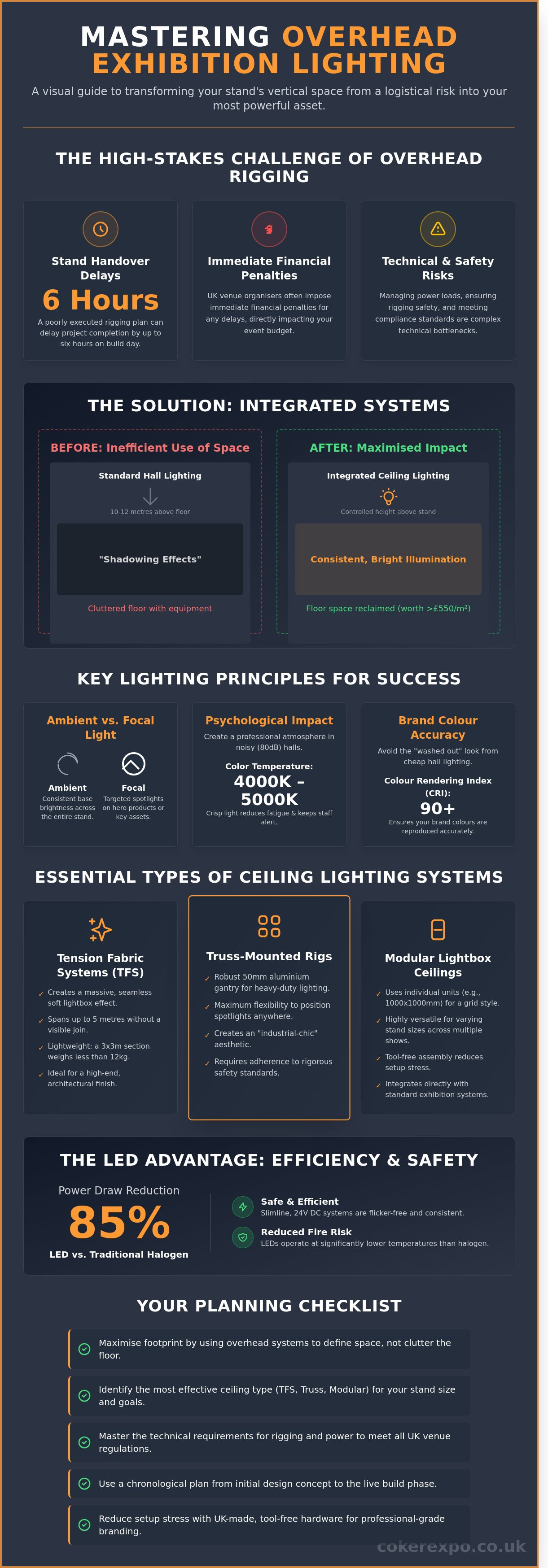
A poorly executed overhead rigging plan can delay a stand handover by up to six hours, often triggering immediate financial penalties from UK venue organisers. You already know that the vertical space above your floor plan is your most impactful branding asset, but it also presents the most significant logistical risks. Managing power loads and ensuring overhead safety while trying to design high-impact ceilings with lighting can quickly become a technical bottleneck.
Our professional planning checklist allows you to master these technical and aesthetic requirements with confidence. We've developed a clear framework for hardware selection, explaining the vital difference between ambient and focal illumination while ensuring your installation meets every safety compliance standard. You'll leave with a practical roadmap to transform your overhead space into a seamless, high-performance feature that works as hard as your team on the ground.
Key Takeaways
- Learn how to maximise your stand’s footprint by using integrated overhead systems to define space without cluttering the floor with equipment.
- Identify the most effective ceilings with lighting for your specific stand size, focusing on versatile modular systems that deliver high visual impact.
- Master the essential technical requirements for rigging and power safety to ensure your overhead lighting meets all UK venue regulations.
- Utilise a chronological planning checklist to manage every stage of the process, from initial design concepts to a seamless live build phase.
- Discover how to reduce setup stress with UK-made hardware designed for tool-free assembly and professional-grade branding.
Understanding the Role of Ceilings with Lighting in Event Environments
In a professional B2B context, ceilings with lighting refer to integrated overhead illumination systems that merge structural truss or gantry components with high-output LED technology. These systems are designed to define the physical volume of an exhibition stand without the need for floor-standing equipment. By shifting the lighting infrastructure upward, exhibitors reclaim valuable floor space. In major UK venues like the NEC or ExCeL London, where floor space costs often exceed £550 per square metre, this structural efficiency provides a direct financial advantage. It allows for a cleaner, more open stand design that facilitates better visitor flow.
Effective stand design relies on architectural lighting design principles to create a balance between ambient and task-oriented light. While ambient light provides a consistent base level of brightness across the stand, targeted spotlighting focuses on specific product hero pieces. The psychological impact of this environment shouldn't be overlooked. Exhibition halls are high-pressure spaces with noise levels often hitting 80 decibels. Using a colour temperature between 4000K and 5000K creates a crisp, professional atmosphere that helps reduce visitor fatigue and keeps staff alert during long ten-hour shifts.
Why Vertical Lighting Isn’t Enough
Standard hall lighting is usually positioned 10 to 12 metres above the floor, which creates significant "shadowing effects" on complex stand builds. Integrated ceilings with lighting solve this by providing a consistent wash of light from a much lower, controlled height. This ensures that every brand asset is visible. It also draws the eye upward, which increases the perceived presence of the stand. For a standard 6x3 metre plot, adding an illuminated overhead structure makes the space feel more authoritative and permanent.
The Aesthetic Advantage of Illuminated Ceilings
A glowing overhead system creates a premium feel that signals quality to high-end B2B buyers. These systems allow marketing managers to define different zones, such as a private meeting area or a product demo zone, using light alone. This is particularly effective when using tension fabric graphics. Light sources with a Colour Rendering Index (CRI) of 90 or higher ensure that your brand colours are reproduced accurately, preventing the "washed out" look that occurs under cheap, low-quality hall luminaires.
Essential Types of Integrated Ceiling Lighting Systems
Modern exhibition stands rely on ceilings with lighting to define spaces and attract visitors from across the hall. The industry has shifted rapidly toward LED technology, which offers an 85% reduction in power draw compared to traditional halogen bulbs. This transition is not just about energy efficiency; it is about safety. LED panels operate at significantly lower temperatures, reducing the risk of fire when integrated into enclosed ceiling structures. We have moved away from bulky 500W floodlights to slimline, 24V DC systems that provide consistent, flicker-free illumination across any floor plan.
Tension Fabric Systems (TFS) with Backlighting
Tension fabric systems use aluminium frames and silicone edge graphics (SEG) to create a massive, soft lightbox effect. This method provides a seamless aesthetic that modular tiles cannot match, as a single piece of dye-sublimated fabric can span up to 5 metres without a visible join. Because fabric is lightweight, a 3m x 3m ceiling section often weighs less than 12kg. This makes it a preferred choice for exhibitors looking to minimise rigging costs while maintaining a high-end, architectural finish.
Truss-Mounted Lighting Rigs
Using 50mm diameter aluminium gantry or truss provides the robust skeleton needed for heavy-duty track lighting. This setup is ideal for the "industrial-chic" look, where the structural elements remain visible. It offers maximum flexibility, allowing technicians to slide and lock spotlights anywhere along the fixed truss ceiling to highlight specific products. When installing these systems, managers must adhere to OSHA lighting safety standards to ensure all temporary electrical connections and suspension points meet rigorous site requirements. This prevents overloading and ensures the safety of everyone on the stand.
Modular Lightbox Ceilings
Modular systems utilise individual LED lightbox units, typically in 1000mm x 1000mm increments, to create a grid-style ceiling. This approach is highly versatile for businesses that attend multiple shows with varying stand sizes. These units integrate directly with standard shell scheme infrastructures or standalone modular frames. If you are planning a complex layout, our modular hardware provides the necessary stability to support these integrated lights without requiring specialist tools for assembly. This modularity ensures your investment remains useful whether you are occupying a 9sqm corner plot or a 50sqm island stand.
Technical Requirements for Rigging and Powering Ceiling Lights
Designing ceilings with lighting isn't just about aesthetics; it's a structural and electrical commitment. The primary concern for most marketing managers is the perceived complexity of integrating power safely. You can eliminate this stress through professional pre-planning. If you don't submit a detailed rigging plan to the venue at least 28 days before build-up, you risk costly delays or denied permits at sites like the NEC or Olympia London. We prioritise tool-free assembly in our modular systems to ensure your team reduces on-site labour costs by up to 30% compared to traditional nut-and-bolt rigs.
Power Distribution and Load Balancing
Calculating total wattage is your first step to avoid tripped circuits. For a standard 36-square-metre stand, a high-impact LED array typically draws between 600W and 1,200W. You must house LED drivers within the stand structure, ideally tucked into the gantry channels for a seamless look. Choosing between a venue ceiling power drop and a floor-based supply is a critical budget decision. A ceiling drop at a major UK venue can cost upwards of £450, but it removes the trip hazard of cables running up the stand legs and keeps the visual profile clean.
Safety Standards and Rigging Compliance
In the UK, all fabric elements used in overhead structures must meet BS 5867 Part 2 Type B fire retardancy standards. When we talk about "load-bearing" for a suspended structure, we're calculating the weight of the truss, the tension fabric, and the lights against the venue's specific point-load limits. Every overhead component requires a secondary fixing. Use steel safety bonds for every light fixture to ensure that if a primary bracket fails, the unit remains safely suspended above the public.
Light Intensity and Lux Levels
Lux levels are the measurement of light intensity on a surface. For an inviting exhibition atmosphere, aim for 400 to 500 Lux in meeting areas, while boosting product displays to 800 Lux for maximum impact. Consult Exhibition Lighting Standards to understand how different intensities affect visibility and visitor comfort. Avoid glare by using diffused LED panels; direct, unshielded bulbs often cause visitor fatigue and reduce the time people spend engaging with your brand.
The Ultimate Exhibition Ceiling Lighting Planning Checklist
Success on the trade show floor depends on meticulous scheduling. When you're managing complex ceilings with lighting, a mistake in the planning phase can lead to costly delays or safety failures on build day. Use this chronological guide to keep your project on track and ensure your overhead gantry meets every regulatory standard. Always cross-reference these points with your specific venue manual, as requirements at the NEC can differ significantly from those at ExCeL London.
Pre-Event Preparation Checklist
Your preparation should begin at least six months before the doors open. This stage is about technical feasibility and budget control.
- Verify Rigging Heights: Check the exhibitor manual for the maximum permissible height. In many UK halls, this is capped at 6 metres, though specific blocks may allow for 10-metre clearances.
- Calculate Power Loads: Confirm the total power allowance for your stand location. A large backlit ceiling can easily exceed a standard 13-amp socket; you'll likely need to organise a 32-amp single-phase supply to ensure consistent illumination without tripping.
- Select Colour Temperature: Choose your LEDs based on brand identity. Use 3000K (warm) to create a relaxed, hospitality-focused environment or 5000K (cool) to give tech products a sharp, clinical edge.
- Book Rigging Points: Submit your rigging plans to the venue's primary contractor at least 12 weeks out. Early booking often secures a 15% discount on standard site rates.
On-Site Build and Testing Checklist
The build phase is high-pressure. You've got a limited window to get the structure safely into the air, so precision is non-negotiable. Our team finds that 90% of on-site issues are solvable if caught before the structure is hoisted.
- Component Inspection: Inspect all LED panels and drivers for transit damage. Data suggests that 3% of electrical components sustain hairline fractures during haulage that only fail under full load.
- Fabric Tensioning: Ensure all tension fabric is "drum tight" across the frame. If there's any slack, the light will bleed at the edges and create unsightly shadows in the centre of your display.
- Dimming Calibration: Test the dimming range once the hall’s ambient lighting is set. Most exhibition halls operate at roughly 500 lux during show hours, so you'll need to adjust your ceilings with lighting to ensure they pop without washing out your digital screens.
If you're planning your next major show and need a reliable structure that meets all UK safety standards, browse our professional exhibition truss and lighting systems to find the right fit for your brand.
Elevating Your Brand with CokerExpo’s Modular Lighting Solutions
CokerExpo stands as the leading specialist for UK-made exhibition lighting hardware. We provide engineered solutions that simplify complex setups. Our modular lightbox systems are built with a strict tool-free assembly promise. Most components click into place using intuitive locking mechanisms. This ensures your team can focus on the event rather than struggling with complicated mechanics or lost hex keys. Because we manufacture in the UK, we offer a level of reliability and fast turnaround that overseas suppliers cannot match. We understand the high-pressure nature of trade shows. Our hardware is designed to withstand the rigours of frequent transport while maintaining a premium aesthetic.
Custom Lightboxes and Tension Fabric Ceilings
Our Tension Fabric Systems (TFS) offer unparalleled versatility for modern exhibition stands. You can customise every element, from the frame dimensions to the light intensity of the internal LEDs. These systems utilise durable, UK-manufactured aluminium frames that create a seamless brand experience. When designing ceilings with lighting, our TFS frames integrate perfectly with overhead trussing. This allows for high-impact, illuminated displays that remain lightweight and structurally sound. Our fabric frames deliver consistent, flicker-free illumination across the entire surface. We use high-grade 6000-series aluminium to ensure the frames don't warp under the tension of the fabric, maintaining a crisp, professional look for the duration of your event.
Expert Event Planning and Truss Hire
Based in Hampshire, our event management team provides comprehensive planning services for exhibitors throughout the United Kingdom. We know that complex ceilings with lighting require more than just hardware; they need precision engineering and logistical foresight. Our truss hire service supports major UK venues, ensuring your rigging meets all safety standards and local regulations. We handle the technical logistics so you can concentrate on your visitors. With over 25 years of industry experience, we ensure your infrastructure is robust and impactful. Our team is ready to assist with everything from initial CAD drawings to on-site installation. Contact our team to discuss your next illuminated ceiling project and discover how our modular solutions can transform your presence at your next trade show.
Secure Your Stand's Impact with Precision Lighting
Executing a successful floor-to-ceiling brand presence requires more than just aesthetic vision; it demands technical precision and reliable hardware. You've now got the framework to manage rigging requirements and power loads while ensuring your ceilings with lighting create the necessary focal point. High-impact displays shouldn't lead to high-stress builds. By prioritising modular systems that offer tool-free assembly, you reduce on-site labour costs and meet tight venue deadlines without compromising on a professional finish.
CokerExpo brings over 25 years of exhibition industry expertise to every project. We manufacture our systems in Hampshire, specialising in tool-free, fast-turnaround assembly that ensures robust quality control for UK businesses. Whether you're navigating complex rigging rules at Excel London or the NEC, our hardware is designed for seamless integration and maximum visibility. Don't leave your stand's atmosphere to chance.
Explore our range of high-performance exhibition lightboxes to see how our British-made solutions transform your space. Let's make your next trade show your most successful one yet.
Frequently Asked Questions
What is the best colour temperature for exhibition ceilings with lighting?
A colour temperature of 5600K is the industry standard for exhibition ceilings with lighting. This daylight-balanced output ensures that your graphics and products appear with neutral, accurate colour rendering. Warmer tones like 3000K often make white tension fabrics look yellow under hall lights. Using 5600K LEDs allows your stand to cut through the muddy ambient light found in most UK NEC or ExCeL halls.
Can I install a ceiling lighting system myself on a shell scheme stand?
You cannot legally or safely install heavy lighting systems yourself on a standard shell scheme stand. These aluminium structures have a strict weight limit, often as low as 1kg per linear metre. For any significant overhead illumination, you must use a free-standing modular gantry or a bespoke truss rig. This ensures you comply with the Health and Safety at Work Act 1974 without compromising the structural integrity of the venue's equipment.
Are LED lightboxes safe for use as a ceiling in an exhibition hall?
LED lightboxes are entirely safe for ceiling applications provided they carry UKCA certification and use fire-rated materials. The tension fabric must meet BS 5867 Part 2 Type B standards for flame retardancy to pass venue inspections. Because modern LEDs operate on 12V or 24V low-voltage systems, they generate 80% less heat than traditional halogen lamps. This makes them a robust and reliable choice for high-impact overhead displays.
How much power does a typical tension fabric ceiling light require?
A standard tension fabric ceiling light requires between 12W and 15W per square metre. For a common 3m x 3m exhibition plot, you should calculate a total power draw of approximately 135W. Most UK venues provide a minimum 500W power drop, which is more than sufficient for this setup. Always check your transformer's efficiency rating, as a 90% efficient driver will reduce wasted energy and heat buildup during long event days.
Do I need a special permit from the venue for suspended ceiling lighting?
You must obtain a "Permission to Rig" permit for any lighting suspended from the venue's roof. Venues require a detailed Risk Assessment and Method Statement (RAMS) and a structural sign-off from a qualified rigger. Permit fees typically start at £180 and must be submitted at least 21 days before the event opens. Failure to provide these documents will result in the venue's health and safety team blocking your installation.
What happens if an LED panel fails during the middle of an event?
If an LED panel fails, the modular nature of modern systems allows for a fast turnaround repair. Most high-quality LED strips are wired in parallel, so a single chip failure won't cause a total blackout. We recommend keeping a spare 60W or 100W transformer on-site, as driver failure accounts for 95% of lighting issues. These components are usually accessible via a discrete zip or silicone edge in the fabric for quick replacement.
How do I hide the cables in an open truss ceiling lighting rig?
Hide your cables by running them along the top chord of the truss and securing them with 15mm Velcro ties. Professional riggers avoid using electrical tape because it leaves a sticky residue on the aluminium gantry. For a seamless look, use 10mm plastic cable management clips that snap directly into the profile of the modular system. This keeps the wiring invisible to visitors while ensuring all leads are tidy and snag-free.
Is it better to hire or buy a ceiling lighting system for annual shows?
You should buy your ceiling lighting system if you plan to exhibit at 3 or more shows over two years. The return on investment typically hits at the 2.5-show mark compared to the recurring costs of hire. Buying UK-made hardware gives you total control over your branding and ensures a consistent user experience for your build team. Hiring is only more cost-effective for one-off international events where shipping costs exceed the hardware's value.
Leave a comment