

Plinthy Plinths: The Professional Guide to Exhibition Display Pedestals
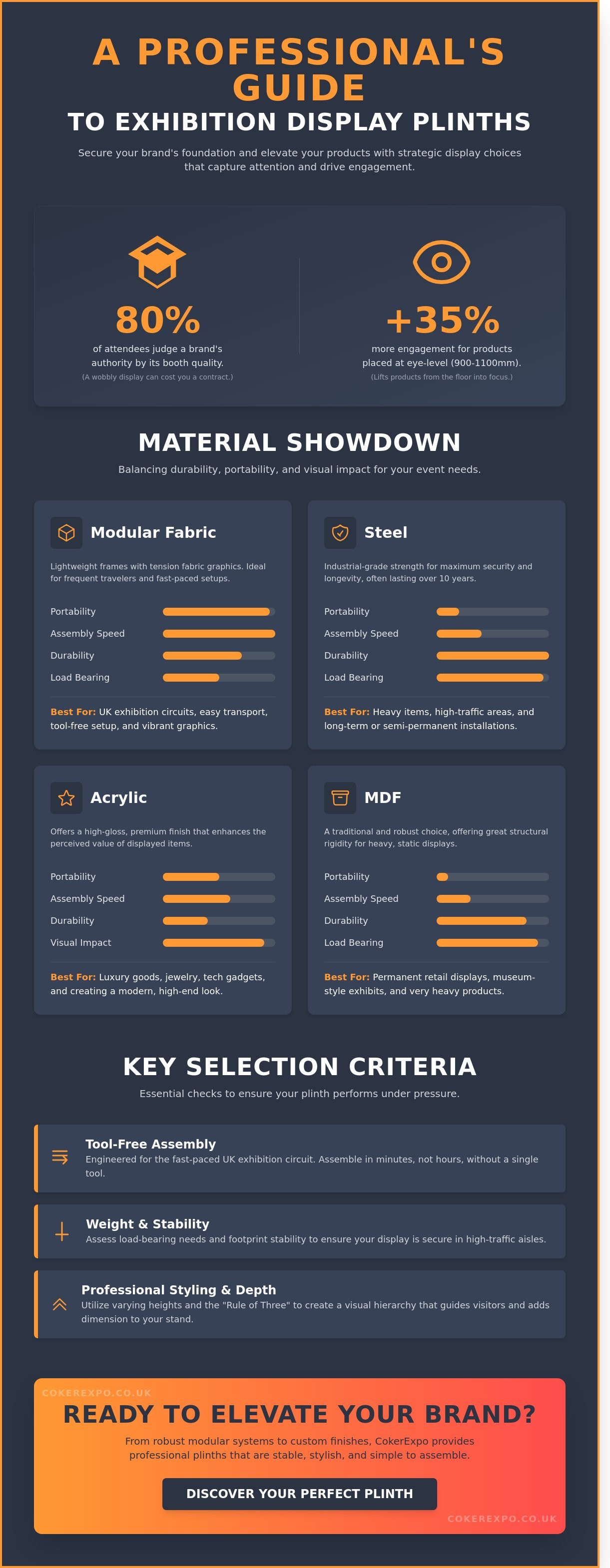
A wobbling display pedestal is the fastest way to lose a five-figure contract before you've even said hello, as 80% of attendees judge a brand's authority by its booth quality. When you utilize plinthy plinths for your next event, you're not just buying a stand; you're securing the foundation of your brand's physical presence. Most marketing managers have faced the frustration of a 20kg wooden block that's impossible to move or graphics that peel away under the intense heat of exhibition hall lighting. It's a common stress point that detracts from your primary goal of lead generation and professional presentation.
We understand that exhibition success relies on hardware that works as hard as your sales team. You likely agree that a display should be robust enough to handle high-traffic crowds while remaining light enough for a single person to assemble without a toolkit. This professional guide details how to select the right exhibition display pedestals to guarantee a stable, high-impact result. We'll examine the technical specifications of modular systems, durable surface finishes, and how to achieve seamless brand integration that lasts through a demanding three-day event schedule.
Key Takeaways
- Understand how elevating products to eye level with plinthy plinths creates a psychological focal point that naturally draws attendees into your exhibition space.
- Learn to balance durability and portability by selecting the right materials, from robust MDF for permanent displays to lightweight modular fabric for easy transport.
- Discover how to assess weight-bearing requirements and footprint stability to ensure your display remains secure in high-traffic exhibition aisles.
- Master professional styling techniques, including the "rule of three" and lightbox integration, to maximize your brand's visual impact and modern appeal.
- Streamline your event setup with tool-free assembly solutions engineered specifically for the fast-paced and demanding UK exhibition circuit.
What are Plinthy Plinths? Elevating Your Exhibition Display
Display plinths are standalone pedestals designed to lift your products off the floor and into the direct line of sight of your audience. In a busy trade show environment, the first three seconds of a visitor's approach are critical. By elevating a prototype, luxury item, or new product to a height of 900mm to 1100mm, you align the object with the visitor's natural eye level. This creates an immediate psychological priority. Research in retail psychology suggests that products placed at eye level receive up to 35% more engagement than those positioned lower, making plinthy plinths a strategic necessity rather than a simple furniture choice.
Understanding What is a Display Stand? helps clarify the functional requirements of these units. Historically, exhibitors relied on heavy, static timber blocks that were difficult to transport and prone to damage. The industry has moved toward modern, portable exhibition plinths that offer tool-free assembly and lightweight frames. These contemporary systems provide the same robust support as permanent fixtures but allow for fast turnaround times between events. They act as vital focal points in open-plan stands, breaking up the horizontal plane and ensuring your key offerings aren't lost in a sea of floor-level carpet.
The Role of Pedestals in Modern Exhibiting
Modern exhibiting is about maximizing the utility of every square meter, especially within a standard 3x3 shell scheme. Plinths allow you to create a visual hierarchy that guides the visitor's journey. Instead of pushing all your displays against the back wall, you can use plinths as "islands" to manage foot traffic flow. This encourages visitors to step onto your stand and interact with products from multiple angles. It transforms a passive viewing experience into an active, tactile one. Our modular systems ensure these islands are stable enough for high-traffic environments while remaining easy to reposition as your stand strategy evolves.
Beyond the Block: Visual Hierarchy and Depth
A flat display is an uninteresting display. Using varying heights prevents your stand from looking clinical or two-dimensional. Professional B2B environments demand clean lines and a sense of order, which is achieved by grouping plinths of different elevations to create depth. This tiered approach allows you to tell a story, perhaps placing a hero product on the tallest pedestal while supporting accessories sit lower down.
Integration is key to a professional finish. Many exhibitors now link their plinth choice to specific graphic standards, such as the A0 paper format, to ensure integrated posters and technical data sheets align perfectly with the pedestal's dimensions. This attention to detail reinforces brand authority. When you invest in high-quality plinthy plinths, you aren't just buying a box; you're investing in a durable, versatile infrastructure that supports your sales team and protects your brand's physical presentation.
Comparing Plinth Materials: From Acrylic to Modular Fabric
Selecting the right material for your plinthy plinths requires a balance between visual impact and operational logistics. MDF remains a staple for semi-permanent installations due to its structural rigidity and ability to support heavy loads. However, the 2024 exhibition market favors versatility. Acrylic offers a high-gloss finish that suits luxury brands, yet it requires careful handling to avoid surface abrasions. For high-traffic environments, steel provides an industrial-grade solution that withstands heavy use. When selecting materials, exhibitors should aim to meet professional museum display standards to ensure both object safety and viewer engagement.
Aesthetic choices often dictate the brand personality on the show floor. Gloss finishes create a high-end, reflective look that works well in jewelry or tech sectors. Conversely, matte finishes are preferred for photography-heavy environments because they eliminate glare from overhead gantry lighting. Sustainability is now a primary driver in procurement. Materials like aluminum and steel offer the longest lifespan, often lasting over 10 years with proper maintenance. Investing in high-quality hardware reduces the need for frequent replacements, making it a sound business investment for repeat exhibitors.
Lightweight Portability vs. Permanent Durability
Tension fabric systems (TFS) are rapidly replacing traditional wooden plinths for national tours. A standard wooden plinth is bulky and requires significant storage space. In contrast, collapsible aluminum frames used in TFS can reduce shipping volume by 85% compared to rigid alternatives. This reduction directly lowers logistics costs and carbon footprints. Heavy-duty steel or solid wood remains the correct choice for displaying high-value items weighing over 50kg, where structural integrity is non-negotiable. For most marketing managers, the priority is tool-free assembly and fast turnaround, which modular systems provide without sacrificing a professional appearance.
The Rise of Tension Fabric Plinths
Dye-sublimated fabric graphics provide a seamless, high-end look that rigid panels struggle to match. The fabric is stretched tight over a frame, eliminating visible joins or hinges. It's incredibly easy to replace graphics for different shows without buying new hardware, allowing your plinthy plinths to evolve with your marketing campaigns. These systems integrate perfectly with folding display boards to create a cohesive brand aesthetic across your entire stand. Because the fabric is washable and crease-resistant, the display stays looking fresh show after show. If you're planning a busy event schedule, you can view our portable display plinth options to see how these systems streamline the exhibiting process.
Key Selection Criteria for High-Traffic Events
Selecting the right plinthy plinths for a busy exhibition hall requires more than just an aesthetic choice. High-traffic environments like the NEC or ExCeL London demand hardware that survives constant physical interaction. You need to assess the transportability of your units before the event begins. A collapsible plinth often weighs under 10kg and fits in a padded carry bag, allowing a single staff member to manage the load without hiring site porters. In contrast, solid MDF pedestals might exceed 25kg and require palletised shipping to prevent corner damage during transit.
Surface durability is equally critical for maintaining a professional image. High-pressure laminate finishes provide superior resistance to scratches and fingerprints compared to standard paint. This matters because you'll likely use isopropyl alcohol or heavy-duty wipes to sanitise surfaces throughout the day, and cheaper finishes will degrade under these chemicals. Choosing a robust surface ensures your display looks as fresh on day four as it did during the morning of the opening.
Weight Loading and Stability Requirements
Every display has a Safe Working Load (SWL) that dictates its limits. Standard tension fabric plinths typically support 20kg to 30kg, while reinforced modular systems handle upwards of 100kg. If your product is heavy or valuable, internal shelving or vertical bracing is a necessity to prevent the structure from bowing. Stability is another major factor in public walkways. For any pedestal taller than 1000mm, we recommend a base footprint that is at least 20% wider than the top surface. This lowered centre of gravity prevents accidental tips when crowds inevitably brush against the display in narrow aisles. Many of our tool-free assembly systems include weighted base plates as an optional extra for added security in high-flow zones.
UK Fire Safety and Material Regulations
Venues across the UK enforce strict fire retardancy standards for all stand components. Your plinthy plinths must comply with BS 476 Part 7 (Class 1) or the more stringent Class 0 rating for high-risk areas. Most professional organisers require proof of certification before you can build your stand. We ensure our timber-based and fabric materials meet these benchmarks to avoid any operational delays. Don't rely on verbal assurances; always ask your supplier for a written fire certificate. This document verifies that the materials won't contribute to flame spread, keeping your staff and visitors safe. Following these rules ensures you don't face a forced teardown by the venue fire marshal during the build-out phase. It's a simple step that protects your investment and maintains your professional reputation on the trade show floor.
How to Style Your Plinths for Maximum Brand Impact
Effective styling turns a simple stand into a high-performance sales tool. When you deploy plinthy plinths on your stand, you're creating a focal point that guides visitor traffic. Pairing these pedestals with a lightbox creates a professional, high-tech aesthetic that works well for tech and medical sectors. The glow from the lightbox provides a backdrop that makes the physical product on the plinth stand out against the visual noise of a busy hall, ensuring your hero product isn't lost in the crowd.
Branding decisions depend on your long-term strategy. Applying a high-resolution vinyl logo to the plinth face reinforces brand recall, but keeping the finish neutral allows for greater versatility across different events. For lead generation, many exhibitors now use plinths as dedicated registration hubs or concession points. This setup provides a natural waist-height surface for tablets or scanners, facilitating seamless data capture without the bulk of a full-sized counter. It's a space-saving tactic that increases the usable floor area by up to 20% compared to traditional desks.
Integrated Lighting and Internal Illumination
Lighting is the most effective way to draw eyes in dimly lit exhibition halls. Internally lit plinths use acrylic tops or tension fabric sides to diffuse light, creating a soft glow that suggests premium quality. If your product has intricate details, LED track lighting mounted to the plinth is essential. We recommend battery-powered LED units for island stands to avoid trip hazards from cables. Mains-powered options remain the standard for perimeter displays where power drops are readily available.
Creating Groupings and Product Clusters
Arranging your plinthy plinths in clusters helps tell a cohesive story. Use the "rule of three" by grouping pedestals of varying heights to create visual rhythm. This prevents the display from looking flat. Nesting plinths are particularly efficient; they offer a tiered look and save 50% of storage space during transport. Leave 30% of the top surface empty to maintain a high-end feel. Overcrowding a pedestal devalues the item on display.
Ready to upgrade your display strategy? View our full range of exhibition hardware to find the perfect match for your brand.
The CokerExpo Advantage: Professional Display Plinths
CokerExpo designs every display solution with the high-pressure environment of the UK exhibition circuit in mind. Our plinthy plinths aren't just furniture; they're engineered hardware built to withstand the rigours of transport and repeated use. By manufacturing in-house at our UK facility, we maintain total control over quality standards. This ensures every unit meets the durability requirements of professional trade shows. We understand that exhibition deadlines are non-negotiable. Our production workflow prioritises reliability and speed, offering fast turnaround times that accommodate last-minute event requirements without compromising on structural integrity.
Tool-Free Assembly for Fast Turnarounds
Efficiency is the cornerstone of a successful event build. Our modular plinth systems utilize intuitive components that click together in minutes, requiring zero tools or specialized technical knowledge. This design philosophy directly impacts your bottom line by reducing the need for expensive on-site labour. A single staff member can manage the entire setup. The user experience begins at the van and ends at the stand; our lightweight frames and tension fabric skins fold down into compact carry bags. This portability makes the logistics of moving plinthy plinths between venues straightforward and cost-effective. You spend less time wrestling with hardware and more time engaging with potential leads.
Bespoke Branding and Custom Finishes
Standard solutions don't always fit a unique brand identity. We provide comprehensive customisation options that go beyond the traditional white cube. Our in-house printing team uses high-resolution sublimation techniques to produce vibrant, seamless graphics that wrap perfectly around your pedestal. Whether you require a specific Pantone match or a non-standard geometric shape, our engineering team can adapt our modular hardware to your vision. We offer various top-plate finishes, including acrylic and wood-effect laminates, to complement your product display. To discuss your specific requirements, contact our specialists for a tailored exhibition solution that elevates your presence on the show floor.
- UK Manufacturing: Direct oversight of all production phases at our local facility ensures consistent quality.
- Rapid Deployment: Systems designed for 10-minute assembly by a single person without any specialized equipment.
- Scalability: Modular components that integrate with existing exhibition kits and grow with your business needs.
Transform Your Display Into a High-Impact Sales Tool
Success at a trade show depends on the infrastructure you choose to support your products. Integrating plinthy plinths into your stand ensures your items sit at the optimal eye level for maximum engagement. You now understand how selecting between modular fabric systems and robust acrylics determines your transport efficiency. Our tool-free assembly systems reduce setup times significantly; this allows your team to focus on lead generation rather than construction. Since 1999, Coker Expo has delivered professional hardware designed specifically for the rigours of high-traffic event environments.
Our UK-based production facility ensures fast national delivery for every order. We provide the technical expertise needed to turn a simple floor space into a professional brand experience. Every pedestal we manufacture reflects decades of industry knowledge and a commitment to durable, practical design. It's time to invest in hardware that works as hard as your sales team does.
Browse our full range of professional exhibition plinths and pedestals to find the perfect foundation for your next event. We look forward to supporting your brand's growth on the exhibition floor.
Frequently Asked Questions
How much weight can a standard exhibition plinth hold?
A standard MDF plinth supports up to 50kg of evenly distributed weight. Our heavy-duty plinthy plinths are engineered with internal reinforcement to manage loads exceeding 100kg. Always check the specific load-bearing capacity of your chosen model before placing heavy machinery or bronze sculptures on the top surface. This ensures structural integrity and safety for the duration of your 3 day or 5 day trade show.
Are fabric plinths stable enough for public trade shows?
Tension fabric plinths are exceptionally stable because they utilize a lightweight aluminum frame or a solid internal core. These systems provide a robust footprint that resists tipping in high-traffic environments like Excel London or the NEC. The fabric graphic fits tightly over the hardware, creating a seamless look that doesn't wobble. Most models include a weighted base option for added security in busy corridors.
Do I need a specific fire certificate for my plinths in UK exhibition halls?
You must ensure your display hardware meets British Standard BS 5867 or the European equivalent B1 fire rating. Venue managers at major UK sites frequently inspect stands to confirm that all materials are flame retardant. We provide the necessary certification with our plinthy plinths to ensure you comply with health and safety regulations. This documentation prevents last-minute issues during the 24 hour build-up period before the doors open.
Can I change the graphics on my plinth for different events?
You can easily swap graphics on our modular systems to suit different branding requirements. Tension fabric graphics are designed for tool-free replacement, allowing you to update your message in less than 2 minutes. This versatility makes the hardware a long-term investment for businesses attending 10 or more events annually. Simply order a new dye-sublimation print to refresh your look without purchasing a new internal structure.
What is the best height for a display plinth to showcase a laptop or small product?
The optimal height for a laptop or interactive display is 1000mm or 1100mm. This elevation allows a standing adult to engage with the screen or product without slouching. For smaller items like jewelry or electronics, a taller 1200mm plinth brings the product closer to eye level. Selecting the correct height ensures your 15 inch laptop is accessible and ergonomic for potential leads during a busy 8 hour exhibition day.
How do I clean and maintain my display plinths between shows?
Wipe down hard surfaces with a damp microfibre cloth and a mild, non-abrasive detergent to remove fingerprints. For fabric covers, you can machine wash the graphics at 30 degrees Celsius to remove dust or scuffs. If you need to repair or replace internal foam padding or rubber seals on your pedestals, specialist suppliers like bondrite.co.uk provide the professional-grade contact adhesives required for a secure finish. Store your components in the provided padded carry bags to prevent damage during transit in your van. Proper maintenance extends the lifespan of your display equipment by at least 24 months of regular use.
Can plinths be used outdoors for festivals or events?
Standard indoor plinths aren't suitable for outdoor use because moisture can damage the MDF or internal frames. You should select specialized outdoor pedestals made from weather-resistant plastics or treated metals. These units feature UV-stable inks that won't fade after 4 hours of direct sunlight exposure. Always secure outdoor displays with internal weights or ground pegs to withstand wind speeds up to 15 miles per hour.
Do you offer plinths for hire or only for purchase?
We provide both hire and purchase options to accommodate different budget cycles and event frequencies. Hiring is a practical solution for a one-off 4 day event where you don't have storage space. Purchasing is more cost-effective if you plan to exhibit at 3 or more shows per year. Our UK facility maintains a large stock of standard sizes for fast turnaround, ensuring your equipment arrives 48 hours before your event starts.
Leave a comment