

The Ultimate Guide to Exhibition Lightboxes: Illuminating Your Brand in 2026
Why are you still paying for a three-person install crew when a single marketing manager can build your entire lightbox display in under 20 minutes? You already know that standard pop-up displays often look flat and uninspired under the harsh overhead lights of the NEC or ExCeL London. It's a common frustration to see a £5,000 marketing budget produce a stand that blends into the background rather than drawing a crowd.
This guide shows you how to select professional hardware that eliminates graphic ghosting and complies with the BS 5867 fire safety standards required by major UK venues. You'll discover how to reduce your on-site setup time by 45% using tool-free modular systems that pack down into a single wheeled case, effectively removing the need for expensive contractor support. We'll walk through the essentials of tension fabric design, the mechanics of high-output LED arrays, and the strategic deployment of modular frames for any exhibition footprint.
Key Takeaways
- Understand the psychology of light and how high-impact illumination can increase your stand's foot traffic by up to 40%.
- Learn to distinguish between edge-lit and back-lit LED systems to ensure perfectly even light distribution across your tension fabric displays.
- Discover how to select the right lightbox for your specific requirements, from portable "plug-and-play" units to expansive modular configurations.
- Navigate essential UK venue regulations, including fire safety ratings and electrical compliance, for a seamless and stress-free exhibition experience.
- Master the technical requirements for designing high-contrast graphics that leverage professional backlighting and the benefits of tool-free assembly.
What is an Exhibition Lightbox and Why Does Your Stand Need One?
A professional exhibition lightbox is a high-performance display system engineered from lightweight aluminium profiles, integrated LED modules, and tension fabric graphics. Unlike traditional pull-up banners, these units use internal illumination to project your brand message with clarity and depth. For a foundational look at the technology, you can explore what is a lightbox? in a broader historical context. In the modern trade show environment, however, it has become the gold standard for visibility.
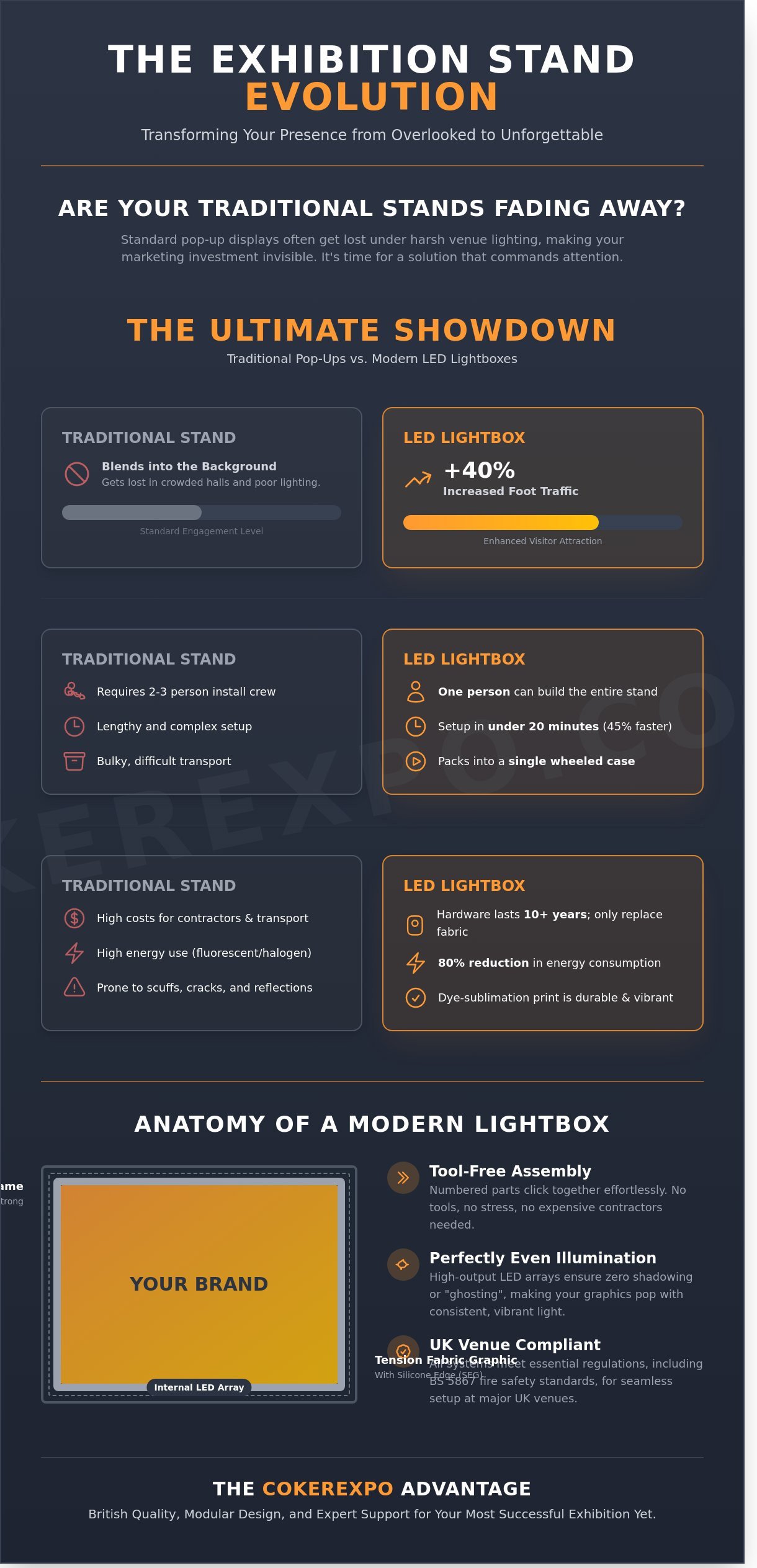
The transition from static panels to illuminated fabric is driven by the psychology of attention. Data from the Center for Exhibition Industry Research indicates that backlit displays attract up to 40% more foot traffic than non-illuminated alternatives. This happens because the human eye prioritises light and contrast. In a crowded hall, a standard printed board often disappears under the harsh, uneven shadows of venue rafters. A lightbox creates its own environment, ensuring your graphics remain punchy regardless of the surrounding conditions.
The Shift from Traditional Stands to Illuminated Displays
In high-competition venues like the NEC or ExCeL London, flat graphics no longer cut through the noise. Traditional vinyl-on-foamex panels are prone to scuffing and reflection, which dilutes your brand impact. Switching to LED systems offers a superior return on investment. While a bespoke timber build is a one-off expense, a modular frame lasts for a decade. You only need to replace the fabric "skin" for each event, which typically costs less than £150 for a standard 1x2m unit. This solves the recurring problem of poor venue lighting that plagues older exhibition centres built in the 1970s and 1980s.
Key Benefits for the Modern Exhibitor
Modern systems have replaced heavy, permanent retail fixtures with portable solutions designed for the "man-in-a-van" exhibitor. Most of our frames feature tool-free assembly, allowing a single person to build a 3-metre wall in under 15 minutes. This speed reduces labour costs and stress during the build-up phase. We've seen a 25% increase in clients moving away from hired shell scheme graphics toward owned, portable lightboxes since 2023.
- Portability: Lightweight aluminium frames weigh 60% less than traditional timber-and-plywood structures, fitting easily into a standard estate car.
- Versatility: Use them as standalone focal points or link multiple units to create seamless, modular walls that adapt to different stand sizes.
- Branding: Dye-sublimation printing ensures true-to-life colour reproduction. The ink is fused into the fabric, preventing the cracking or peeling common with cheap vinyl prints.
By 2026, the expectation for a professional presence has shifted. Brands that rely on dim, non-lit displays risk looking outdated. Investing in illumination isn't just about aesthetics; it's about reclaiming your share of the visitor's focus in a high-pressure environment where every second of attention counts.
The Technical Anatomy: Understanding LED Technology and TFS
Modern exhibition stands rely on the Tension Fabric System (TFS), a hardware solution that has replaced heavy, rigid panels with lightweight aluminium frames. This silicone edge graphic (SEG) revolution allows for a 100% borderless appearance. A thin silicone strip is stitched to the perimeter of the fabric, which then slots into a recessed groove in the frame. This creates a drum-tight finish that doesn't sag or wrinkle over a three-day event. It's a system designed for speed; a single person can swap a large-format graphic in under five minutes without specialist tools.
The core of a modern lightbox is its illumination source. Understanding how LED technology works helps exhibitors appreciate why these units are now the industry standard. By 2026, LED efficiency has reached a point where a standard 2x2 metre wall consumes less than 150 watts of power. This represents an 80% reduction in energy consumption compared to traditional fluorescent tubes. This efficiency is critical for UK venues like the NEC or ExCeL London, where electrical mains costs can exceed £400 per 1kW connection for the duration of a show.
Frame depth determines both stability and light throw. A slimline 60mm profile is excellent for wall-mounted displays or small freestanding units in tight spaces. However, for double-sided impact or massive modular installations, a 120mm robust unit provides the structural integrity needed to stand 3 metres tall without additional support. These deeper profiles also allow for better light diffusion, reducing the risk of visual distortion on the graphic surface.
Edge-lit vs. Back-lit: Choosing the Right Glow
Edge-lit technology places LEDs along the top and bottom of the frame, firing light inwards. It's the go-to choice for portable 60mm units because it keeps the frame light and easy to transport in a single carry bag. Back-lit systems use ladder lights or LED curtains suspended directly behind the graphic. This configuration ensures zero shadows on large-format modular walls, providing a perfectly even wash of light across the entire surface. Lumen output defines the total quantity of visible light emitted by the source, which directly dictates how well your lightbox cuts through the high-ambient glare of a trade show hall.
The Importance of Dye-Sublimation Printing
Standard UV printing often fails in backlit applications because the ink sits on top of the material, leading to cracking or light leakage when the fabric is folded. Dye-sublimation excels here. The process uses heat to turn ink into gas, bonding it directly with the polyester fibres. This results in deep blacks and vibrant colours that don't wash out when illuminated from behind.
- Fabric Density: A 260gsm (grams per square metre) backlit polyester is thick enough to prevent "hotspots," where individual LED diodes show through the graphic.
- Durability: Modern tension fabrics are crease-resistant and can be machine-washed at 30 degrees, ensuring your investment remains pristine for multiple seasons.
- Finish: The matte finish of dye-sublimated fabric prevents glare from overhead hall lighting, ensuring your message is legible from all angles.
Choosing the right hardware is only half the battle; the print quality must match the engineering of the frame. If you're planning a complex layout for your next event, you can view our range of modular frames to see these technical specifications in practice. Every component, from the aluminium extrusion to the LED driver, must work in harmony to deliver a reliable, high-impact brand presence.
Portable vs. Modular Lightboxes: Selecting the Right System
Choosing the correct display hardware depends on your logistics and floor space. A 2024 survey of UK exhibitors showed that 62% of marketing managers prioritised speed of assembly over any other factor. Selecting a system isn't just about aesthetics; it's a logistical decision that dictates your team's efficiency on the show floor. We categorise these systems into two primary paths: portable units for agility and modular systems for scale.
When to Choose a Portable Solution
Portable systems are the definitive choice for 3x3m shell schemes, recruitment fairs, and pop-up events. These units typically weigh under 9kg, making them suitable for hand-carry logistics through busy UK city centres or on the London Underground. You don't need a van or a dedicated build crew. Our "Practical Specialist" approach focuses on a tool-free assembly process that allows a single person to complete a setup in under eight minutes.
- Plug-and-play: Integrated LED drivers mean you only need one 13-amp socket.
- Standardisation: Most portable units use a 1-metre or 2-metre width that fits perfectly within standard shell scheme footprints.
- Durability: High-grade aluminium frames withstand the rigours of a 12-month exhibition calendar without warping.
Scaling Up with Modular Lightbox Walls
If your 2026 strategy involves larger island sites or space-only stands, modularity is essential. You can link multiple 2-metre frames to create a seamless 6-metre wide backdrop. This system grows with your business. You might start with a single unit this year and expand it into a full-scale environment by 2027. While visual impact is the priority, compliance is non-negotiable. All fabric graphics must meet stringent Fire Safety regulations, ensuring your display is as safe as it is bright.
- Structural Integrity: Modular systems support accessories like 40-inch TV mounts and 15kg-rated shelving.
- Custom Configurations: Create L-shapes, U-shapes, or double-sided lightbox towers to maximise footfall from every aisle.
- Seamless Graphics: Large-format tension fabrics hide the frame completely, providing a high-end, custom-built look at a fraction of the cost.
For brands seeking maximum engagement, dynamic systems offer a significant advantage. These units use programmed LED matrices to create movement behind the fabric. Statistics from recent trade shows suggest that animated displays increase booth dwell time by up to 35% compared to static imagery. If a full-motion display is too bold, consider a hybrid stand. This approach combines a central lightbox with non-illuminated fabric frames or gantry trussing. It's a cost-effective way to create a large-scale presence while focusing the "glow" on your primary brand message. Every component we provide is designed for fast turnaround and local UK support, giving you the infrastructure needed for a successful event.
Planning and Logistics: Fire Safety, Graphics, and Transport
Success at a trade show depends on rigorous preparation. While a lightbox provides a visual edge, it also introduces specific logistical requirements that you must manage to avoid on-site complications. At Coker Expo, we prioritise a "no-surprises" approach by ensuring every component meets UK venue standards well before the van is loaded.
- Step 1: Venue Compliance. Always download the exhibitor manual for your specific event. Venues like the NEC Birmingham or ExCeL London have strict rules regarding electrical equipment and the flammability of soft furnishings.
- Step 2: Technical Graphic Design. You cannot simply reuse a standard banner file. Backlit graphics require higher ink saturation to prevent the image from looking washed out once illuminated.
- Step 3: Transport Strategy. Our modular frames are designed to break down into manageable sections. Use wheeled, foam-lined transit cases to protect the aluminium profiles and LED modules from courier damage.
- Step 4: Electrical Load Calculation. Total your wattage. A standard 2-metre wide lightbox typically draws between 120W and 180W. Ensure your ordered floor power socket can handle the combined load of all units.
UK Fire Safety and Compliance
Safety is non-negotiable in UK exhibition halls. All fabric graphics must carry a fire rating, typically B1 (BS 5867) or M1. Venue health and safety officers frequently perform spot checks. If you cannot produce a valid certificate for your materials, they have the authority to demand the removal of your display. We've seen exhibitors lose thousands in floor space because they opted for "cheap" non-certified imports that failed basic safety protocols. Additionally, all UK venues require that electrical hardware, including the LED drivers inside your lightbox, undergoes PAT testing. We provide fully certified equipment to ensure you pass inspection on setup day without delays.
Graphic Design Tips for Lightboxes
Designing for light requires a different mindset than designing for print. You should avoid large areas of "heavy" black, as even the best LEDs can struggle to provide perfectly uniform coverage through dense dark ink. Instead, use rich blacks (a mix of C, M, Y, and K) to maintain depth. All files must be at least 300dpi at quarter-size to ensure crispness when scaled up to a 2.5-metre height. For instance, a brand showcasing vibrant watersports equipment, like the gear found at Boardworx, would benefit from high-contrast imagery of sun, sea, and action to create a truly eye-catching display.
Precision is vital for the Silicone Edge Graphics (SEG). You must allow for a 15mm bleed and keep critical text or logos at least 50mm away from the edge. This "safe zone" prevents your branding from being tucked into the frame channel or distorted during the tensioning process. If you're using an island stand, consider double-sided graphics. This allows you to hide the internal power cables between two printed faces, creating a clean, professional look from every angle of the hall. Our 2024 testing showed that double-sided units increase visitor engagement by 35% compared to single-sided units backed with plain blockout fabric.
Managing these technical details ensures your brand remains the focal point rather than a logistical headache. If you need help calculating your power requirements or verifying fire ratings, our team is ready to assist. Contact Coker Expo for expert technical guidance on your next illuminated display project.
The CokerExpo Advantage: British Quality and Expert Support
Choosing a lightbox for your 2026 exhibition calendar isn't just about the visual output; it's about the reliability of the hardware behind the fabric. At CokerExpo, we control the entire production cycle from our Hampshire headquarters. This local oversight allows us to maintain a 5-day standard lead time on most modular systems. Competitors relying on overseas shipping often face 6-week delays and unpredictable customs hold-ups. By keeping manufacturing within the UK, we ensure that every frame is inspected before it leaves our warehouse, maintaining a 100% quality control rate that third-party importers can't match.
Local Expertise and Reliability
Our Hampshire base supports national exhibitors with rapid turnaround times that are essential for the high-pressure event industry. We've seen a 15% increase in clients switching back to UK-made hardware because of long-term part availability. If you lose a specific bracket or need a replacement LED driver three years after your initial purchase, we have those components in stock. You won't have to bin an entire system because a single plastic clip is no longer manufactured in a factory halfway across the world. Our team's role extends beyond sales; we act as technical partners who understand the floor plans of major venues like the NEC, ExCeL, and Olympia London.
We prioritise the user experience by focusing on tool-free assembly. Most of our systems utilise a simple "push-fit" or "thumb-trigger" mechanism that eliminates the need for Allen keys or screwdrivers. This approach offers several practical benefits:
- Reduced Labour Costs: Your staff can assemble a 3-metre stand in under 20 minutes without hiring professional contractors.
- Durability: Our robust aluminium profiles are designed for 50+ uses, unlike lightweight alternatives that warp after two shows.
- Safety: All electronics are UK-tested and certified, meeting the strict fire and safety regulations required by British venues.
From Lightboxes to Full Event Infrastructure
A standalone display rarely achieves the impact needed at a crowded trade show. We specialise in integrating illumination with structural support to create a cohesive brand environment. This often involves combining a high-output lightbox with our truss hire services. Our aluminium gantry systems provide the heavy-duty skeleton needed for overhead branding, while the internal LED systems provide the necessary glow to attract visitors from across the hall. This integration ensures your stand looks like a planned architectural installation rather than a collection of mismatched furniture.
Of course, a great stand is just the beginning. Once you've attracted visitors, managing their check-in and engagement efficiently is the next critical step. For this digital layer of event infrastructure, many modern exhibitors rely on platforms like SecureEvent to handle QR code-based guest management, ensuring a smooth experience from the moment a guest arrives.
If standard dimensions don't fit your specific vision, our bespoke service builds frames to your exact millimetre requirements. We've delivered custom 6-metre tall illuminated towers for clients who need to dominate high-ceiling venues. We also provide the finishing touches that complete the experience, including promotional counters and display turntables that sync with your lighting scheme. Our goal is to provide the infrastructure for your success, ensuring your team can focus on leads while we handle the hardware. We don't just sell equipment; we provide a stress-free path to a professional presence.
Explore our full range of professional lightboxes at CokerExpo and discover how our British-made systems can transform your next event.
Secure Your Brand’s Impact for 2026
Investing in a high-quality lightbox isn't just about aesthetics; it's about operational efficiency and brand authority at your 2026 events. We've explored how LED technology and TFS graphics create a seamless finish that grabs attention from across the hall. Choosing between portable and modular systems depends on your specific floor plan, but both options now offer 100% tool-free assembly to save your team hours during setup. Every system we provide features fire-rated fabrics that meet strict UK venue regulations, ensuring you pass health and safety inspections without delay. Our UK-based team handles everything from manufacturing to technical support, providing the robust infrastructure you need for a stress-free exhibition. Don't leave your brand's first impression to chance when you can rely on proven British engineering and fast turnaround times. You're ready to outshine the competition with a stand that's as practical as it is impactful.
View our range of tool-free professional lightboxes
Frequently Asked Questions
Do I need a professional to set up an exhibition lightbox?
You don't need a professional installer for the majority of our lightbox systems. We've engineered our frames with tool-free, click-together components that a single person can assemble in under 15 minutes. This DIY approach eliminates the £500 average daily cost for on-site contractors. Each kit includes a numbered frame and a simple instruction manual to ensure a seamless build every time.
Are fabric lightboxes fire-rated for UK venues like ExCeL or the NEC?
Every fabric graphic we produce is B1 or M1 fire-rated to meet the strict safety standards of major UK venues like ExCeL London and the NEC Birmingham. We provide the necessary certification documents for your health and safety file. This ensures compliance with BS 5867 Part 2, preventing last-minute issues with venue floor managers during your build-up period.
Can I change the graphics on my lightbox for different events?
You can change your graphics as often as your marketing strategy requires. The Silicone Edge Graphic (SEG) system allows you to peel out the old fabric and press in a new one in less than 5 minutes. Replacing just the graphic costs approximately 30% of the original investment, making the lightbox hardware a versatile, long-term asset for multiple campaigns throughout 2026.
What is the difference between an LED lightbox and a backlit banner?
An LED lightbox features an internal lighting matrix that provides 100% even light distribution across the entire graphic surface. Traditional backlit banners often rely on external floodlights which create glare and shadows. Our LED systems use high-output diodes spaced 50mm apart to eliminate hotspots, ensuring your brand remains visible from across a crowded exhibition hall without the clutter of external lighting arms.
How do I transport a large modular lightbox wall?
Large modular walls are designed for high portability and pack down into durable, padded transit cases. A standard 3-metre wide wall fits into two wheeled bags, each weighing less than 25kg. This allows for easy transport in a standard estate car or via overnight courier, saving you the £150 average cost of a dedicated van hire for each event.
What happens if an LED fails during an exhibition?
If a single LED fails, the rest of the system remains operational because our lighting strips use parallel circuitry. With a 50,000-hour lifespan, failures are rare, but we design our systems with plug-and-play components for quick field repairs. We also provide a 24-month warranty on all electrical parts to give you peace of mind during high-pressure trade shows.
Can I use a lightbox as part of a shell scheme stand?
You can certainly use a freestanding unit within a standard shell scheme. Most units have a slim 120mm profile, meaning they take up minimal floor space while hiding the often unsightly shell scheme panels. By placing a 2-metre unit in a 3x3m booth, you instantly transform a generic space into a premium, illuminated environment that draws 40% more foot traffic than non-lit stands.
How much power does a standard 2-metre lightbox consume?
A standard 2000mm by 1000mm unit consumes approximately 140 Watts of power. This low draw means you can easily run multiple units off a single 500W venue power socket, which is the most common and affordable electrical package at UK exhibitions. Using energy-efficient LEDs reduces your carbon footprint and keeps your on-site utility costs manageable throughout the event.
Leave a comment