

Glass Cabinet Display: The Professional Guide to High-Impact Product Showcasing
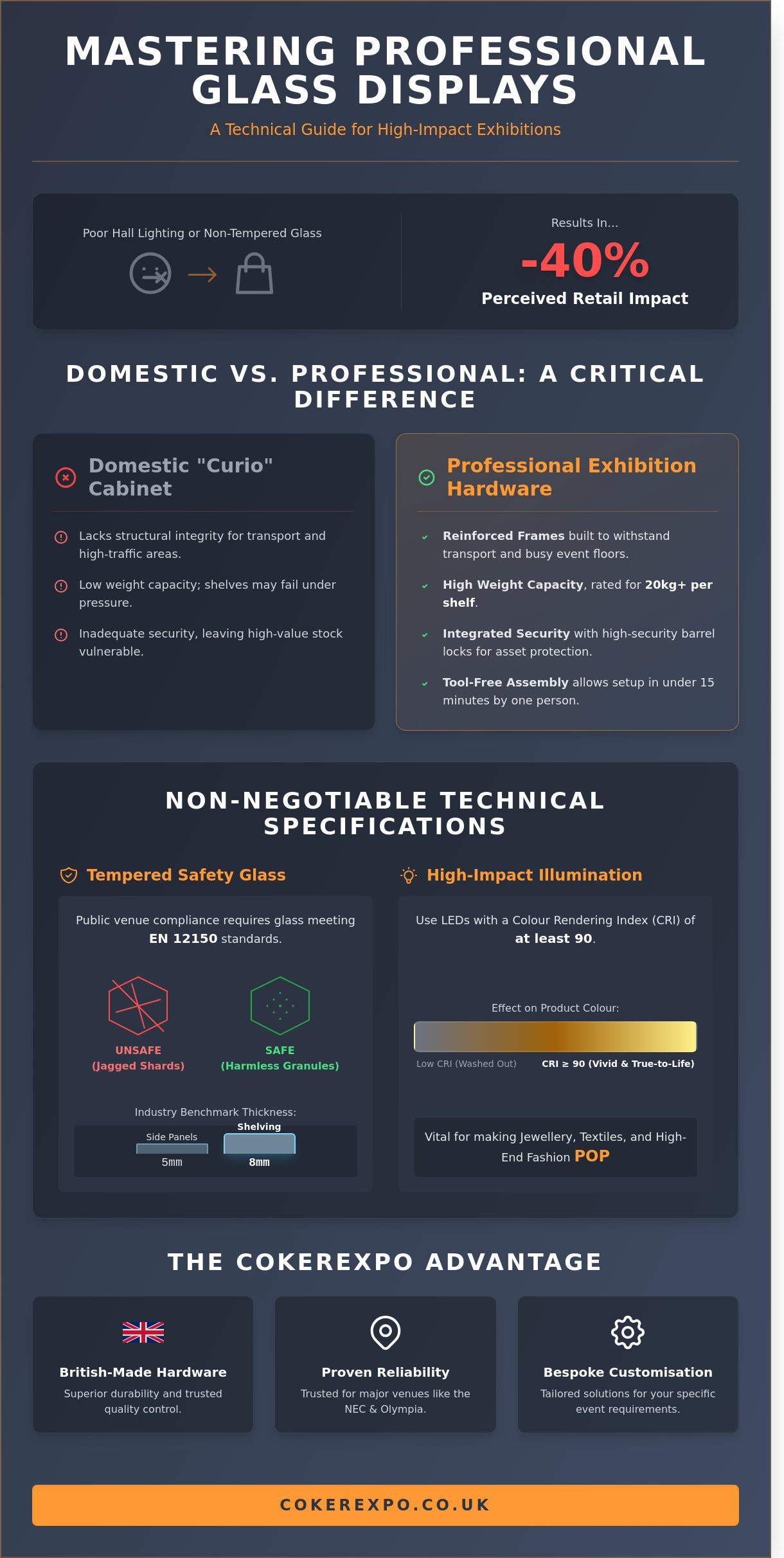
Your most valuable inventory loses nearly 40% of its perceived retail impact when it is shadowed by inadequate exhibition hall lighting or obscured by non-tempered glass. You understand that at a high-pressure trade show, a professional glass cabinet display isn't just a piece of furniture; it's a secure, high-performance sales tool. It's frustrating when portable options feel flimsy or risk shattering during transit to major venues like the NEC or Olympia. You need hardware that reflects the quality of the products inside while standing up to the rigours of a busy event floor.
We agree that protecting your brand's physical assets shouldn't mean sacrificing aesthetic brilliance or ease of use. This guide provides the technical roadmap to mastering professional showcases, from ensuring structural integrity during transport to selecting the correct LED specifications to make your products pop. You'll learn how to integrate robust, modular cabinets into your existing shell scheme and why tool-free assembly is the secret to a stress-free exhibition setup. We will help you secure your stock and elevate your brand presence with the reliability your business demands.
Key Takeaways
- Distinguish between domestic furniture and professional-grade exhibition hardware to ensure your inventory remains secure and your brand appears authoritative.
- Select the most effective glass cabinet display configuration for your footprint, from versatile countertop units to high-impact freestanding towers.
- Learn why technical specifications like LED Colour Rendering Index (CRI) and safety glass standards are non-negotiable for professional public showcases.
- Discover strategic methods for integrating display units with shell scheme panels to create a cohesive, seamless brand environment on the trade show floor.
- Leverage the reliability of British-made hardware to benefit from superior durability and bespoke customisation options tailored to your specific event requirements.
What Defines a Professional Glass Cabinet Display?
A professional glass cabinet display is far more than a storage unit; it's a high-performance marketing asset designed for the rigours of the UK exhibition and retail sectors. Unlike standard furniture, these units are engineered as secure, illuminated, and durable platforms that protect high-value inventory while maximising visibility. In the fast-paced environment of a trade show, these displays must be robust enough to handle constant transport and rapid deployment. A professional display case serves as a critical touchpoint where technical security meets brand storytelling.
For marketing managers and business owners, the focus remains on modularity and ease of use. High-impact showcasing requires hardware that supports tool-free assembly, allowing a single operative to build a secure unit in under 15 minutes. This efficiency is vital when working against tight venue deadlines at locations like the NEC or ExCeL London. The professional display cabinet isn't just about aesthetics; it's about providing a reliable infrastructure that elevates the perceived value of the products inside.
Domestic vs. Professional: Why the Difference Matters
The distinction between a domestic "curio" cabinet and professional exhibition hardware is found in the engineering. Domestic units often lack the structural integrity required to support heavy industrial samples or high-density retail stock. Professional cabinets feature:
- Reinforced Frames: Built to withstand the vibrations of transport and the impact of 2,000+ daily visitors in high-traffic zones.
- Weight Capacity: While home units might fail under pressure, professional shelves are frequently rated for 20kg or more per level.
- Integrated Security: Standard features include reinforced hinge systems and high-security barrel locks, which are essential for overnight protection in public exhibition halls.
Retail Synergy: Lessons from High-End Environments
Retailers use a glass cabinet display to create "islands of exclusivity" within a larger floor plan. This strategy was effectively demonstrated in the Harrods Beauty hall, where bespoke glass housing was used to separate luxury brands from the general shopping environment. This physical barrier creates a psychological "halo effect," where the transparency of the glass invites inspection while the physical protection signals that the product is a premium asset. When a product is showcased behind toughened glass, it's no longer just a commodity; it's an item of value that demands the customer's full attention. This shift in perception is a primary driver for conversion in both luxury retail and technical B2B environments.
Technical Specifications: Safety, Security, and Lighting
Selecting a glass cabinet display involves more than aesthetic choice. It requires a rigorous focus on engineering standards that protect both your inventory and the public. Professional exhibition environments demand hardware that complies with specific UK safety mandates while providing the clarity needed for high-impact visual merchandising. Technical reliability ensures your focus remains on lead generation rather than equipment failure.
Tempered Safety Glass and UK Regulations
All glass used in public exhibition spaces must meet EN 12150 standards for thermally toughened soda lime silicate safety glass. This manufacturing process ensures that if the glass breaks, it shatters into small, relatively harmless granules rather than jagged shards. For standard retail use, 5mm glass is often sufficient for side panels, but 8mm toughened glass is the industry benchmark for internal shelving. This increased thickness provides the structural integrity required to support heavier items without bowing or risk of fracture. Choosing certified glass is a prerequisite for most UK venue insurance policies, as it significantly reduces public liability risks. For those seeking the highest archival standards, reviewing the Technical Specifications for Display Cases provides deeper insights into laminated and UV-filtered options used in high-security environments.
Illumination Strategy: Making Products Pop
Lighting is the most critical factor in product conversion. We recommend LEDs with a Colour Rendering Index (CRI) of at least 90. A high CRI ensures that colours appear vivid and true to life, which is vital for jewellery, textiles, and high-end fashion. Integrated LED tracks offer a seamless look, while adjustable spots allow you to highlight specific hero products within the glass cabinet display. Unlike traditional halogen bulbs, modern LEDs emit negligible heat. This protects sensitive inventory like cosmetics or electronics from thermal damage and prevents the "greenhouse effect" inside the case. Colour temperature also plays a role; 3000K (warm white) suits gold and wood finishes, while 5000K (cool white) is better for silver, chrome, and technical equipment.
Security and Weight Loading
Security remains a priority for high-value stock. Professional cabinets should feature drill-resistant cylinder locks and reinforced hinges to deter opportunistic theft. In temporary exhibition environments, shelf stability is paramount to prevent accidents. Standard glass shelves in our professional systems are typically rated for a distributed load of 10kg to 15kg. If you're unsure which configuration fits your inventory weight, our team can help you select the right display hardware for your next event. Robust base units and levelling feet ensure the cabinet remains stable on uneven trade show floors, preventing vibration-related damage to delicate items during busy hall hours.
Choosing the Right Format for Your Space
The configuration of your glass cabinet display dictates how visitors move through your stand and interact with your stock. In a standard 3m x 3m exhibition shell scheme, every square centimetre represents a significant portion of your marketing budget. Selecting a format isn't just about aesthetics; it's about floor flow and product security. Freestanding units offer maximum visibility but require clear perimeter space. Wall-mounted options reclaim floor area, while countertop units target the point of sale where engagement is highest.
Modular cabinets provide the best return on investment for businesses with evolving retail layouts. These systems allow you to reconfigure a tall tower into smaller plinths, adapting to different booth sizes across a busy event calendar. For teams attending five or more trade shows annually, portability is the priority. We recommend cabinets featuring tool-free assembly that fit into bespoke transit cases. This approach reduces setup time by 40% and prevents the glass breakage often associated with manual handling in high-pressure environments.
- Freestanding: Best for high-traffic areas where 360-degree access is required.
- Wall-mounted: Ideal for narrow walkways or small exhibition footprints where floor space is at a premium.
- Modular: Essential for businesses that need to scale their display up or down depending on the venue.
- Portable: Designed with lightweight aluminium frames and reinforced glass for frequent transport.
Freestanding Towers and Plinths
Towers provide 360-degree visibility for hero products, making them the primary choice for the centre of an open floor plan. To ensure safety in busy UK exhibition halls, these structures must use 6mm toughened safety glass and weighted bases. A 400mm square plinth creates a natural focal point without blocking sightlines across the hall. High-performance aluminium frames ensure the structure remains stable even when reaching heights of 2 metres.
Countertop and Integrated Displays
Countertop units maximise sales at promotional desks where space is restricted. They encourage close-up inspection of high-value items like electronics or jewellery while maintaining a physical barrier against theft. For a seamless professional look, integrate these small displays directly into larger exhibition gantry or truss systems. This creates a unified brand presence and ensures your most valuable items stay at eye level. Most UK venues require fire-rated materials, so ensure your integrated units meet local safety standards before the build begins.
Integrating Glass Displays with Exhibition Stands
Integrating a glass cabinet display into a shell scheme requires more than just placing it in a corner. It's about infrastructure and flow. Most UK exhibition venues, such as the NEC or Olympia London, provide standard cord carpet. This 3mm to 5mm pile can cause slight instability for tall, narrow units. We recommend using adjustable levelling feet to ensure the cabinet remains perfectly vertical. This prevents door misalignment and ensures the safety of your high-value inventory.
Cable management is a frequent oversight during the planning phase. Visible power leads look amateur and create significant trip hazards. Run your lighting cables behind shell scheme uprights or under the cord carpet using approved gaffer tape. This ensures a seamless professional finish that keeps the focus on your products rather than the wiring. Use cabinets to guide visitor flow; a well-placed counter-height unit can act as a natural barrier, helping your team manage the 15% of visitors who typically feel hesitant to fully enter a stand space.
Synergy with Shell Schemes
Your shell scheme graphics are your primary brand voice. Position cabinets at least 300mm away from critical text or logos on your back wall. If you're using internal LED spotlights, angle them toward the rear of the stand. This creates a layered lighting effect that eliminates shadows on your graphic panels. Matching your cabinet’s powder-coated finish to your modular frame creates a seamless, bespoke appearance that elevates your entire presence. It's a simple way to make a standard package look like a custom build.
The Practicalities of Event Logistics
Speed is everything during a build. We prioritise tool-free assembly because it reduces setup time by up to 40% compared to traditional bolt-together systems. This efficiency is vital when you're working against strict venue breakdown deadlines. On-site maintenance is equally important in high-traffic zones where fingerprints are inevitable. Keep a microfibre cloth and ammonia-free glass cleaner behind your counter. A quick wipe-down at 08:30 and again during the mid-afternoon lull keeps your presentation sharp and professional throughout the show.
Ready to upgrade your event presence? Explore our range of modular exhibition systems to find the perfect match for your next show.
The CokerExpo Approach: Specialist Display Solutions
Professional exhibition environments demand more than just a basic shelf. Our approach focuses on British reliability, ensuring that every glass cabinet display we supply meets the rigorous standards of the UK events industry. We build our reputation on hardware that survives the logistical challenges of transport and frequent assembly. While off-the-shelf units might suffice for a static retail corner, they often fail under the pressure of a busy trade show. We bridge the gap between standard storage and bespoke exhibition infrastructure.
Our commitment to a fast turnaround is backed by local UK production. This allows us to offer customisation options that overseas competitors cannot match. Whether you require integrated LED lighting or specific branding on the plinth, we provide professional units designed for immediate impact. We prioritise tool-free exhibition systems because we know your time on-site is valuable. You don't need a toolbox to create a high-end presentation; you just need the right hardware.
Why Practical Specialism Wins
We've spent 25 years refining our product selection. This history informs every recommendation we make, giving marketing managers the peace of mind that their event infrastructure is under control. We understand the stress of a looming deadline. Our role is to remove the technical guesswork from your planning process.
- Integrated Systems: We don't view a glass cabinet display as an isolated item. It's part of a wider ecosystem that includes our modular lightboxes and gantry trussing.
- Durability: Our units use toughened safety glass and robust aluminium frames to ensure longevity across multiple event cycles.
- Ease of Use: Most of our professional cabinets feature simplified assembly, reducing the need for specialist installation crews.
By integrating your display units with our wider range of exhibition hardware, you create a seamless brand experience. This holistic approach ensures that your lighting, structural support, and product showcases all work together to drive footfall and engagement.
Getting Started with Your Display Project
Success begins with a clear brief. To help us provide the best solution, consider the weight of your products and the floor space available at your venue. We help you navigate these technical requirements to ensure your chosen hardware is fit for purpose. Lead times for our professional-grade hardware are among the most competitive in the UK, but we recommend starting the conversation at least four to six weeks before your event date.
Our team provides full event management and planning support. We don't just ship boxes; we help you design the layout and flow of your stand. Contact our specialists today to discuss your requirements. We'll provide a clear, no-nonsense assessment of which systems will work best for your specific goals, ensuring your next exhibition is your most successful yet.
Elevate Your Professional Product Presentation
Investing in a high-quality glass cabinet display is a strategic decision to protect your inventory while maximising visual impact. You've seen how integrated LED lighting and toughened safety glass create a secure, high-performance environment for your most valuable items. Choosing a modular system ensures your display remains versatile enough for any floor plan, whether you're at a busy trade show or in a permanent retail space.
Since 1999, Coker Expo has provided UK businesses with robust exhibition hardware designed for the rigours of the industry. We manufacture our units in the UK to ensure consistent quality and offer specialist support from our local base. Our systems prioritise the user experience with a focus on tool-free assembly, allowing you to set up a professional-grade showcase in minutes without technical stress. We handle the infrastructure so you can focus on making a lasting impression on your clients.
Explore our range of professional glass cabinet displays
We look forward to helping you build a display that reflects the quality and craftsmanship of your brand.
Frequently Asked Questions
What is the difference between tempered glass and standard glass in display cabinets?
Tempered glass is four to five times stronger than standard annealed glass and shatters into small, blunt cubes rather than dangerous sharp shards. Most UK exhibition organisers require tempered safety glass to comply with public safety standards. For any professional glass cabinet display, toughened glass is the essential choice because it withstands higher thermal stress and physical impact in busy trade show environments.
Do exhibition venues in the UK have specific safety rules for glass displays?
Yes, UK venues such as the NEC Birmingham and ExCeL London enforce strict regulations under the Health and Safety at Work Act 1974. All glass used in displays must meet BS EN 12150 standards for thermally toughened safety glass. If your equipment doesn't feature the required safety "kitemark" or certification, venue floor managers have the authority to demand its immediate removal from the hall.
How much weight can a standard glass shelf in a professional cabinet hold?
A standard 6mm thick tempered glass shelf typically supports between 10kg and 15kg of evenly distributed weight. If you're showcasing heavier items like industrial components or stone samples, you'll need to specify 8mm or 10mm glass shelves instead. Always verify that the shelf clips and support pins are rated for the same weight to prevent structural failure during your event.
Can I add my own branding or graphics to a glass display cabinet?
You can easily customise your glass cabinet display using high-quality vinyl decals or branded headers. Most marketing managers use "easy-apply" removable vinyl that leaves no adhesive residue, allowing the hardware to be reused for different campaigns. We also provide bespoke options like LED-lit graphics and 3D-printed logos that integrate directly into the aluminium frame for a seamless, professional finish.
What is the best way to transport a glass cabinet to an exhibition?
The most reliable method is using a foam-lined flight case or a modular system designed for tool-free assembly on-site. Professional cabinets often weigh over 80kg, so you'll need a vehicle with a tail lift and proper lashing points. Don't transport glass shelves inside the unit; wrap them separately in protective blankets and store them vertically to avoid cracks caused by road vibrations.
Is LED lighting better than halogen for displaying delicate products?
LED lighting is far superior because it produces 80% less heat than halogen bulbs, which protects sensitive items like leather, cosmetics, or electronics. Halogen bulbs can reach temperatures of 250 degrees Celsius, creating a fire risk and potentially warping your product packaging. LEDs also provide a 50,000-hour lifespan, ensuring your stand stays bright without the need for mid-show bulb replacements.
How do I secure my products inside a glass cabinet at a busy trade show?
Secure your inventory by using cabinets fitted with high-quality cylinder locks or digital keypads. For high-value items, use discreet clear acrylic stands with adhesive bases to prevent "grab and run" incidents in crowded aisles. It's also vital to ensure the cabinet is weighted or bolted to the floor if it's a tall, narrow unit, as this prevents it from tipping in high-traffic areas.
What maintenance is required to keep professional glass cabinets looking new?
Keep your glass surfaces pristine by using a microfibre cloth and a 70% isopropyl alcohol solution to strip away fingerprints and grease. Avoid using abrasive cleaners or paper towels, as these can leave fine scratches or lint on the surface over time. You should also check all aluminium fixings and shelf supports every 6 months to ensure they haven't vibrated loose during transit between venues.
Leave a comment