

Making a Shell Scheme Look Custom: The Professional Guide to High-Impact Stands
Why would you pay upwards of €1,000 per square meter for a one-off custom stand when the secret to a high-impact presence lies in hiding the hardware you've already rented? Most exhibitors settle for the "ugly" aluminium uprights of a standard booth, but making a shell scheme look custom is actually a matter of strategic engineering rather than just better graphics. With UK shell scheme upgrades starting at approximately £1,000 in 2026, many marketing managers feel trapped between a basic look and a budget-breaking timber build.
We agree that it's frustrating to see your brand's premium identity compromised by clunky metal frames and visible seams. You need a seamless, high-end aesthetic without the stress of complex installations or the $1,000 fines associated with health and safety violations for non-compliant builds. This guide will show you how to use modular tension fabric systems and tool-free assembly to create a bespoke-looking space that is both reusable and robust. We'll preview the specific hardware configurations and design techniques required to bridge the gap between standard rentals and premium 2026 trends like minimalist, biophilic aesthetics.
Key Takeaways
- Identify the visual markers that compromise brand impact, such as exposed aluminium uprights and fascia boards, and learn how to eliminate them.
- Discover the specific hardware configurations for making a shell scheme look custom, focusing on over-the-pole graphic systems that create a seamless, wall-to-wall aesthetic.
- Learn how to integrate architectural elements like modular truss systems and custom flooring to add height and professional texture to a standard booth.
- Follow a streamlined 5-step planning process to ensure technical compliance with show organisers while prioritizing tool-free assembly for reduced labor costs.
- Understand the long-term ROI of investing in robust, UK-made hardware that offers fast turnaround times and the durability required for a busy event calendar.
What is a Shell Scheme and Why Does it Look "Standard"?
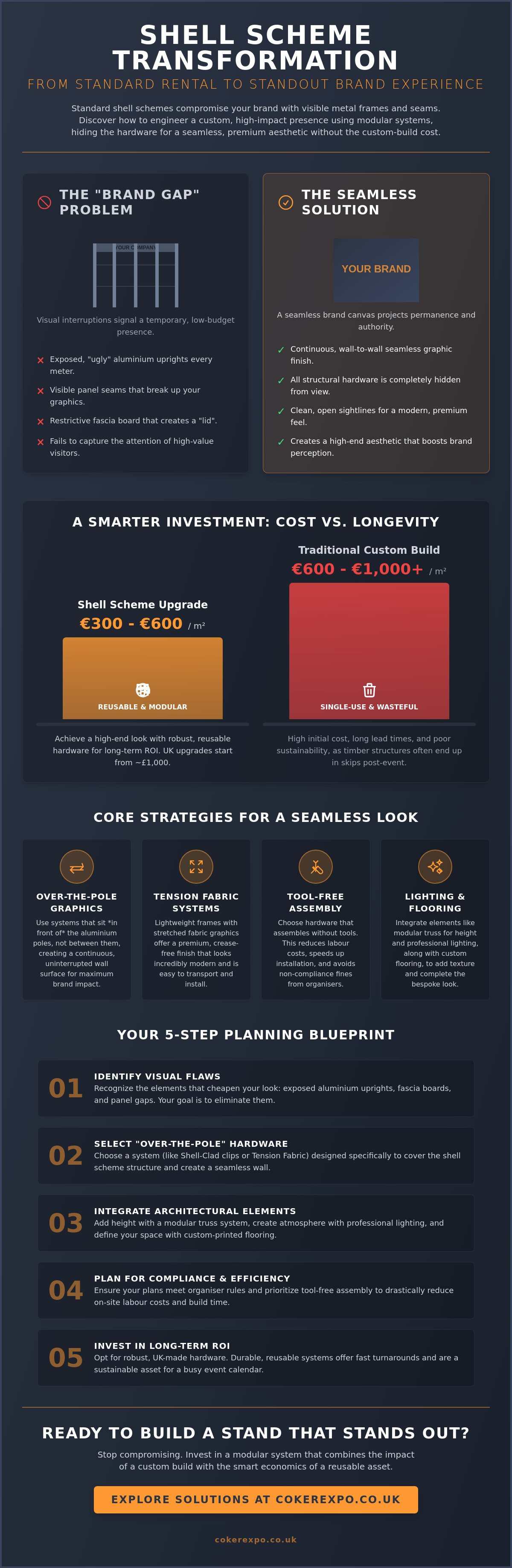
A shell scheme is a modular system of 1m wide panels supported by vertical aluminium uprights and horizontal cross-beams. It's the most common "blank canvas" provided by event organizers to exhibitors. For many marketing managers, this structure is the starting point for understanding What is an Exhibition? and how to establish a physical brand presence. While these systems are functional, the "standard" look is defined by visible fascia boards, exposed metal poles, and basic grey cord carpet. This aesthetic creates a "Brand Gap" where the visible hardware signals a temporary or low-budget presence, often failing to capture the attention of high-value visitors.
The goal of making a shell scheme look custom is to eliminate these visual interruptions. By hiding the aluminium grid, you transform a generic box into a seamless, wall-to-wall brand experience. This approach moves away from the "rental" feel and toward a premium identity that suggests permanence and authority. In a 2026 market where 18-50m² custom stands in Europe can cost between €600 and €1,000 per square meter, achieving a bespoke look through modular customization is a strategic financial decision.
The Anatomy of a Shell Scheme Stand
Most venues use systems like Octanorm or Sodem. These consist of vertical uprights with grooves that hold 3mm to 4mm infill panels. The fascia board is a horizontal beam at the top that usually displays the company name. While it's meant for identification, the fascia often blocks sightlines and creates a physical "lid" on your space. Understanding these components is vital because your customization strategy must work with, or completely over, this existing framework to create a unified surface.
The Benefits of Customising a Modular Space
Choosing modular customization over traditional timber builds offers three primary advantages for the modern exhibitor:
- Cost-efficiency: You can achieve a high-end aesthetic for €300 to €600 per square meter, significantly lower than the price of bespoke construction.
- Sustainability: 2026 trends prioritize eco-friendly materials. Modular hardware and tension fabric graphics are reusable for multiple shows, unlike single-use timber structures that often end up in skips.
- Lead times: Modular systems allow for faster turnarounds. Since the hardware is pre-engineered, you don't need the lengthy design and fabrication cycles required for bespoke builds, which is critical for meeting tight event deadlines.
By focusing on high-performance materials and "over-the-pole" graphics, you can bypass the limitations of the standard shell. The result is a robust, impactful stand that projects confidence without the logistical weight of a traditional custom build.
Strategic Hardware: How to Hide the Aluminium Frame
Hiding the frame is the cornerstone of making a shell scheme look custom. Most exhibitors make the mistake of pinning graphics inside the panels, which leaves the aluminium uprights visible every meter. To fix this, you must use "Over-the-Pole" graphic systems. These systems use specialized clips or lightweight frames that sit in front of the aluminium uprights rather than between them. By utilizing high-quality shell scheme graphic panels, you create a continuous, flat wall surface that masks the underlying grid entirely. This structural shift is essential for companies looking to leverage the benefits of trade shows to project an image of market leadership and professional authority.
Shell Clad clips offer a practical mechanical solution for attaching rigid Foamex or PVC panels directly to the Octanorm grooves. These clips allow panels to butt up against each other, hiding the vertical lines that usually scream "standard rental." For modern UK trade shows, tool-free assembly is a non-negotiable requirement. It reduces labor costs and ensures your team isn't struggling with Allen keys while the 12:00 p.m. flooring deadline approaches. Robust, UK-made hardware ensures these clips don't snap under tension, providing a reliable foundation for your branding. If you're planning for multiple events in 2026, investing in versatile modular hardware ensures your assets remain compatible across different venues and shell types.
Tension Fabric Systems (TFS) for Seamless Walls
TFS uses Silicone Edge Graphics (SEG) to achieve a drum-tight, wrinkle-free finish across large spans. Unlike traditional PVC panels, fabric graphics don't suffer from "ghosting" or harsh light reflections from venue spotlights. They're incredibly lightweight and fold into small bags, making them easy to transport without the risk of creasing. For those seeking a more tactile, premium feel, our custom wallpaper guide details how textured finishes can elevate a modular stand far beyond the standard flat print.
Lightboxes: The Ultimate "Custom" Differentiator
Illumination is the fastest way to signal a premium presence in a crowded hall. Backlit displays look inherently more expensive than front-lit graphics because they eliminate shadows and significantly boost color saturation. Integrating exhibition lightboxes as focal points or full-wall sections breaks the monotony of the shell scheme structure. This level of technical integration is the most effective method for making a shell scheme look custom without the logistical burden of a timber build. Dynamic lightboxes, which use animated LED sequences, are particularly effective for drawing attention in high-traffic environments where standard static graphics often blend into the background.
Advanced Tactics: Texture, Lighting, and Flooring
Standard venue-supplied cord carpet is often the first thing a visitor notices, and it's rarely a positive impression. For events scheduled in March 2026, many organizers are mandating that all professional flooring must be installed by 12:00 p.m. on the Sunday preceding the show. Swapping generic grey cord for custom-printed vinyl or a raised interlocking floor system is a foundational step in making a shell scheme look custom. This creates a distinct brand "zone" that separates your space from the aisle. When you combine this with atmospheric LED wash lighting instead of the standard-issue yellow spotlights, you change the entire psychological mood of the stand.
Dynamic lightboxes take this a step further. While static backlighting improves color saturation, dynamic versions use programmed LED sequences to create subtle movement within the wall itself. This technology is a major trend for 2026. It allows you to highlight specific product features or brand narratives without the need for bulky, expensive video screens. This adds a layer of "bespoke" sophistication that is impossible to achieve with basic rental hardware.
Breaking the Box with Counters and Furniture
Standard hire furniture often looks mismatched against a high-end graphic wall. We recommend using branded promotional counters to bridge the gap between the aisle and your stand. These units serve as a professional greeting point and provide secure storage for lead-capture devices. For supplementary technical information, folding display boards offer a versatile way to present data sheets or case studies without cluttering your primary brand walls. This ensures your stand remains functional while maintaining a clean, minimalist aesthetic that projects confidence.
Adding Height and Gantry Structures
One of the biggest limitations of a shell scheme is the fixed height of the panels. To truly dominate the exhibition hall, you need to think vertically. Lightweight truss systems allow you to create a "ceiling" or high-level header that is visible from the venue entrance. This is particularly useful given the 2026 regulation at major exhibitions where only 40% of any open side can be "full walling" (any build above 1.2m in height). A gantry structure allows you to maintain an open, welcoming stand at eye level while suspending massive brand banners overhead. These structures are robust; they meet strict health and safety protocols while maximizing your visual footprint through tool-free assembly.
The 5-Step Process to Planning Your Custom Shell Scheme
Don't leave your stand's success to chance. The most critical phase of making a shell scheme look custom occurs weeks before you arrive at the venue loading bay. Following a structured workflow ensures that your hardware fits the specific site conditions and meets all regulatory requirements for 2026 events. For exhibitors at March 2026 trade shows, remember that insurance proof must be uploaded by February 16, 2026; missing these deadlines can derail even the best-designed stands. Here is the professional 5-step roadmap to a bespoke-looking finish.
- Step 1: Obtain Technical Specifications. Request the official exhibitor manual to identify the shell scheme brand. Knowing if you are working with Octanorm or a different system determines which clips or frames are compatible.
- Step 2: Select Your Hiding Method. Decide between Tension Fabric Systems (TFS), Shell Clad rigid panels, or freestanding lightboxes based on your budget and transport capacity.
- Step 3: Account for Safe Zones. Design your graphics with a 50mm "safe zone" around the edges to ensure critical text isn't lost behind corner uprights or obscured by the fascia.
- Step 4: Verify Fire Safety. All decorative materials, including fabrics and cardboard, must be flame-retardant. You must have a valid certificate available for inspection to avoid the $1,000 fine for first-time health and safety violations.
- Step 5: Conduct a Dry Run. Assemble your tool-free components at your facility before the event. This prevents "on-site surprises" and ensures the hardware is robust and ready for the high-pressure environment of the show floor.
Measuring and Technical Specs
The biggest pitfall in stand design is confusing the panel size with the visible area. A standard 1m panel usually only has a visible width of 950mm once it's slotted into the uprights. If you're making a shell scheme look custom, your graphics must span the full width to hide those uprights entirely. Identify if you have a corner plot or a mid-row stand; corner plots require specialized 90-degree corner profiles to maintain a seamless graphic wrap without visible metal gaps. If you're unsure about your specific requirements, consult our technical team for a hardware compatibility check.
Artwork and Graphic Design for Impact
Sublimation fabric printing allows for deep, vibrant colors and high-resolution imagery that breaks the "panelled" look of standard booths. Keep your primary typography and logos above 1m from the floor. This ensures your brand remains visible even when the stand is crowded with visitors. Using large-scale, high-contrast imagery across the entire wall surface creates a narrative experience, a key trend for 2026, rather than a disjointed collection of small posters.
Professional Support: Why Quality Hardware Matters
The final hurdle in making a shell scheme look custom is the selection of the hardware itself. While the market is flooded with low-cost imports, these "budget" solutions often lead to significant on-site stress. Buckling aluminium frames and poor-quality LED drivers don't just compromise the aesthetic; they risk your entire presence at the event. Professional exhibition stand design is built on the principle that your hardware should be a one-time investment that serves you for years, not a single-use expense that fails under pressure.
In 2026, where a basic modular booth in Europe costs between €300 and €600 per square meter, the durability of your kit is the most important factor in your return on investment. Choosing robust, UK-made components ensures that your stand remains seamless and impactful across multiple show cycles. This reliability is the hallmark of a practical specialist approach, where technical expertise translates directly into a stress-free user experience for the exhibitor.
British Reliability and Fast Turnaround
Local production is a strategic advantage when dealing with the high-pressure deadlines of the exhibition industry. Last-minute graphic changes or hardware additions are common as show dates approach. Because the hardware and graphics from Coker Exhibition Systems Ltd (CokerExpo) are made in the UK, we offer a fast turnaround that offshore suppliers simply cannot match. This proximity ensures that quality control is maintained at every stage, from the initial sublimation print to the final tool-free assembly check.
The systems provided by Coker Exhibition Systems Ltd (CokerExpo) are designed for speed. In a recent internal trial, a standard 3x3m shell scheme was completely transformed into a bespoke-looking brand space in under 60 minutes. This efficiency is vital when you're working against strict venue move-in times, such as the 12:00 p.m. flooring deadline required by many 2026 event organizers. We focus on the user experience, ensuring that every clip and frame fits perfectly without the need for specialized labor or complex tools.
The Long-Term Value of Modular Systems
The true power of a custom shell scheme kit lies in its versatility. A system purchased for a 3x3m corner plot this year can be scaled and adapted for a 6x3m mid-row stand next season. This adaptability eliminates the waste associated with bespoke timber builds, which often end up as landfill after a single use. By investing in a modular tension fabric or Shell Clad system, you're building a reusable asset that supports your brand's sustainability goals while maximizing your marketing budget.
If you're ready to move beyond the "ugly" aluminium frame and create a high-impact presence, contact Coker Exhibition Systems Ltd (CokerExpo) for a custom shell scheme consultation. Our experts will help you navigate technical specifications and select the robust hardware needed to transform your next exhibition space into a premium brand destination.
Dominate the Trade Show Floor with Modular Precision
Achieving a high-end, bespoke presence doesn't require a six-figure timber build or a massive logistics team. The secret lies in strategic hardware choices that hide the aluminium uprights and create a seamless brand surface. making a shell scheme look custom is a calculated business decision that prioritizes reusable, tool-free components over single-use materials. By focusing on the over-the-pole graphics and integrated lighting discussed in this guide, you transform a generic box into a professional destination that projects authority.
At Coker Exhibition Systems Ltd (CokerExpo), we bring over 25 years of UK exhibition expertise to every project. We specialize in tool-free assembly systems and offer a fast turnaround on high-quality, UK-made graphics and lightboxes. This ensures your stand is ready for the 2026 event season without the stress of complex installations or technical failures. Our robust hardware is an infrastructure for your success, designed to be used across multiple venues and configurations.
Ready to elevate your brand's impact at your next show? Explore our Shell Scheme Graphic Solutions and consult with our practical specialists to find the right modular solution for your budget. You have the tools to stand out; now it's time to build your presence with confidence.
Frequently Asked Questions
Can I remove the fascia board from my shell scheme stand?
You can usually remove the fascia board, but you must obtain written permission from the show organiser first. In many cases, the fascia provides essential structural stability for the vertical uprights. If you remove it to facilitate making a shell scheme look custom, you may need to add internal bracing or support beams to ensure the stand remains robust and safe for visitors.
How do I attach graphics to a shell scheme without damaging the panels?
Use mechanical clips like Shell Clad or high-quality hook-and-loop tape to attach graphics without damaging the underlying panels. Venue organisers will charge you for any damage caused by nails, screws, or permanent adhesives. Shell Clad clips are the preferred professional choice because they slot into the aluminium grooves, providing a secure mount for rigid panels while keeping the original rental infrastructure pristine.
What is the best way to hide the aluminium poles on an exhibition stand?
The most effective way to hide aluminium poles is by using an "over-the-pole" graphic system or a Tension Fabric System (TFS). These methods involve mounting the graphics in front of the vertical uprights rather than inside the panel recesses. This eliminates the visible 50mm silver lines that define a standard booth, creating the seamless, wall-to-wall aesthetic required for a bespoke brand experience.
Do I need a professional fitter to install tension fabric graphics?
You don't need a professional fitter if you choose a system designed for tool-free assembly. Modern modular hardware allows your own marketing team to slot graphics into place in under 60 minutes for a standard 3x3m stand. This significantly reduces labor costs and gives you total control over the installation timeline during the high-pressure buildup phase of the event.
Are fabric graphics fire-rated for UK exhibition venues?
Yes, all fabric graphics used in UK venues like the NEC or ExCeL must be fire-rated to BS5867 or European equivalent B1/M1 standards. Under 2026 regulations, exhibitors failing to provide a valid fire certificate for their materials face a $1,000 fine for the first violation. We ensure all our sublimation-printed fabrics meet these strict safety protocols to protect your investment and reputation.
What is the difference between a shell scheme and a space-only stand?
A shell scheme is a pre-erected box with walls, carpet, and a name board, whereas a space-only stand is literally just a marked-out area on the hall floor. While space-only allows for total creative freedom, it involves significantly higher costs for flooring and structural builds. Customising a shell scheme provides the "bespoke" look of a space-only stand at a fraction of the price, often saving 40% to 60% on total build costs.
Can I use LED lightboxes within a standard shell scheme?
You can absolutely use LED lightboxes within a standard shell scheme to create a high-impact focal point. These can be freestanding units or integrated into the wall system itself. Backlit graphics are a key 2026 trend for making a shell scheme look custom because they eliminate the shadows associated with front-lit spotlights and dramatically increase your brand's visibility from across the exhibition hall.
How do I ensure my graphics fit the specific shell scheme at the NEC or ExCeL?
Always refer to the specific dimensions in your exhibitor technical manual provided by the show organiser. While most UK venues use Octanorm, the visible area of the panels can vary by 5mm to 10mm between different systems. Providing your stand partner with the specific brand of the shell scheme ensures that your graphics and clips fit perfectly on the first attempt, avoiding costly on-site adjustments.
Leave a comment