

Modular Exhibition Stands: 2026 Professional Buyer’s Guide
Why are you still paying for a one-off timber build that ends up in a skip after three days? It is a common frustration for marketing managers who see a massive slice of their budget disappear into storage fees and disposal costs. You need a high-impact presence, yet the logistical stress of rigid designs and rising transport overheads often makes exhibiting feel more like a liability than an opportunity. With global exhibition market values projected to reach £40 billion in 2026, the cost of inefficiency is higher than ever.
Investing in modular exhibition stands is the most effective way to reclaim control over your event strategy. This professional buyer’s guide will show you how to select, configure, and scale modular systems to maximise brand impact and long-term ROI. You'll learn how a single, durable kit can adapt from a basic 3x3m shell scheme to a complex space-only site while meeting strict UK venue regulations, such as the mandatory 50% frontage rule. We will break down the technical specifications of tension fabric systems and lighting truss to help you build a versatile infrastructure that lasts for years.
Key Takeaways
- Replace wasteful one-off builds with sustainable, reusable assets that deliver measurable long-term ROI.
- Compare the structural advantages of heavy-duty lighting truss against the seamless branding capabilities of Tension Fabric Systems.
- Select modular exhibition stands that adapt to your full event calendar, scaling from small shell schemes to expansive space-only sites.
- Minimise logistical stress by choosing hardware configurations that match your specific transport and assembly requirements.
- Enhance visitor engagement by integrating high-impact components like animated lightboxes into your modular infrastructure.
Understanding Modular Exhibition Stands: The Professional Choice for 2026
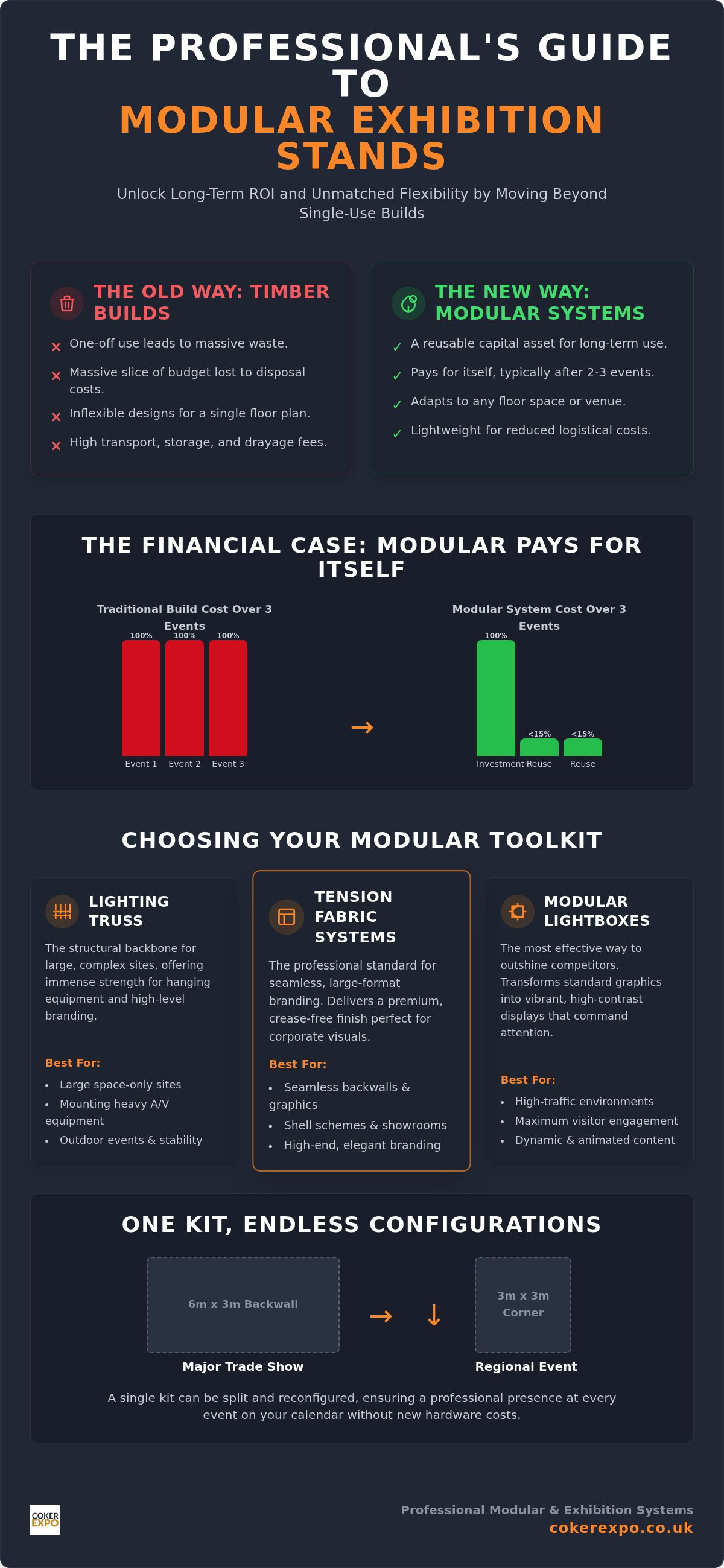
Modularity in the exhibition sector is defined by a system of interchangeable components designed to scale. Unlike traditional timber builds, modular exhibition stands consist of high-grade aluminium frames, secure connectors, and tensioned graphics that can be reconfigured for any floor space. This shift represents a move away from "build-and-burn" custom stands, which generate significant waste and recurring costs. For UK businesses in 2026, these systems are the primary driver of event ROI, turning a one-time marketing expense into a reusable capital asset.
The core infrastructure of a professional system includes several critical elements:
- Precision-engineered frames: Lightweight aluminium profiles that provide structural integrity.
- Universal connectors: Hardware that allows for rapid expansion or height adjustments.
- Dye-sublimation graphics: High-resolution fabric skins that offer a seamless, crease-free finish.
- Integrated lighting: LED arm lights or backlit panels that fit directly into the frame channels.
Modular vs. Custom: Finding the Sweet Spot
The financial argument for modularity is clear. While a bespoke timber stand is often discarded after a single use, a modular system typically pays for itself after just two or three events. You gain the ability to adapt your presence based on the venue. For instance, a 6x3m backwall used at a major London trade show can be split and reconfigured into a 3x3m corner stand for a smaller regional event. This flexibility ensures you always have a professional, authoritative presence without the need to commission new hardware for every booking.
The Evolution of Tool-Free Assembly
Modern systems have eliminated the need for specialist build crews. The implementation of secure spigot and pin systems allows for rapid, tool-free construction that remains incredibly stable. By using lightweight aluminium profiles, you significantly reduce drayage and transport costs. Most importantly, these advancements empower your own internal teams to manage the build. Instead of waiting for external contractors, your staff can assemble a professional-grade stand in a fraction of the time, ensuring your event schedule remains brisk and efficient.
Comparing Modular Systems: Truss, Tension Fabric, and Lightboxes
Choosing the right hardware for your modular exhibition stands depends on your structural requirements and visual goals. Modularity is not a one-size-fits-all category. It's a toolkit of distinct systems that can be used independently or combined to create a hybrid presence. While some brands prioritise lightweight portability for shell schemes, others require the heavy-duty support of a gantry for suspended equipment or overhead branding.
Lighting Truss Systems: Trio vs. Quad
Structural truss serves as the backbone for space-only sites. System 35 Trio Lighting Truss is the versatile choice for footprints ranging from 3x3m to 3x6m. It uses 35mm tubes and a secure spigot and pin system for rapid assembly. For larger sites that demand a stylish industrial aesthetic, the Quad Lighting Gantry offers immense strength. These systems are essential for mounting heavy lighting rigs or creating high-level signage that is visible across the hall. If you're exhibiting outdoors, truss provides the necessary stability and wind loading capabilities that fabric-only stands cannot match.
Tension Fabric Frames and Walls
Tension Fabric Systems (TFS) are the professional standard for seamless, large-format branding. The FW120 Tension Fabric Display Stand combines elegance with functionality, offering a deep profile that allows for optional internal illumination. For brands with strict identity guidelines, FF50 Freestanding Frames can be finished in specific coloured RAL frames to match corporate palettes. If you're working within a showroom or a standard shell scheme, the FF40 Slimline Profiles provide a low-profile, wall-mounted solution that maximises floor space while delivering a high-end finish.
Modular Lightboxes: GL120 and ProRGB
Illumination is the most effective way to outshine competitors in a high-traffic environment. GL120 Edge-Lit Lightboxes transform standard graphics into vibrant, high-contrast displays that command attention. For maximum engagement, ProRGB Animated Backlit Displays use motion lighting to create dynamic visual effects that draw visitors toward your stand. If speed of deployment is your priority, the Halo Edge-Lit LED Lightbox features 120mm PVC profiles designed for quick, tool-free setup. You can view our full range of professional Exhibition Lighting Truss and illuminated frames to see how these systems integrate.
The most successful 2026 exhibition strategies often involve hybrid configurations. By combining a Quad truss structure with integrated GL120 lightboxes, you bridge the gap between industrial strength and high-end retail aesthetics. This multi-functional approach ensures your stand is not just a backdrop, but a piece of essential infrastructure that supports your brand's technical and creative requirements.
The Buyer’s Framework: How to Select Your Ideal Modular Configuration
Selecting the right hardware requires a clear view of your 12 month event calendar. If your schedule includes a mix of small regional trade shows and large scale national exhibitions, reconfigurability is your primary metric for success. You need modular exhibition stands that don't just fit one specific plot but can be broken down or expanded to suit different floor plans. This strategic approach ensures your initial investment continues to deliver value across multiple venues without requiring new hardware for every booking.
Your choice of graphics also impacts long term usability. While rigid panels offer durability, they are bulky to transport and prone to edge damage. Stretch fabric is the professional's choice for 2026. It's lightweight, washable, and can be folded into a small bag, significantly reducing shipping costs. For those integrating technology, ensure your chosen frame system is rated for AV equipment. High grade aluminium profiles can easily support integrated monitor brackets and tablet holders, allowing you to blend digital engagement with physical branding.
Shell Scheme or Space-Only?
The type of site you book dictates your structural needs. If you're working within a shell scheme, your goal is to maximise the internal footprint. Wall mounted solutions like the FF40 or GL65 slimline lightboxes allow you to skin the existing walls without losing valuable floor space. For space-only sites, you must provide your own structural integrity. A Lighting Truss Backwall (Build 11) provides the necessary height and stability to dominate a larger plot. Remember that UK venue regulations are strict; all fabric graphics must meet fire safety standards, typically requiring a B1 or M1 flame retardant certification.
Transport and Assembly Logistics
Logistical stress is often the hidden cost of exhibiting. You must decide between car-portable systems and those requiring a dedicated van. A Curved Pop-Up Display Stand is a classic example of efficiency, where the transport case often doubles as a branded promotional counter. Weight is a critical factor here. Aluminium profiles offer the best strength-to-weight ratio, ensuring your kit is manageable for internal teams. Most 3x3m modular builds can be completed by two people in under 45 minutes, allowing your staff to focus on lead generation rather than manual labour. If you need assistance with complex logistics, our team provides comprehensive Event Management and Planning to ensure a seamless build.
Standout Modular Solutions from the Coker Expo Collection
Selecting the right hardware is the final step in executing your 2026 event strategy. The Exhibition Stand Designs collection offers a range of pre-configured modular exhibition stands that balance aesthetic appeal with technical reliability. For brands seeking maximum engagement, the ProRGB Animated Backlit Tension Fabric Display (approx. £1,144) uses programmable motion lighting to attract footfall in crowded halls. If your schedule involves large-scale space-only sites, the Trio Lighting Truss Sets (£2,500 to £3,580) provide the structural authority needed for high-level branding and heavy equipment support. For rapid deployment in shell schemes, Straight Pop-Up Display Kits (£470 to £643) offer a portable solution that includes high-resolution graphics and integrated lighting.
Dominating Vertical Space: Aerial and Hanging Displays
Aerial and hanging displays are often overlooked but serve as powerful magnets for visitors. Circular tension fabric hanging displays allow your brand to be seen from across the hall, breaking through the visual noise of the ground floor. Overhead hanging stretch fabric displays provide a massive branding surface without consuming any of your paid floor footprint. Safety is paramount when suspending hardware. Using professional-grade aerial frames is essential to ensure your graphics meet venue lifting regulations and structural safety requirements. These systems act as a beacon, guiding traffic directly to your location from the moment they enter the venue.
Flexible Branding: Banner Stands and Fabric Walls
For smaller footprints or supplementary branding, the Twist® Flexible Banner Stand Kit is the ultimate modular solution. It allows you to link multiple banners together to create a seamless wall that can flex around corners or adapt to uneven floor spaces. If you require a more permanent look for showrooms or VIP event areas, the FF50 Freestanding Fabric Backdrop provides a stable, high-end finish with a clean aesthetic. The Straight Stretch Fabric Display Stand remains a staple for creating a vibrant, seamless visual narrative. It can be assembled in minutes by a single person, making it the ideal choice for businesses that value speed and efficiency without compromising on professional quality.
Future-Proof Your 2026 Exhibition Strategy
Transitioning from disposable timber builds to high-performance modular exhibition stands is a strategic move that secures your long-term ROI. By prioritising reconfigurable hardware, you gain the agility to adapt to any venue size without the recurring costs of new construction. Whether you choose the structural strength of a quad truss system or the seamless visual impact of tension fabric, your investment represents a durable asset that works as hard as your marketing team.
Success on the trade show floor requires a partner that understands the technical demands of the UK market. We provide UK-based expert support and custom 3D stand visuals before your build begins, ensuring your durable aluminium or steel infrastructure meets every site regulation. You don't have to settle for rigid designs or logistical stress when you can build a scalable foundation for your brand's growth.
Take the next step in professionalising your event presence. Browse the Full Range of Modular Exhibition Stand Designs today to discover how our systems can transform your next show into a streamlined, high-impact success.
Frequently Asked Questions
Can I assemble a modular exhibition stand myself or do I need a team?
Most modular exhibition stands are engineered specifically for self-assembly by your internal marketing or sales teams. Systems featuring tool-free connectors and spigot and pin hardware allow two people to construct a standard 3x3m stand in approximately 45 minutes. This capability eliminates the need for expensive external contractors and gives you total control over your event schedule and logistics.
Are modular stands compatible with standard UK shell scheme dimensions?
Professional modular systems are fully compatible with standard UK shell scheme dimensions. Frames are typically designed in 1000mm increments to fit precisely within the 2.4m or 2.5m heights common in UK venues like the NEC or ExCeL. You can also use slimline profiles to skin existing shell scheme walls, ensuring you maximise every square centimetre of your allocated floor space.
How do I update the graphics on my modular stand for a new campaign?
Updating your branding is a simple process that involves replacing the fabric skins rather than the hardware. Tension Fabric Systems (TFS) use silicone edge graphics (SEG) that slot directly into the frame channels. You can order new large-format prints for specific campaigns and swap them out in minutes, ensuring your stand remains a versatile asset for different target audiences.
What is the lifespan of a professional aluminium modular frame?
A high-grade aluminium modular frame has an operational lifespan of ten years or more when handled with care. Aluminium is resistant to warping and structural fatigue, making it far more durable than timber or plastic alternatives. This longevity ensures that modular exhibition stands function as a long-term capital investment rather than a recurring marketing expense.
Can modular stands be used for outdoor events as well as indoor trade shows?
Modular stands are suitable for outdoor use if you select a system designed for environmental loads. Heavy-duty lighting truss is the industry standard for outdoor events because of its superior stability and wind loading capabilities. While lightweight fabric frames are perfect for indoor halls, truss-based modularity provides the resilience required for external brand activations and regional shows.
Do modular exhibition stands meet UK fire safety standards for public events?
Yes, professional modular systems meet all mandatory UK fire safety standards for public exhibitions. The fabric graphics are treated to achieve B1 or M1 flame retardant certification, which is a strict requirement for most UK event organisers. We provide the necessary documentation to ensure your stand passes venue health and safety inspections without delays or complications.
Leave a comment