

The Professional Guide to Glass Cabinets: Maximising Display Impact in 2026
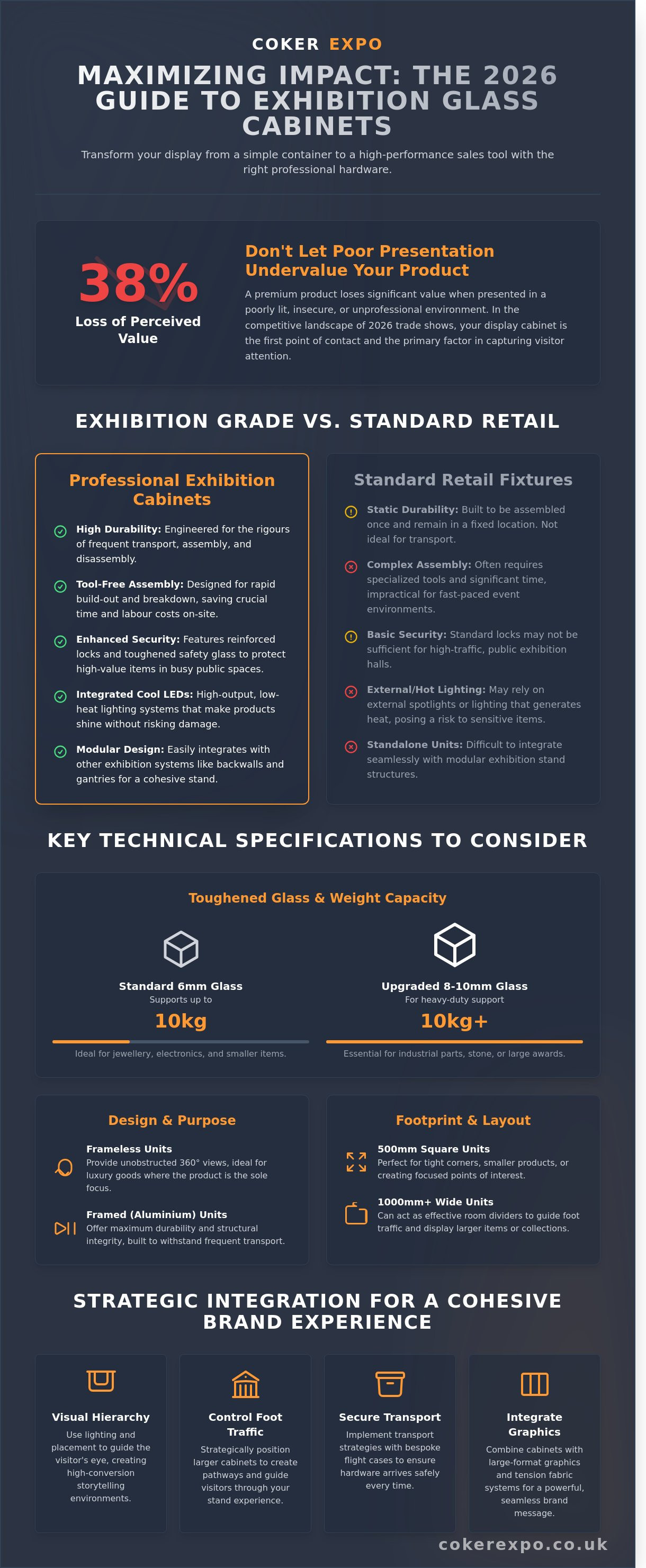
A premium product loses approximately 38% of its perceived value when presented in a poorly lit or insecure environment. In the competitive landscape of 2026 trade shows, your choice of glass cabinets is the primary factor in whether a visitor stops or walks past. You know that your display must be robust enough for transport yet elegant enough to command a premium price point. It's a common struggle to find hardware that balances these needs without becoming a maintenance headache or a security risk during busy event hours.
We believe your exhibition stand should function as a high-performance sales tool, not a source of stress. This guide provides the technical framework to select, organise, and maintain professional glass cabinets that maximise visual impact and security. You'll discover how to integrate high-output LED lighting and modular security features that protect your high-value items while increasing footfall. We will also detail the maintenance protocols and tool-free assembly benefits that ensure your brand remains the focal point of the hall from the first hour to the last.
Key Takeaways
- Learn how to distinguish between permanent retail fixtures and portable exhibition units to ensure your hardware meets specific weight-bearing and durability requirements.
- Discover the professional techniques for using visual hierarchy and negative space to transform your glass cabinets into high-conversion storytelling environments.
- Streamline your event build-out by mastering tool-free assembly methods and implementing secure transportation strategies with bespoke flight cases.
- Understand how to strategically position display units to control foot traffic flow and integrate them with large-format graphics for a cohesive brand experience.
- Identify the essential technical specifications needed to future-proof your product displays against the evolving standards of the 2026 B2B exhibition landscape.
Understanding Professional Glass Cabinets for High-Impact Displays
In the 2026 exhibition landscape, glass cabinets have evolved from simple storage units into sophisticated tools for product storytelling. They function as secure, illuminated micro-environments that isolate a product from the chaos of a busy hall. While domestic units focus on aesthetics, professional B2B hardware prioritizes durability and visibility. These units provide a controlled stage where lighting and placement work together to guide the viewer's eye exactly where it needs to go.
Professional displays are now the preferred medium for high-value items like electronics, jewellery, and corporate awards. By Understanding Display Cases and their various configurations, exhibitors can select the right freestanding or counter-top model for their specific floor plan. Glass offers 360-degree unobstructed visibility, which is critical in retail centres where you have roughly 3 seconds to capture a passerby's attention. It creates a physical barrier that doesn't feel like a barrier, allowing for an intimate viewing experience without compromising the safety of the merchandise.
The Role of Glass Cabinets in Modern Brand Storytelling
Physical displays offer a tactile contrast to the saturated digital marketing space. When you place a product inside glass cabinets, you create a premium aura through physical isolation. It signals that the item is valuable and requires protection. This environment builds consumer trust. A clean, well-lit display suggests a brand that cares about its presentation and its craftsmanship. It's a psychological cue that tells the customer the product is worth their time and investment.
Key Differences Between Retail and Exhibition Cabinets
Exhibition hardware must withstand frequent transport and assembly. Unlike static retail units, professional exhibition cabinets often feature modular designs and tool-free assembly to ensure fast turnaround times. Security is another major differentiator. Standard home locks don't suffice in high-traffic trade shows. Professional units utilize reinforced locking mechanisms and toughened safety glass to protect assets in public spaces. These systems are built for the "Practical Specialist" who needs reliability and impact in equal measure.
- Durability: Engineered for frequent loading and unloading from transport vehicles.
- Modularity: Ability to integrate with other exhibition stands or gantry systems.
- Security: High-grade locks and shatter-resistant glass as standard.
- Illumination: Integrated LED systems that don't produce heat, protecting sensitive electronics.
The shift toward professional-grade hardware in 2026 reflects a need for efficiency. Marketing managers now demand systems that are easy to build but look like permanent installations. This balance of portability and premium finish is what separates a professional display from a standard retail fixture.
Choosing the Right Specifications for Your Display Requirements
Selecting glass cabinets requires a clear understanding of your specific environment. A permanent retail fixture demands different structural integrity than a portable exhibition unit designed for rapid assembly. You must identify the core purpose before committing to a build. For permanent retail or hospitality installations, TFSE Products Ltd offers specialized solutions that prioritize aesthetic seamlessness and durability. Conversely, if your brand moves between trade shows, portability and tool-free assembly are your primary metrics.
Weight-bearing capacity is a critical technical factor. Standard 6mm toughened glass shelves typically support up to 10kg of evenly distributed weight. For heavier items like industrial components or stone sculptures, upgrading to 8mm or 10mm glass is a non-negotiable safety requirement. Always calculate your product density against the cabinet footprint. A 500mm square unit fits tight corners, while 1000mm wide modules can double as effective room dividers in large halls.
Design choice impacts both visibility and longevity. Frameless units offer 360-degree views, perfect for high-end luxury goods where the hardware shouldn't distract from the product. Conversely, framed units built with anodised aluminium provide the robust durability needed to survive the rigours of frequent transport and public interaction.
Toughened Glass and Safety Standards in Public Spaces
Public safety is governed by strict UK regulations, specifically BS EN 12150. All professional glass cabinets must use tempered or toughened glass. This material is processed to be significantly stronger than annealed glass. If a break occurs, the glass crumbles into small, blunt granules. This crumble effect prevents the dangerous, jagged shards that cause serious injury in crowded exhibition spaces. Using non-compliant glass in a public gathering can invalidate your insurance and pose a major liability risk.
Integrated Lighting Systems: LED vs. Halogen
In 2026, LED lighting is the undisputed standard for professional displays. Halogen bulbs are largely obsolete due to their high power consumption and excessive heat, which can damage delicate merchandise. LED systems offer superior energy efficiency and allow you to control the colour temperature. For tech or jewellery, a 5000K cool white provides a crisp, modern look. For leather or wood, a 3000K warm white is more flattering. Positioning is equally important; side-strip lighting reduces the shadows often cast by top-down spotlights.
Security Features for High-Value Showcasing
Security is more than just a lock; it's about peace of mind during a busy event. Plunger locks are the standard for sliding doors, while hinged doors require high-security cylinder locks. To keep your display looking pristine, look for units with integrated dust-proof seals. These seals can reduce cleaning requirements by over 60% by blocking airborne particles. For high-stakes retail, many modern units now allow for the integration of discreet vibration sensors and alarm systems. If you need a custom security configuration, you can view our modular display options to find a system that fits your specific risk profile.
How to Organise and Merchandise Your Glass Cabinets for Maximum Impact
Effective merchandising transforms standard glass cabinets into high-performance sales tools. To achieve this, you must establish a clear visual hierarchy that directs a visitor's gaze from the top shelf down to the base. Start by placing your most visually striking or high-value items at the top to draw people in from across the hall. To maintain a premium feel, follow the 30% negative space rule. Retail data suggests that over-crowding a shelf reduces the perceived value of the items by up to 40%. Leaving empty space around products prevents the display from looking cluttered and ensures each item receives the attention it deserves.
Integrate subtle branding elements, such as laser-etched acrylic blocks or small tension fabric graphics, within the cabinet to reinforce your identity. For multi-day exhibitions, stock rotation is vital. Reorganising your layout between day one and day two keeps the stand fresh for recurring visitors and allows you to promote different product lines based on real-time lead data.
The Rule of Three and Visual Balancing
The human brain processes odd-numbered groupings more effectively than even ones. Utilise the "Rule of Three" by clustering products in small sets to create a balanced, asymmetrical aesthetic. Use varying heights to add depth; clear acrylic plinths are essential here as they elevate products without adding visual bulk. Balance heavy textures with smooth surfaces and dark colours with light ones to prevent visual fatigue and keep the viewer engaged for longer periods.
Strategic Product Placement for Eye-Level Engagement
The "hero" product must sit within the primary impact zone, which is the average human eye level between 150cm and 160cm from the floor. This is where the highest conversion of attention occurs. Use lower shelves for supporting technical literature—including guides to explore AEG Airsoft Rifles or other tactical equipment—heavier accessories, or bulkier items that provide context to your main display. If your product requires full inspection, consider linking your cabinet layout to a rotating display stand. This hardware ensures 360-degree visibility and adds a kinetic element that naturally draws the eye in a crowded exhibition hall.
Lighting Techniques for Professional Merchandising
Lighting is the difference between a functional box and a professional showcase. Use adjustable spot lighting to pick out specific features or textures on your products. To eliminate distracting reflections, angle your products at approximately 45 degrees relative to the glass surface. For high-end luxury items, dimmable LEDs allow you to control the mood and intensity. Modern glass cabinets often feature integrated, cool-running LED strips that provide a clean, daylight-balanced glow without the heat risk associated with older halogen systems.
Practical Considerations for Exhibition Logistics and Maintenance
High-pressure event build-outs leave no room for technical delays or missing Allen keys. You need equipment that performs immediately. Tool-free assembly is a standard requirement for modern exhibitors, allowing a single team member to erect complex glass cabinets in under 20 minutes. This speed doesn't just save time; it reduces the labor costs associated with hiring specialist contractor teams for basic furniture setup.
Tool-Free Assembly and Portability
Modular systems offer the greatest versatility for 2026 trade show calendars. While rigid structures provide maximum stability for heavy engineering components, collapsible units are the superior choice for tight logistics budgets. Data from 2024 logistics reports shows that collapsible units occupy 65% less space in transit, which significantly lowers carbon footprints and haulage fees. Regardless of the structure, always verify that your unit includes adjustable leveling feet. Exhibition hall floors at venues like the NEC or ExCeL often vary by up to 15mm across a standard 3x3m plot. Stability is a safety requirement, not a luxury.
Bespoke flight cases with high-density foam inserts are essential for protecting your investment. These cases eliminate the micro-vibrations that lead to stress fractures in tempered glass during transit. Standard pallet shipping results in a 12% higher breakage rate compared to custom-crated solutions. Investing in a flight case ensures your display arrives in showroom condition every time.
Maintaining a Smudge-Free Professional Finish
A professional appearance requires a rigorous cleaning schedule. Dust and fingerprints become visible under high-intensity LED lighting within two hours of a show opening. Use an "inside-out" cleaning method: polish the interior surfaces first, then the exterior. This technique ensures you don't miss streaks that are only visible from certain angles. If you notice a scratch, test it with a fingernail. If the nail catches, the structural integrity of the tempered panel may be compromised, and it's time to order a replacement panel from your supplier.
Your onsite maintenance toolkit should include:
- Ultra-fine microfibre cloths: Minimum 300 GSM to avoid lint shedding.
- Anti-static glass cleaner: Specifically formulated to repel dust in high-traffic environments.
- White cotton gloves: Use these during assembly and shelf adjustment to prevent oil transfer.
Cable management is the final hurdle for a seamless look. Professional glass cabinets should feature integrated cable channels within the aluminum extrusions or the base. Keeping power leads for internal lighting hidden ensures the focus remains on your products, not the infrastructure. If your unit lacks internal channels, use clear acrylic clips to route wires down the rear corners to maintain a clean aesthetic.
Ensure your next show is stress-free with our expert-grade hardware.
View our range of portable glass cabinets here.
Integrating Glass Cabinets into Your Wider Exhibition Strategy
Strategic placement of hardware dictates how visitors move through your space. Don't view glass cabinets as isolated units; they are functional tools for controlling foot traffic. Positioning a tall showcase at a 45-degree angle to the aisle creates a natural funnel, drawing attendees into your stand. This layout prevents the "barrier" effect where visitors feel blocked from entering. Instead, it invites them to follow a curated path from product discovery to personal interaction.
Successful exhibitors use these units as consultation hubs. By placing a waist-height cabinet between a staff member and a prospect, you create a professional anchor for sales conversations. It provides a shared focal point, allowing you to demonstrate product features without the awkwardness of hovering. High-performing stands often see a 15% increase in dwell time when glass cabinets are used to physically structure the transition from the "browsing" zone to the "negotiation" zone.
Consistency across your display hardware is vital for brand authority. Using modular systems with matching finishes ensures your stand doesn't look like a collection of mismatched rentals. This uniform approach signals reliability and attention to detail, traits that B2B buyers prioritise when selecting new partners. Every component must work together to support the primary goal: making a professional impact.
Pairing Cabinets with Lightboxes and Tension Fabric Systems
To maximise visual depth, use a lightbox as a high-contrast backdrop. The glow from the fabric graphic makes the transparent surfaces of the cabinet pop, ensuring your products aren't lost against a busy hall background. If you're working within a standard booth, shell scheme graphic panels can frame a dedicated display zone, creating a "shop-in-shop" atmosphere. To complete this premium environment, define the floor space with high-quality cord carpet. This tactile change underfoot signals to the visitor that they've entered a different, more exclusive area of your brand experience.
Learning from High-End Retail: The Harrods Beauty Approach
The Harrods Beauty case study provides a blueprint for applying luxury retail standards to temporary environments. Their success relies on the seamless integration of lighting, high-spec finishes, and clean lines. You can replicate this by choosing cabinets with minimal framing and integrated LED tracks that eliminate shadows. Investing in premium display hardware isn't just about aesthetics; it's about perceived value. When a product is housed in a secure, well-lit, and professionally finished cabinet, its market value is instantly elevated in the mind of the buyer. For 2026, the focus is on this intersection of durability and high-street elegance, ensuring your exhibition presence is both robust and refined.
Future-Proof Your Product Displays for 2026
Success at a trade show depends on the seamless integration of high-spec hardware and strategic merchandising. By selecting glass cabinets with integrated LED lighting and secure locking systems, you'll ensure your products remain the focal point of every interaction. Prioritising tool-free assembly and robust construction is essential for navigating the fast-paced logistics of national event circuits. These practical choices reduce setup times and protect your investment during transit. You'll find that the right specifications don't just display products; they drive measurable engagement.
Coker Expo brings over 25 years of UK exhibition expertise to your project. We specialise in durable, high-spec hardware designed to withstand the rigours of frequent transport. Our systems focus on the user experience, providing the infrastructure you need to make a lasting impact without the technical headache. We're ready to help you build a professional presence that stands out. Your next high-impact display starts with reliable, British-engineered hardware.
Explore our range of professional glass cabinets for your next event
Frequently Asked Questions
Is toughened glass mandatory for glass cabinets in UK exhibition halls?
Yes, UK health and safety regulations, specifically BS EN 12150, require that all glass cabinets used in public exhibition spaces use toughened safety glass. This prevents the glass from shattering into dangerous shards if impacted. Most major UK venues like the NEC or ExCeL London will inspect equipment to ensure compliance with these safety protocols before the event opens to the public.
Can I add my own LED lighting to a standard glass display cabinet?
You can retrofit LED strips to a standard unit, though we recommend using integrated, tool-free lighting systems for a cleaner finish. Professional units often feature internal channels designed to hide 12V or 24V wiring. If you're adding your own, ensure the adhesive is heat-resistant to avoid the strips peeling off under the 14-hour daily operation common at trade shows.
How much weight can a standard glass shelf hold in a professional unit?
A standard 6mm toughened glass shelf in these glass cabinets typically supports a distributed load of 10kg to 15kg. For heavier items like industrial components or stone samples, you should specify 8mm or 10mm glass which increases capacity to 25kg per shelf. Always ensure the shelf supports are fully engaged in the vertical profiles to maintain stability throughout the event.
What is the best way to transport glass cabinets to avoid breakage?
The most effective method for transporting glass cabinets is using bespoke, foam-lined flight cases designed for rapid transit. If cases aren't available, wrap the unit in 25mm thick bubble wrap and secure it vertically on a standard 1200mm by 1000mm pallet. Statistics from logistics partners show that 90% of transit damage occurs when units are laid flat rather than standing upright.
Are lockable glass cabinets secure enough for overnight trade show storage?
Standard lockable units provide a robust deterrent against opportunistic theft during exhibition hours and overnight. Most professional cabinets feature cylinder locks with a 2-key system as standard. For high-value items like jewellery or electronics, we advise removing stock to a secure venue safe or using 10.5mm laminated glass panels for enhanced physical protection against smash-and-grab attempts.
How do I stop glare from overhead hall lights on my glass cabinet?
Position your internal LED spotlights at a 45-degree angle to the front pane to counteract harsh overhead hall lighting. Using anti-reflective glass can reduce glare by up to 98%, ensuring your products remain visible from a distance. If glare persists, adding a simple header graphic or a pelmet can shade the top of the cabinet from 500-lux ceiling arrays.
What is the difference between a frameless and a framed glass cabinet?
Frameless designs use UV-bonded joints or discrete clips to provide a 360-degree unobstructed view of your merchandise. Framed cabinets utilize robust aluminium extrusions, offering 40% more structural rigidity for high-traffic areas. While frameless units offer a premium aesthetic, framed versions are often more practical for frequent breakdown and reassembly across multiple annual shows due to their durability.
How often should I clean my glass cabinets during a busy event?
You should perform a full wipe-down every morning before the doors open and a touch-up at midday. High-traffic stands see an average of 50 to 100 fingerprints per hour on eye-level glass surfaces. Use a microfibre cloth and an ammonia-free specialist glass cleaner to maintain a professional, streak-free appearance that doesn't distract from your product display.
Leave a comment