

Wall Mounted Display Guide: Fabric Frames & Lightboxes
What if your most valuable commercial real estate isn't the floor space you pay for, but the empty walls you've been ignoring? Most managers recognize that a cluttered floor plan restricts movement and dampens the professional atmosphere, yet leaving vertical surfaces bare is a missed opportunity for brand visibility. Implementing a high-quality wall mounted display system allows you to reclaim this underutilized space while maintaining a sleek, unobstructed environment. Whether you're managing a busy retail floor or a high-traffic event hall, the right hardware transforms passive surfaces into strategic communication tools.
We understand the pressure to maintain a modern aesthetic while adhering to strict safety protocols. You need a solution that's easy to update without specialized tools and complies with standards like the 4-inch protrusion limit for displays in circulation paths. This guide provides the practical expertise you need to select, install, and maximize the impact of fabric frames and lightboxes. We'll break down the essential components of Tension Fabric Systems (TFS), explore fire safety compliance such as NFPA 286 standards, and show you how to achieve a professional finish that stands up to public scrutiny.
Key Takeaways
- Learn how to convert under-utilised vertical surfaces into high-impact brand assets using professional wall mounted lightboxes and tension fabric systems.
- Compare the technical advantages of LED illumination for constant visibility against the seamless, edge-to-edge aesthetic of Tension Fabric Systems (TFS).
- Understand critical UK fire safety regulations and load-bearing requirements for various wall types, including stud, brick, and shell scheme environments.
- Discover how to match display hardware to specific viewing distances while balancing initial infrastructure costs with the long-term ROI of interchangeable graphics.
Beyond Storage: The Strategic Value of Wall Mounted Displays in Professional Spaces
Vertical space represents the most under-utilised asset in commercial environments. While managers often fret over floor layouts and pedestrian flow, the perimeter walls remain passive. A professional wall mounted system transforms these surfaces into high-impact communication zones. Unlike floor-based stands that can be obstructed by foot traffic or furniture, wall-mounted signage sits at the natural eye line of your audience. This positioning is psychologically superior; it commands attention without invading the physical path of the visitor.
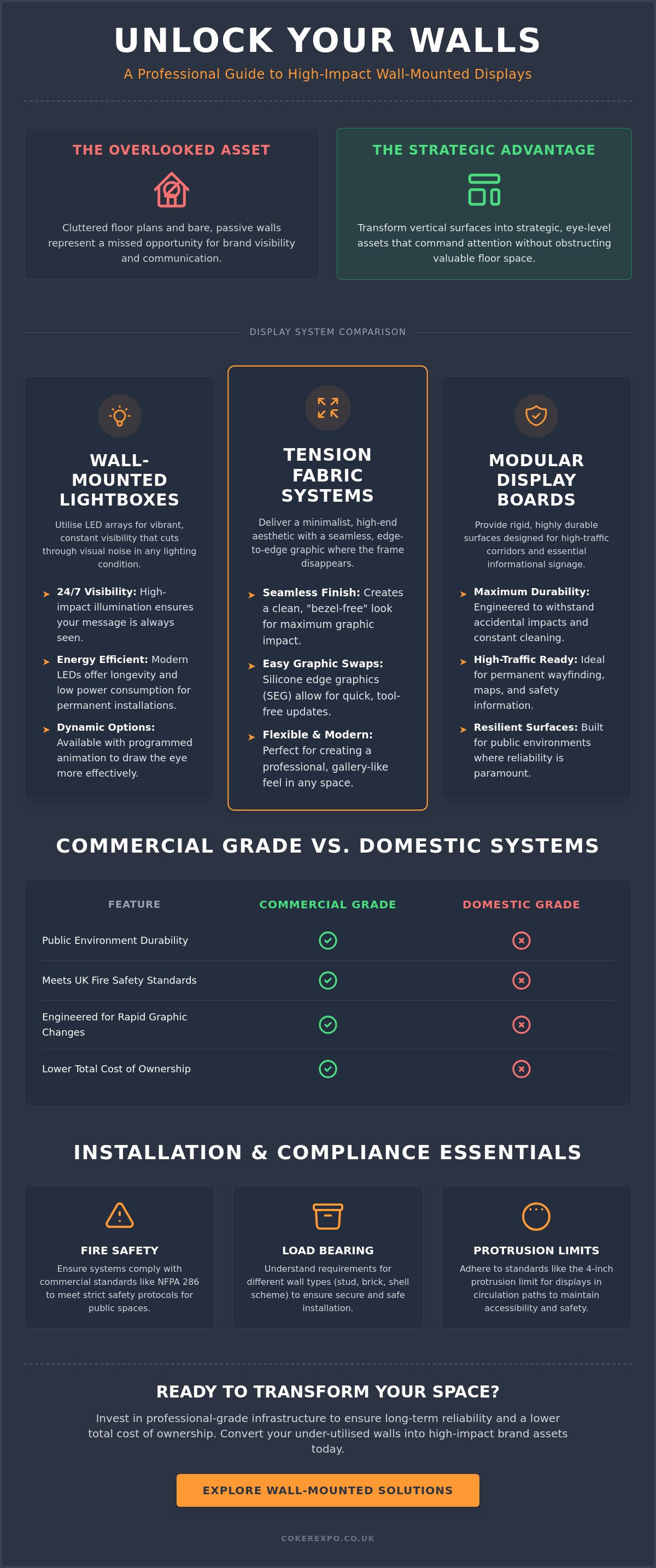
Professional systems generally fall into three categories:
- Wall Mounted Display Lightboxes: These utilise LED arrays for vibrant, 24/7 visibility in any lighting condition.
- Tension Fabric Systems (TFS): These deliver a seamless, edge-to-edge finish where the frame effectively disappears behind the graphic.
- Modular Display Boards: These provide rigid, durable surfaces for high-traffic corridors and informational signage.
Integrating these tools allows for a cleaner environment. In narrow corridors or compact event shells, every square inch of floor space is vital for movement. By moving your messaging to the vertical plane, you preserve that space while ensuring your brand remains visible from across the room. It's about turning a structural necessity into a strategic advantage.
This strategic approach to wall space isn't limited to functional signage; it also applies to curated art that reinforces a company’s professional image. For those seeking high-quality bespoke framing and fine art prints, First4Frames Gallery offers a range of options that can be seamlessly integrated into commercial interiors to complement your display systems.
Maximising Brand Impact with Vertical Signage
Creating a hero focal point requires more than just hanging a poster. It involves applying core exhibition stand design principles to your permanent office or retail branding. Traditional retail construction often involves permanent fixtures that are difficult to alter. Modern fabric frames and lightboxes provide a flexible alternative, allowing you to swap large-format graphics in minutes. This agility is similar to how digital signage technology allows for rapid content updates, ensuring your environment stays relevant to current promotions without requiring a full renovation.
Commercial vs. Domestic Wall Systems
It's a mistake to equate professional hardware with domestic solutions. While home shelving might look adequate in a showroom, it lacks the durability required for public environments. Commercial wall mounted displays are engineered for resilience. They're built to withstand constant cleaning, accidental impacts, and the logistical demands of rapid graphic changeovers. Domestic units often fail under heavy-duty usage and rarely meet the stringent fire safety standards required for UK commercial buildings. Investing in professional-grade infrastructure ensures long-term reliability and a lower total cost of ownership.
Technical Solutions: Comparing Professional Wall Mounted Display Types
Selecting the right hardware depends on your environment's ambient light and the desired frequency of graphic updates. Professional wall mounted solutions offer more than just a static frame; they provide a technical platform for high-resolution brand storytelling. Whether you require the high-impact glow of a powered unit or the understated elegance of a fabric frame, the choice of technology dictates how your brand is perceived in high-traffic commercial zones.
The Power of Illumination: Wall Mounted Lightboxes
Standard LED lightboxes provide consistent, 24/7 visibility that cuts through visual noise in busy corridors or retail spaces. These units are highly energy-efficient, making them a sound investment for permanent office installations where longevity is a priority. Modern lightbox technology has evolved to use thin-profile wall mounts in 2026, ensuring that even large-format displays remain sleek and unobtrusive.
For those seeking maximum engagement, dynamic lightboxes add programmed animation to the vertical surface. These units use back-lit LED matrices to create subtle movement behind the fabric, drawing the eye more effectively than a static image. This technology allows you to highlight specific products or brand messages without the complexity of a full digital screen.
Seamless Graphics with Tension Fabric Systems (TFS)
If your goal is a minimalist, architectural look, Tension Fabric Systems (TFS) offer a sophisticated alternative. These frames allow for massive, single-piece graphics that eliminate the need for joins or visible hardware. The system relies on the silicone edge graphic (SEG) mechanism; a thin silicone strip is sewn into the perimeter of the fabric, which then tucks into a recessed groove in the aluminium frame. This creates a drum-tight, edge-to-edge finish where the frame effectively disappears.
Maintenance is straightforward and cost-effective. Unlike rigid boards that can scratch or crack, fabric graphics are durable and often washable. You can replace the entire visual in minutes without dismantling the wall mounted infrastructure, providing a high ROI for businesses that update their messaging seasonally. For temporary needs or pop-up events, folding display boards offer a lightweight, portable alternative that can be mounted quickly. When planning these installations in public spaces, it's helpful to reference federal accessibility standards to ensure your displays are safe and usable for all visitors. If you're ready to transform your vertical space, you can explore professional display options at cokerexpo.co.uk to find the right technical fit for your project.
Installation and Compliance: Ensuring Safety in Public Environments
Safety is the primary consideration for any installation in a public or commercial space. While the aesthetic impact of a wall mounted display is vital, technical compliance ensures that your investment doesn't become a liability. Professional environments, from high-street retail to international exhibition halls, operate under strict health and safety protocols that dictate how hardware is secured and what materials are permitted. Ignoring these standards can lead to refused entry at venues or significant legal risks.
UK Fire Safety and Material Standards
In the UK, all textiles used in public buildings must meet specific fire retardancy standards. You'll frequently encounter B1 or M1 ratings; these indicate that the fabric has been tested for limited flame spread and self-extinguishing properties. Compliance isn't just a recommendation; it's a requirement for insurance and venue access. For example, shell scheme graphic panels must often be accompanied by fire certificates before an event organiser allows them to be installed. Always keep digital copies of your material specifications ready for inspection by venue fire marshals.
Mounting Hardware and Stability
The method of attachment depends entirely on the substrate. Brick and concrete walls provide excellent anchor points for direct-to-wall frames, while stud walls require careful alignment with internal timber or metal supports. We recommend using Z-bars or split battens for larger wall mounted lightboxes. These systems distribute the weight evenly across the surface and allow for a perfectly level finish without visible screw heads. If you're working with exceptionally heavy or oversized displays, integrating truss truss structures can provide the necessary structural support for wall-adjacent installations.
For high-traffic commercial areas, security is another logistical hurdle. Standard mounting can be vulnerable to tampering or accidental dislodgment. We provide anti-theft locking systems that secure the frame to the wall brackets, requiring a specific tool for removal. This protects your hardware and ensures the safety of passers-by in crowded corridors. If you're unsure about the load-bearing capacity of your site or need guidance on local regulations, contact the specialists at cokerexpo.co.uk for professional installation support.
Selecting the Right Wall Mounted System for Your Business Goals
Finalising your choice of wall mounted hardware requires a clear understanding of your specific environment and long-term promotional goals. While previous sections detailed the technical specifications of lightboxes and fabric frames, the selection process must also account for viewing distances and the frequency of your messaging updates. A high-resolution board is often superior for narrow corridors where visitors are mere inches from the graphic. Conversely, large-format fabric systems are more effective for branding that needs to be legible from across a large exhibition hall or lobby.
Budgeting for vertical displays should be viewed as a two-part investment. The initial hardware represents the essential infrastructure; it must be durable enough to withstand years of use in public spaces. The second part is the recurring cost of graphics. Tension Fabric Systems (TFS) offer a high ROI because the lightweight fabric is inexpensive to print and ship, allowing you to refresh your brand's look without replacing the underlying frame. It's a pragmatic approach that balances high-impact visuals with manageable operational costs.
Choosing UK-made frames provides a distinct competitive advantage. Local production ensures shorter lead times and the ability to handle bespoke manufacturing requests that off-the-shelf imports cannot accommodate. We focus on providing hardware that's engineered for the high-pressure demands of national commercial use, ensuring every component is resilient and easy to assemble on-site.
Assessing Your Display Environment
Before ordering, conduct a thorough audit of your ambient lighting. If the space is dimly lit or has competing visual noise, an illuminated wall mounted lightbox is necessary to ensure your brand remains the focal point. You must also analyse traffic flow to determine the safest mounting height and depth. In high-traffic areas, a slim-profile frame is essential to prevent accidental collisions and maintain compliance with accessibility standards. Consider whether the installation is permanent or if you'll need to scale the system for a rotating promotional calendar.
Streamlining the Ordering Process
Precision is critical when preparing artwork for large-format graphics. We require specific bleed and resolution settings to ensure your images remain crisp when scaled to wall-sized dimensions. If your space has non-standard architectural features, bespoke sizes can be manufactured to fit exactly within your available footprint. This flexibility allows for a seamless integration into your existing interior design. Your next step should be a consultation with a technical specialist to verify that your chosen system meets all safety and structural requirements before production begins.
Transform Your Commercial Space with Vertical Branding
Professional wall mounted displays are more than just decorative additions; they're essential infrastructure for modern commercial environments. We've detailed how moving branding to the vertical plane preserves floor space while keeping messages at eye level for maximum engagement. Success in high-traffic areas requires balancing technical choices like LED illumination with strict adherence to UK safety standards and accessibility requirements.
As specialist UK-based manufacturers established in 1999, we combine technical expertise with expert event management and planning services to deliver results that stand up to heavy-duty commercial use. Whether you need a bespoke lightbox or a seamless tension fabric frame, we provide the durability and ease of assembly required for professional success. Explore our full range of professional wall-mounted displays at CokerExpo to find a solution tailored to your specific requirements. It's time to stop ignoring your empty walls and start using them as strategic assets to drive your brand forward.
Frequently Asked Questions
Do I need professional installation for a wall-mounted lightbox?
Professional installation is recommended for large-format lightboxes and any units requiring hard-wired electrical connections. Smaller, plug-and-play models can often be installed by an on-site maintenance team using standard mounting hardware. However, ensuring the unit is perfectly level and securely anchored to the substrate is critical for public safety. When fitting panels over existing electrical points, using a socket spacer plate UK ensures that outlets remain flush and accessible. For complex or oversized displays, expert installers ensure compliance with structural and electrical regulations to prevent future logistical failures.
Can tension fabric systems be mounted on any wall type?
Tension fabric systems can be installed on most surfaces, including brick, concrete, and timber-stud walls. The key is selecting the appropriate fixing method for the specific substrate. Brick requires heavy-duty wall plugs, while stud walls need fixings secured directly into the internal framework for stability. For temporary environments, these systems can also be adapted for mounting onto exhibition shell schemes using specialised bracketry that avoids damaging the venue's panels.
Are wall-mounted exhibition displays fire-rated for UK venues?
All professional wall mounted displays intended for UK venues must comply with fire safety regulations, typically requiring a B1 or M1 rating. This ensures the fabrics and graphics are flame-retardant and self-extinguishing. We provide the necessary certification for our materials, which is often requested by venue fire marshals during the build phase of an event. Using non-rated materials can result in the immediate removal of your display from the exhibition floor.
How easy is it to change the graphics on a wall-mounted TFS frame?
Changing graphics on a Tension Fabric System (TFS) is a straightforward process that requires no specialised tools or training. The silicone edge of the graphic simply pushes into a dedicated groove in the frame's perimeter. This allows a single operator to update a large-format display in minutes. Because the fabric is lightweight and foldable, replacement graphics are easy to transport and store, making the system ideal for frequent seasonal promotional updates.
What is the maximum size for a single-piece wall-mounted display?
Single-piece fabric graphics can reach widths of up to 5 metres by almost any length, depending on the specific material roll size. While the aluminium frames are manufactured in modular sections for ease of transport, they join seamlessly to create massive wall mounted installations that appear as a single, continuous image. This modularity allows us to create bespoke displays that cover entire walls without the visible seams or joins found in traditional rigid panel systems.
Are LED lightboxes expensive to run for permanent office displays?
Modern LED lightboxes are highly energy-efficient and cost-effective for long-term use. Compared to older fluorescent tube technology, LEDs consume significantly less power and have a much longer operational lifespan, often exceeding 50,000 hours. This makes them a sustainable choice for permanent office branding that remains illuminated throughout the working day. The low heat output also reduces the load on air conditioning systems, further contributing to overall operational efficiency.
Leave a comment