

Sustainable & Eco-Friendly Trade Show Displays: The UK Professional’s Guide (2026)
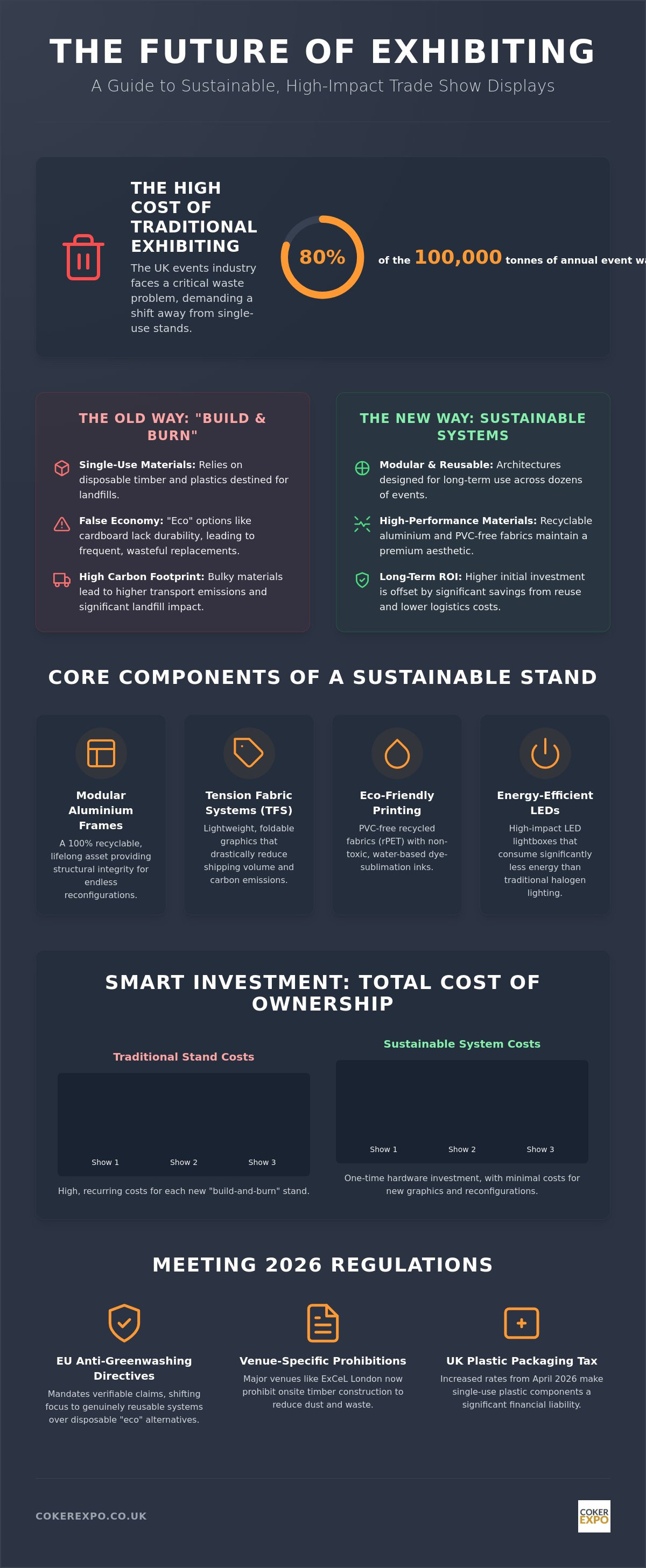
Did you know that temporary exhibition designs account for approximately 80% of the 100,000 tonnes of waste the UK events industry generates every year? It's a staggering figure that explains why you're likely feeling intense pressure to reduce your carbon footprint while maintaining a high-impact presence. You might worry that switching to eco-friendly trade show displays UK venues now mandate means sacrificing durability or aesthetic appeal for materials that lack the resilience your schedule demands.
We understand the challenge of balancing environmental responsibility with the need for a professional, resilient stand. This guide provides a strategic framework to master the transition to sustainable exhibiting without compromising on quality. We'll examine the latest 2026 regulations, including the EU's strict anti-greenwashing directives and ExCeL London's onsite timber prohibitions. You'll learn how to choose modular hardware and TFS Tension Fabric systems that offer a clear justification for your investment through years of reliable, high-performance reuse and rapid onsite assembly.
Key Takeaways
- Understand the critical shift from high-waste "build-and-burn" stands to modular architectures designed for long-term reuse across multiple events.
- Identify the high-performance materials, such as aluminium frames and PVC-free fabrics, that maintain a premium brand aesthetic while meeting 2026 sustainability standards.
- Learn how to source eco-friendly trade show displays UK experts recommend to reduce carbon footprints without sacrificing durability or ease of assembly.
- Master the "Total Cost of Ownership" model to justify the investment in sustainable infrastructure through significant long-term ROI.
- Discover how to implement reusable TFS and LED lightbox systems to streamline your logistics and achieve a high-impact professional finish.
What Defines Eco-Friendly Trade Show Displays in 2026?
In 2026, the definition of sustainability in the exhibition hall has evolved from a vague marketing term into a strict set of operational requirements. True eco-friendly trade show displays UK businesses invest in are no longer just about using recycled paper or biodegradable boards. They are high-performance systems engineered for minimal waste and maximum reuse. This shift represents a move away from the traditional "build-and-burn" culture toward modular architectures that align with core sustainable design principles.
The Problem with Traditional Exhibition Waste
The UK events industry generates approximately 100,000 tonnes of waste annually. It's a massive volume of material, and temporary exhibition designs account for roughly 80% of that total. Traditional custom builds often rely on single-use timber and plastics that end up in landfills immediately after the breakdown. While some "disposable" eco-options like basic cardboard exist, they often represent a false economy. They lack the durability to survive the rigours of transport and assembly, leading to more frequent replacements and higher long-term carbon costs than a robust, reusable system. Additionally, the UK Plastic Packaging Tax rate increase in April 2026 makes single-use plastic components a financial liability as much as an environmental one.
The Rise of Tension Fabric Systems (TFS)
Tension Fabric Systems (TFS) have become the industry standard for low-impact exhibiting. Because fabric graphics can be folded and packed into small cases, they drastically reduce shipping volume and the associated carbon emissions from transport. The framing is equally important. Aluminium frames serve as a 100% recyclable, lifelong asset that provides the structural integrity needed for years of service. These systems allow for rapid graphic swaps, meaning the hardware stays out of the waste stream for decades. This approach prioritises the physical experience of the operator by ensuring transport and construction remain simple and efficient.
Tension Fabric Systems act as the lightweight, modular foundation for modern green exhibiting by combining high-definition branding with a drastically reduced transport footprint.
Key Components of a Sustainable Exhibition Stand
Building a stand that survives the rigours of the UK exhibition circuit requires more than just green labels. It demands high-performance hardware. Aluminium frames provide the necessary structural integrity and represent a lifelong asset rather than a single-use cost. Unlike cardboard alternatives, which often lack the professional authority required for major B2B events, aluminium allows for hundreds of reconfigurations. This directly supports the University of Lincoln's sustainable exhibit guidelines regarding material longevity and waste reduction. By investing in modular frames, you secure a foundation that can be reused for a decade or more.
Decision-makers often worry about the trade-off between sustainability and visual impact. Modern eco-friendly trade show displays UK professionals use today prove that high-definition branding and environmental responsibility can coexist. The secret lies in the combination of recyclable hardware and advanced textile technology.
Eco-Friendly Fabrics and Printing
The transition to PVC-free fabric graphics is a critical step for any sustainable strategy. We recommend using recycled polyester (rPET) fabrics, which are manufactured from post-consumer plastic waste. When paired with water-based inks and dye-sublimation printing processes, these graphics deliver vibrant, high-contrast results without the toxic off-gassing associated with traditional solvent-based printing. These materials are lightweight and foldable, which lowers shipping costs and carbon emissions. Crucially, these sustainable textiles are engineered to meet strict UK fire safety standards, ensuring compliance without compromising your environmental goals.
Energy-Efficient LED Lightboxes
Lighting is often the largest consumer of energy on a trade show stand. Traditional halogen or fluorescent systems are inefficient and generate excessive heat. Modern LED systems reduce power consumption by up to 80% while providing more consistent illumination across your graphics. Dynamic lightboxes take this a step further. By using programmable LED arrays, you can create movement and change the mood of your stand without needing to print and ship physical graphic updates. For a technical breakdown of these systems, see The Ultimate Guide to Exhibition Lightboxes. These energy-efficient solutions are essential for meeting the "Net Zero" mandates now common in major UK venues.
The final component of a green strategy is the use of modular connectors. These high-performance components allow a single kit to be reconfigured into different shapes and sizes. Whether you have a 3x3m shell scheme or a larger island site, modularity ensures you don't need to purchase new hardware for every event. If you are looking to upgrade your infrastructure, exploring our range of reusable TFS systems is an excellent starting point for long-term ROI.
Strategic Selection: Maximising ROI and Reducing Environmental Impact
Achieving true sustainability requires a shift in procurement logic. Many businesses fall into the trap of a "fast-fashion" approach to exhibiting, purchasing low-cost, disposable stands for every individual event. This model is the antithesis of environmental responsibility. When evaluating eco-friendly trade show displays UK companies must look beyond the initial purchase price and calculate the Total Cost of Ownership (TCO). A high-quality modular system may require a larger upfront investment, but its ability to be reconfigured and reused for years dramatically lowers the cost per event and reduces the total volume of material entering the waste stream.
Choosing UK-manufactured systems further enhances this strategy. By sourcing hardware locally, you eliminate thousands of shipping miles and the associated carbon emissions of international freight. It also ensures faster lead times and easier access to replacement parts, reinforcing the reliability of your infrastructure. This no-nonsense approach to procurement values craftsmanship and regional reliability over the convenience of cheap, short-lived imports.
The Longevity Factor in Sustainability
Durability is the most effective form of sustainability. An aluminium frame with a ten-year lifespan is significantly greener than purchasing five cardboard stands that only last two years each. To maximise this lifespan, keep your frames free of adhesive residue and store them in padded carry cases to prevent transit damage. Modularity allows for future-proofing your stand design, as you can simply add or subtract components to meet changing floor space requirements without discarding existing hardware.
Lightweight Design and Transport Efficiency
Logistical waste is often overlooked in green strategies. Heavy, bulky crates require larger vehicles and more fuel. Our folding display boards and fabric frames are designed for compact packing, allowing a full stand to fit into a standard van or even a large estate car. This efficiency reduces fuel consumption across your UK-wide event schedule. For more insights on how structural choices influence your logistical footprint, read our Exhibition Stand Design: The Professional Guide. Reducing the physical weight of your kit is a practical, solution-oriented way to lower your carbon footprint while simplifying your event day logistics.
If you're ready to invest in a long-term solution that balances impact with responsibility, view our modular exhibition stand systems today.
Implementing Your Green Strategy with CokerExpo Systems
Transitioning to a sustainable model requires a partner who understands the logistical pressures of the UK exhibition circuit. We don't just supply hardware; we provide the essential infrastructure for long-term exhibiting success. Our approach to eco-friendly trade show displays UK wide focuses on total reliability and waste reduction. By integrating professional event management with high-performance systems like reusable TFS and LED lightboxes, we help you meet environmental mandates without sacrificing the impact of your brand presence.
Our commitment to sustainability is grounded in regional reliability. We prioritise domestic manufacturing and local production, which ensures that your stand has a lower carbon footprint from the moment it's built. This no-nonsense strategy respects your time and your budget, providing hardware that is easy to transport, simple to assemble, and designed to survive the high-pressure environment of the trade show floor.
Bespoke Sustainable Solutions
Large-scale stands often present the most significant waste challenges. To combat this, we offer custom fabric frames designed for specific stand dimensions, ensuring a perfect fit without the need for onsite cutting or sawing. Our exhibition lighting truss hire also plays a critical role in creating reusable overhead structures. Truss is a structural asset designed for decades of use, making it an ideal choice for brands looking to create high-impact, multi-storey environments sustainably. For a detailed look at structural sustainability, see our Truss Truss: The Ultimate Guide.
Next Steps for UK Exhibitors
The first step toward a greener presence is conducting a "Sustainability Audit" of your current display inventory. Identify which components are single-use and which can be transitioned to modular alternatives. Many exhibitors find they can easily swap heavy shell scheme panels for lightweight, PVC-free fabric graphics. This simple change reduces transport weight and simplifies onsite logistics. Once you've audited your kit, contact our specialists for a tailored, eco-conscious stand plan. We can help you integrate dynamic lightboxes or branded display plinths that offer a clear justification for your investment through years of reliable reuse. Planning for waste reduction today ensures your brand remains compliant and competitive in the evolving exhibition landscape of 2026.
Securing Your Competitive Edge in a Circular Economy
The transition to sustainable exhibiting is no longer a voluntary choice; it's a strategic necessity driven by the 2026 regulatory landscape and strict venue mandates. Success in this environment depends on moving away from the high-waste culture of the past toward high-performance modular hardware that provides significant long-term ROI. By prioritising durable aluminium frames and energy-efficient LED systems, you're not just reducing your carbon footprint. You're investing in the essential infrastructure of your brand's future.
Securing professional eco-friendly trade show displays UK venues now require shouldn't be a source of logistical stress. With UK-based expertise since 1999, we specialise in long-life aluminium TFS and LED systems designed for years of high-impact use. Our team provides full event management and planning support to ensure your transition to sustainable infrastructure is seamless and efficient.
Explore our range of professional, sustainable display systems at CokerExpo and take the first step toward a more resilient, low-waste exhibition strategy. It's time to build a presence that reflects your commitment to craftsmanship and environmental responsibility.
Frequently Asked Questions
Are eco-friendly trade show displays as durable as traditional ones?
Professional eco-friendly systems are often more durable than traditional single-use stands. While "build-and-burn" timber structures are designed for a single event, sustainable displays utilise high-grade aluminium frames and reinforced connectors. These components are engineered for repeated assembly and transport. This provides a robust infrastructure that maintains its aesthetic value and structural integrity over hundreds of shows, representing a superior long-term business investment. Similarly, for permanent business locations, investing in quality vinyl flooring installation Singapore provides a durable foundation that withstands high traffic while maintaining a professional appearance.
Can I use my existing LED lightboxes with sustainable fabric graphics?
You can typically use existing LED lightboxes with sustainable fabric graphics if the hardware supports Silicone Edge Graphics (SEG). Most modern lightbox systems are compatible with PVC-free textiles and recycled polyester (rPET) alternatives. Swapping your current branding for eco-friendly trade show displays UK specialists recommend is a cost-effective way to upgrade your sustainability profile without replacing your entire hardware inventory.
What is the most sustainable material for exhibition stand frames?
Recycled aluminium is the most sustainable material for exhibition stand frames due to its strength and infinite recyclability. Unlike timber or plastic, an aluminium frame acts as a long-term asset that stays out of the waste stream for decades. Its lightweight nature also reduces the energy required for transport. This lowers your carbon footprint while ensuring the hardware remains easy for staff to handle and assemble onsite.
How does modularity contribute to a lower carbon footprint for trade shows?
Modularity reduces your carbon footprint by eliminating the need to manufacture new hardware for every event. A single modular kit can be reconfigured to fit various floor plans, from small shell schemes to large island sites. This versatility ensures that your initial material investment is maximised over many years. Because these systems pack down into compact cases, they also significantly reduce the fuel consumption associated with event logistics.
Are PVC-free graphics more expensive than standard vinyl?
PVC-free graphics may carry a slightly higher initial price point than standard vinyl, but they offer superior long-term value. As UK venues implement stricter waste management fees and sustainability mandates, the cost of disposing of traditional PVC becomes a financial liability. Investing in sustainable textiles ensures compliance with 2026 regulations while providing a premium, high-definition finish that doesn't suffer from the creasing or off-gassing common with cheaper plastics.
How do I recycle my old exhibition graphics in the UK?
You should partner with specialist textile recycling facilities or check if your supplier offers a "take-back" scheme for used materials. Many PVC-free fabrics and rPET materials can be processed into new industrial products or insulation. It's important to avoid general waste bins, as mixed materials often end up in landfills. Proper disposal ensures your old eco-friendly trade show displays UK assets contribute to a circular economy rather than adding to the industry's annual waste tonnage.
Leave a comment