

The Professional Guide to Reusable Exhibition Stands: Sustainability and ROI
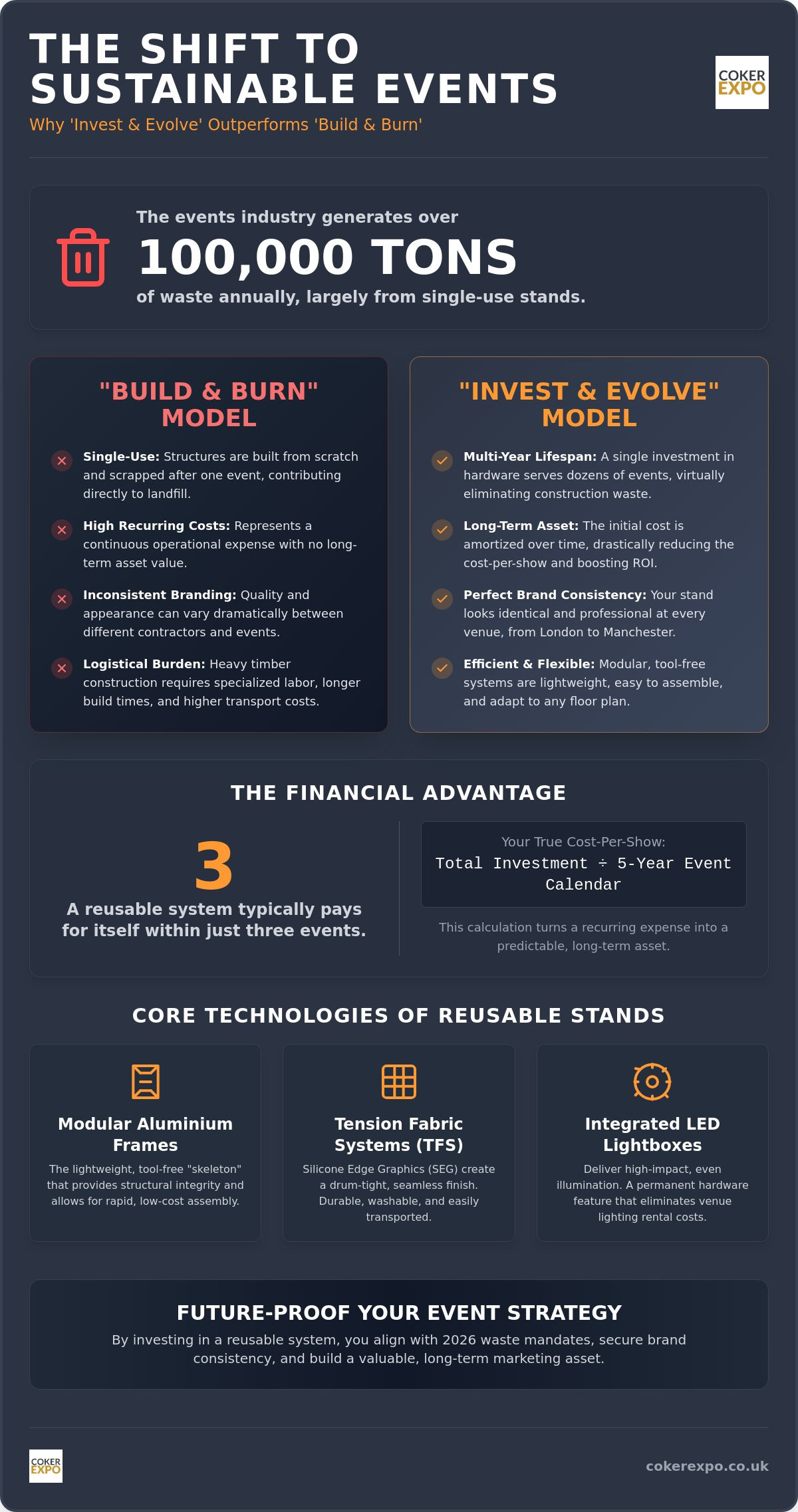
The events industry generates over 100,000 tons of waste annually, and a significant portion comes from "build and burn" stands that are scrapped after a single use. It's a cycle that feels both environmentally irresponsible and financially draining, especially as construction costs continue to climb. If you're tired of starting from scratch for every event, switching to high-quality reusable exhibition stands offers a path toward long-term efficiency. By choosing a modular system, you're not just reducing your footprint; you're investing in a durable asset that maintains a consistent, high-end brand image at every show.
We know the pressure of needing a stand that looks bespoke but remains flexible enough to fit varying floor spaces. This guide will show you how to transition to high-impact systems that slash your cost-per-show and boost your ROI over the next five years. We'll examine how modular aluminum frames and interchangeable fabric graphics provide the versatility you need. You'll learn how these systems help you navigate 2026 waste tracking mandates while delivering a professional look that competes with any custom build.
Key Takeaways
- Learn why moving away from "build and burn" stands to an investment-based model is essential for long-term ROI and compliance with 2026 waste regulations.
- Discover how modular aluminium frames and reusable exhibition stands featuring Tension Fabric Systems (TFS) provide the structural flexibility to adapt to any floor plan.
- Understand the maintenance protocols and professional storage techniques required to ensure your hardware maintains its high-end finish for five years or more.
- Master the 5-step process for refreshing high-impact graphics, allowing you to pivot your marketing message without replacing your entire infrastructure.
- Identify the specific hardware choices that balance durability with ease of assembly to minimize logistical stress and on-site labor costs.
The Business Case for Reusable Exhibition Stands in 2026
In a professional Trade show environment, the legacy "build and burn" mindset is no longer a viable strategy. For decades, the industry relied on single-use timber structures that were scrapped immediately after the hall doors closed. Today, reusable exhibition stands represent a shift toward an "invest and evolve" model. These systems are professional-grade hardware assets designed for a multi-year lifespan across diverse venues. By choosing high-performance aluminium frames and interchangeable fabric graphics, you secure a reliable infrastructure that adapts to your marketing needs rather than dictating them.
Sustainability as a Corporate Mandate
Major UK exhibition hubs now enforce stricter waste management protocols. Transitioning to modular aluminium and fabric systems directly aligns with these mandates by virtually eliminating skip waste. Aluminium is infinitely recyclable, and the lightweight nature of Tension Fabric Systems (TFS) significantly reduces the carbon footprint of transport. You aren't just meeting environmental goals; you're future-proofing your operations against increasing "net zero" requirements from venue owners and event organisers.
Economic Advantages and Cost-Per-Show
The financial logic for reusability is undeniable. While the initial investment for a modular system may be higher than a basic shell scheme, the operational costs for subsequent shows drop drastically. Most businesses find that a reusable system pays for itself within just three events. You save significantly on design fees because the core structure remains constant, allowing your budget to focus on graphic messaging rather than physical construction. To see how these efficiencies can translate into better ROI at major industry events, you can learn more about Event Participation and Sponsorship Sales for the Construction Technology ConFeX KSA.
To accurately measure success, you must calculate your Cost-Per-Show. This is defined as the total initial investment divided by the projected 5-year event calendar. When viewed through this lens, the price of high-quality hardware becomes a fractional expense compared to the recurring costs of commissioning new, single-use stands for every date on your schedule. It's a pragmatic approach that turns an annual marketing expense into a long-term business asset.
Core Technologies Powering Professional Reusable Displays
The foundation of high-performance reusable exhibition stands lies in the precision of the hardware. Unlike traditional timber builds that require heavy tools and specialized labor, modern systems rely on a modular aluminium architecture designed for tool-free assembly. This structural "skeleton" allows your team to deploy a professional presence rapidly, reducing the logistical stress and on-site costs associated with every event. By investing in these core technologies, you transition from purchasing a temporary service to owning a versatile business asset.
Tension Fabric Systems (TFS): The Reusable Revolution
Tension Fabric Systems have become the gold standard for professional displays due to their Silicone Edge Graphic (SEG) mechanism. This system uses a thin silicone strip sewn directly into the edge of a high-definition fabric print, which then tucks into a recessed groove in the aluminium frame. The result is a drum-tight, seamless visual that completely hides the modular framework. These polyester fabrics are far more durable than traditional foamex or PVC panels; they don't crack, they're washable, and they can be folded for compact transport. This technology is so effective that many firms now use custom wallpaper systems to mirror this high-end aesthetic in their permanent corporate offices.
Integrated LED Lightboxes for Permanent Impact
Freestanding fabric lightboxes represent the ultimate reusable investment for brands that want to stand out in a crowded hall. These units can function as standalone features or be integrated directly into a larger stand layout. Modern lightboxes use high-efficiency LED strips that provide perfectly even illumination without the "hot spots" common in older technology. Because the lighting is a permanent part of the hardware, you eliminate the need for expensive venue lighting rentals at every show. For detailed technical specifications on power requirements and lumen output, consult our ultimate guide to exhibition lightboxes.
Modular Truss and Structural Frameworks
For large-scale footprints or hanging displays, truss truss systems provide the necessary load-bearing "skeleton." These aluminium structures are incredibly strong yet lightweight, allowing for the safe suspension of lighting rigs or heavy digital screens. Their modular nature means you can add or remove sections to fit different floor spaces, much like a professional-grade Meccano set. Adhering to Sustainable Exhibition Stand Guidance suggests that these modular designs can reduce build costs by up to 30% over several shows. If you're planning a busy event calendar, choosing our TFS Tension Fabric systems ensures your infrastructure remains as resilient as your brand.
Maximising Longevity: Maintenance and Graphic Refreshes
Owning high-quality hardware is a smart investment, but the true ROI of reusable exhibition stands depends on how well you maintain the system between shows. Unlike timber builds that are discarded, these aluminium and fabric systems require a proactive care routine to preserve their high-end finish. This involves more than just packing away the components. It requires a systematic inspection of every element, from the structural integrity of the frame to the performance of integrated electronics. When you treat your stand as a long-term asset, it will continue to deliver a bespoke, professional look for years.
Routine maintenance includes a thorough check of all electrical components. If your stand utilizes LED lightboxes, you should test the internal lighting strips for any dimming or failure before every event. For the graphics, a handheld steamer is an essential tool for removing minor creases on-site. If the fabric becomes soiled, most high-quality dye-sublimated graphics are washable on a gentle cycle. Adopting these sustainable practices ensures that your existing assets remain in peak condition, preventing the need for premature replacements and reducing overall environmental impact.
The Graphic Refresh Process
One of the most powerful advantages of modular systems is the ability to pivot your marketing message without buying a new stand. Follow this 5-step process for a professional refresh:
- Step 1: Audit your existing frame dimensions and inspect the SEG (Silicone Edge Graphic) channels for any debris or damage.
- Step 2: Design your new visuals using high-resolution large format printing standards to ensure clarity on a massive scale.
- Step 3: Print the graphics on premium tension fabric using dye-sublimation, which bonds the ink to the fibres for maximum durability.
- Step 4: Perform a simple on-site replacement. Your team can tuck the new fabric skins into the frame without needing professional fitters.
- Step 5: Conduct a final quality check under show lighting to ensure the tension is perfect and the visuals are seamless.
Storage and Logistics Strategy
The way you transport your hardware determines how long it will last. We recommend using wheeled flight cases or padded carry bags to protect aluminium components from scratches or structural bends. When you only need to update your message, "graphic-only" shipping is a cost-effective alternative to transporting the entire stand infrastructure. Proper storage in a climate-controlled environment can double the lifespan of fabric graphics. To ensure your hardware is ready for your next national event, explore our professional Large Format Printing services for durable, high-impact refreshes.
Selecting Your Reusable Infrastructure with CokerExpo
Securing a high-performance event presence requires a shift from viewing stands as temporary expenses to seeing them as essential business infrastructure. CokerExpo acts as a dedicated UK partner, providing the hardware and technical expertise needed to make reusable exhibition stands a reality for your brand. When you partner with us, the strategy for exhibition stand design evolves. Instead of creating a static structure for a single date, we help you develop a versatile kit of parts that adapts to every venue on your schedule. This approach ensures your brand remains consistent while your logistical costs drop.
For exhibitors looking for a professional entry point into reusability, shell scheme graphic panels provide a high-impact, portable solution. These systems allow you to achieve a bespoke look within a standard shell scheme space, using graphics that can be stored and deployed repeatedly. We bridge the gap between basic modularity and premium aesthetics by integrating advanced lighting solutions. While many providers overlook the impact of illumination, our lightboxes ensure your stand maintains a high-end, professional glow that competes with expensive bespoke builds. Because we manufacture and support our systems from within the UK, we offer the reliability of fast lead times and immediate access to replacement parts.
Customisation vs. Standardisation
Achieving a unique look doesn't require a single-use build. You can balance a bespoke appearance with modular efficiency by using standardised frames paired with custom add-ons. Promotional counters and branded plinths serve as modular "building blocks" that enhance your stand's functionality without complicating the build. We assist in planning layouts that work seamlessly across different footprints, such as 3x3m and 6x3m spaces. This ensures your hardware remains a productive asset regardless of the floor space you've commissioned.
Next Steps: Planning Your 2026 Event Calendar
The first step toward a more sustainable and profitable event strategy is an audit of your upcoming shows. Identify your largest planned footprint to select a "base" frame size that can be scaled down for smaller venues. We recommend a consultation to determine whether hardware purchase or specific truss system hire is the right choice for your logistical needs. Our team focuses on the physical experience of the operator, ensuring that every system we provide is simple to transport and construct. Contact CokerExpo to design your next reusable exhibition stand and start building your long-term event infrastructure today.
Future-Proof Your Exhibition Strategy for 2026
Transitioning to reusable exhibition stands is a pragmatic business decision that aligns fiscal responsibility with modern sustainability mandates. By investing in modular aluminium frames and interchangeable Tension Fabric Systems, you eliminate the waste of single-use builds while securing a consistent brand presence across your entire event calendar. This infrastructure doesn't just reduce your environmental footprint; it significantly lowers your cost-per-show as you reuse and reconfigure your assets for years to come.
CokerExpo provides the essential hardware and technical support to help you manage this transition with total reliability. With over 25 years of exhibition industry expertise, we specialize in high-performance TFS and LED Lightbox technology produced right here in the UK. Our local manufacturing and support ensure you receive durable, high-end products with the fast turnaround times required in a deadline-driven industry. It's time to stop thinking about stands as temporary expenses and start viewing them as long-term assets.
View our range of reusable Tension Fabric Systems and Lightboxes to start building a more resilient, high-impact presence for your next event. We look forward to helping you achieve a professional result that lasts.
Frequently Asked Questions
What is the difference between a modular stand and a reusable stand?
Modular stands use a kit-of-parts construction method, while reusable exhibition stands are defined by their long-term durability and multi-year lifespan. While many systems are modular, true reusability requires high-grade architectural aluminium and resilient Tension Fabric Systems that can withstand the rigours of national transport. A professional reusable stand is a long-term business asset, whereas some basic modular systems are only intended for a handful of uses before the connectors or frames degrade.
How many times can I realistically reuse a tension fabric graphic?
You can realistically reuse a high-quality tension fabric graphic for dozens of events if you follow professional handling protocols. Because the ink is bonded directly to the polyester fibres via dye-sublimation, the visuals won't crack, peel, or fade like traditional vinyl or foamex panels. Most graphics maintain a high-end, "as new" appearance for three to five years, provided they're stored in a dry environment and steamed on-site to remove transit creases.
Can reusable stands be adapted to different booth sizes?
Yes, adaptability is the core advantage of modular aluminium frameworks. A system originally designed for a 6x3m space can be reconfigured into a 3x3m backwall or a smaller corner stand by simply removing or rearranging specific frame sections. This flexibility ensures your infrastructure remains functional across your entire event calendar, allowing you to scale your presence up or down based on the floor space commissioned at each venue.
Do I need professional installers to set up a reusable stand?
Professional installers are generally not required for modern reusable exhibition stands. Most hardware features tool-free connectors or simple locking mechanisms that allow your own marketing team to complete the assembly. This design focus on the physical experience of the operator reduces on-site labour costs and eliminates the logistical stress of coordinating third-party contractors during the high-pressure build phase of a trade show.
How do I store my reusable exhibition stand between events?
You should store your stand in wheeled flight cases or padded bags to protect the aluminium components from scratches or structural bends. Fabric graphics should be folded neatly and kept in a climate-controlled, dry environment to prevent moisture buildup. Using dedicated, protective storage solutions not only doubles the lifespan of your fabric skins but also ensures that your hardware is organised and ready for rapid deployment at your next show.
Are reusable exhibition stands actually more sustainable than recyclable ones?
Reusable stands are significantly more sustainable because they prioritise "reuse" over "recycling" in the waste hierarchy. While recyclable stands still require energy-intensive processing to break down materials after a show, reusable systems stay in active circulation for years. This approach reduces the total demand for raw materials and virtually eliminates the recurring landfill contributions associated with the "build and burn" culture of single-use timber or cardboard structures.
Leave a comment